Almost every buyer looking at a tenancy-in-common in San Francisco asks the same two questions before they ask anything about the house itself. Can I actually get a TIC loan on this, and am I taking on my neighbors' financial problems along with my own? Both have clear answers, and neither is the one most buyers arrive with.
How TIC Financing Works in San Francisco: One Loan Per Owner
For most of the history of the TIC in San Francisco, the answer really was complicated. Buyers in a multi-unit building shared a single mortgage on the whole property, which meant that every owner's credit was tied to every other owner's discipline. If a neighbor lost a job and stopped contributing, the remaining owners covered the shortfall or watched the building slide toward default. That structure is where the TIC's reputation for financial risk comes from, and the reputation outlived the structure by more than a decade.
Fractional financing replaced it. Under a fractional TIC loan, each owner borrows individually against their own percentage interest in the building. You qualify on your own income and credit, you sign your own note, you have your own rate and your own payment, and your loan has no legal connection to the loan held by the owner upstairs. If a neighbor defaults, their lender deals with their share. Your loan is unaffected. You can also refinance whenever it suits you, and sell whenever you like, without collecting signatures from anyone else in the building.
This is now the ordinary way TICs are financed in San Francisco. It is not exotic, it is not a workaround, and it has been the standard for years. A handful of lenders write these loans, and National Cooperative Bank has been the most consistent of them in this market. If you are still working out how TIC ownership itself differs from a condo, start with my guide to buying a TIC in San Francisco and come back here for the loan.
What Lenders Look At in the Building
Fractional lenders underwrite the building as carefully as they underwrite the borrower, because the collateral is a share of a shared asset. The requirements are specific, and a building either satisfies them or it does not.
01
Size of the Building
Fractional programs are written for small multi-unit buildings, and each lender sets its own ceiling. Confirm the limit with your lender before assuming a larger building qualifies.
02
The TIC Agreement
The lender's own counsel reviews the agreement that governs the building. It has to allocate the right to occupy specific units, define how expenses are shared, and set out what happens when an owner defaults or wants to sell.
03
A Completed TIC Questionnaire
This is the building's disclosure document to the lender, covering ownership, occupancy, expenses, and litigation.
04
Insurance
Lenders set minimum general liability coverage that scales with the number of units, and they require coverage at full replacement cost rather than market value.
The practical consequence for a buyer is worth understanding. When a building has already been through this review for an earlier sale, the path for the next buyer is materially shorter. When you are looking at a TIC, asking whether the building is already approved with a fractional lender is one of the most useful questions available to you, and any listing agent should be able to answer it immediately.
What Lenders Look At in the Borrower
The borrower side of a TIC loan is stricter than a conforming loan on a single-family home, but it is not unusual once you see it laid out.
- ✓Occupancy: these are loans for primary and secondary homes. Investment purchases do not qualify, and non-occupant co-borrowers are generally not permitted, which means a parent cannot co-sign unless they will live there.
- ✓Credit: programs typically set a minimum median FICO score in the range of 700.
- ✓Reserves: lenders want to see post-closing liquidity covering several months of principal, interest, taxes, insurance, and HOA-equivalent dues.
- ✓Down payment: more equity is required than on a conforming loan, and the requirement steps up as the purchase price rises. Your lender will give you the current tiers.
- ✓Unit size: programs commonly set a minimum square footage, which rules out the smallest studio conversions.
Cash-out refinancing is available on these loans, though usually restricted to primary residences.
What TIC Loan Rates and Costs Look Like vs. a Condo
Fractional TIC loans price above conforming loans on condominiums and single-family homes. That spread is real and you should plan for it, but it is narrower than most buyers assume, and it is the reason TICs trade at a discount to comparable condominiums in the same neighborhood. You are paying a higher rate in exchange for a lower purchase price, and whether that trade favors you depends on your holding period and your alternatives. For a buyer who intends to stay several years, it frequently does.
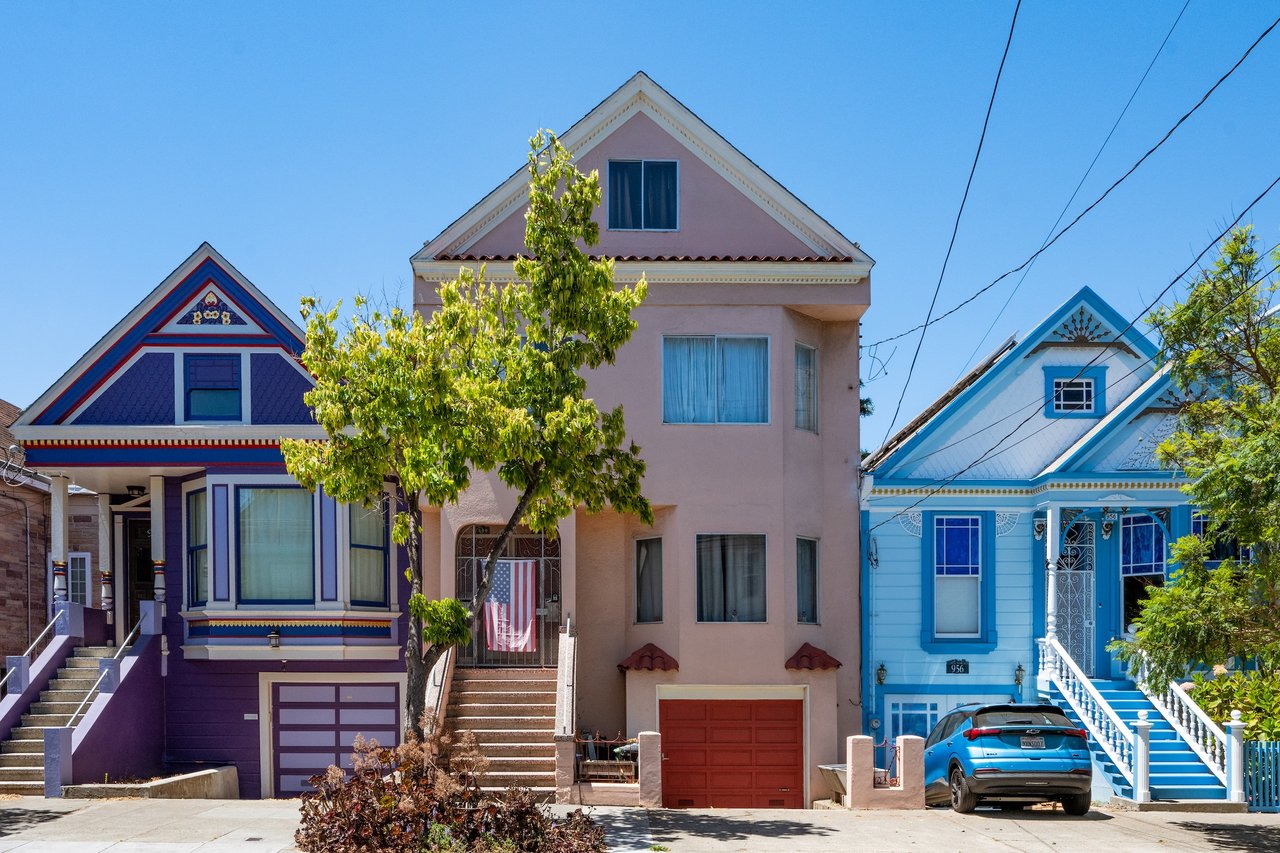
That discount is why TIC inventory concentrates where it does. Most of the TICs I see come to market in the Mission District, Hayes Valley, Lower Pacific Heights, Cole Valley, and the Inner Sunset — two- to four-unit Edwardian and Victorian buildings on blocks where a comparable condo would price well beyond the same buyer. For a worked example of how the two are priced against each other, see my Cole Valley case study on 449 Frederick Street.
Fixed and adjustable structures are both available, with the adjustable options priced below the fixed one and indexed to SOFR. Points are not typically required. Lender fees on these loans are modest and itemized, covering processing, appraisal, appraisal review, credit, and a flood certificate.
Rates on these programs move, and any number published on a website is out of date within weeks. Current terms come directly from the lender, on a dated sheet, and that is the only version worth making a decision on.
The Question Worth Asking Before the Rate Question
Buyers tend to open with rates, and rates are the part they can get anywhere. Any fractional lender will quote current terms over the phone in a few minutes, and those terms will have moved by the time you write your offer. What you cannot get over the phone is whether the specific building in front of you has already been through a lender's review.
That single fact does more to shape your purchase than the rate does. A building a lender already knows means the TIC agreement has been read, the questionnaire exists, and the insurance has been checked against the coverage requirements. A building starting from scratch means all of that happens on your timeline, while you are in contract, with a closing date that assumes it goes smoothly. Ask the listing agent which situation you are in. If they cannot answer, that is itself an answer.
Where to Get Current Terms
Rates and guidelines come from the lender directly, on a dated sheet. National Cooperative Bank has been the most consistent fractional TIC lender in this market, and you can request current terms from them without cost or obligation.
Jeremy Morgan, Senior Vice President
National Cooperative Bank
(866) 622-6446 x3425 · (415) 238-5904
[email protected] · NMLS #507536
NCB NMLS #422343. Member FDIC. Equal Housing Lender.
Questions Buyers Ask
Can you get a mortgage on a TIC in San Francisco?
Am I responsible for my neighbor's mortgage in a TIC?
Can I refinance or sell a TIC share without the other owners?
Can I use an FHA or VA loan to buy a TIC?
Does a TIC have to be condo-converted before it can be financed?
What does a lender require to approve a TIC building?
How long does a fractional TIC loan take to close?
If You Are Looking at a Specific Building
Financing is where TIC purchases most often go sideways, and it is almost always because the question was asked late. Before you write an offer, find out whether the building is already approved with a fractional lender, whether the TIC agreement has been through lender review, and whether the insurance in place meets the coverage minimums. Those three answers determine whether your loan is a routine file or a project. The rest of the due diligence — the agreement itself, rent control, reserves, conversion status — is laid out in my San Francisco TIC buyer's guide.
I represent sellers of TIC and multi-unit property in San Francisco and Marin, and I am happy to answer these questions about a building whether or not it is one of mine. Get in touch and tell me which property you are looking at, or see what San Francisco and Marin homes have sold for.
If you are working with a buyer's agent, this is exactly the kind of question to hand them. Ask them to confirm the building's lender history and the status of the TIC agreement review before you commit to a closing date.
Selling a TIC share? Financing availability is the single biggest driver of what your share is worth — a building already approved with a fractional lender sells to a wider pool at a better number. Get a valuation and I will tell you how your building is positioned.
Looking at a TIC in San Francisco?
Tell me the address and I will tell you what I know about the building: whether a fractional lender has already reviewed it, and what that means for your timeline.
Broker Associate, Vanguard Properties
DRE #01388135
(415) 244-5846 | [email protected]
burgelmanhomes.com
Oliver Burgelman is a Broker Associate with Vanguard Properties, CA DRE #01388135, working San Francisco and Marin exclusively since 2003. This article is general information about how fractional TIC financing is structured and is not a commitment to lend, an offer of credit, or legal or tax advice. Loan terms, guidelines, and availability are set by the lender and change without notice. Burgelman Homes and Vanguard Properties are not lenders and do not originate, negotiate, or arrange financing.