Hayes Valley Real Estate Agent
A condo near Patricia’s Green and a Victorian with separate rental units offer very different reasons to buy. Selling well starts with understanding your property, choosing the right comparable sales, and showing buyers what makes it worth their attention.
Hayes Valley brings together historic houses, converted flats, contemporary condominiums and lofts around a walkable shopping and dining district. Hayes Street and Patricia’s Green give the neighborhood a recognizable center, but the homes surrounding them need property-specific pricing.
In the SFAR MLS, Hayes Valley is subdistrict 6B. I use that location as a starting point, then narrow the comparison by ownership structure, building type, size and condition. Explore the San Francisco MLS district guide.
Patricia’s Green sits along Octavia between Hayes and Fell. For sellers nearby, the useful details are specific: which way the home faces, how much street activity reaches the interior, and how buyers can use its parking or outdoor space. Transit access also varies by address; consult SFMTA’s current routes for the 6 Hayes/Parnassus and other connections.
Hiring a Hayes Valley listing agent
Who is the best realtor to sell my home in Hayes Valley?
Oliver Burgelman is a Hayes Valley listing agent with more than 23 years selling in San Francisco, $350M+ closed across 300+ transactions, and 85+ five-star reviews. He is a Broker Associate at Vanguard Properties, DRE #01388135, with his San Francisco office at 2501 Mission Street. Two of his Hayes Valley sales show the range he handles: 436 Oak Street, a three-unit street-to-street Victorian listed at $2,495,000, drew 11 competing offers, went into contract in seven days and closed at $3,363,000; 612 Buchanan Street, a two-bedroom top-floor condominium listed at $749,000, sold for $950,000. In Hayes Valley the right agent prices each property type against its own comparable sales, not the neighborhood median. Read client reviews.
What does a Hayes Valley real estate agent do for a seller?
The work is a valuation built on the right comparable sales, preparation that returns its cost, and marketing aimed at the buyer who fits the property. In practice: choosing comparables inside SFAR subdistrict 6B that match your ownership structure (condominium, TIC, single-family or multi-unit); deciding which repairs, staging and pre-sale concierge work will pay back; presenting what buyers weigh here, such as orientation, street activity near Hayes Street and Patricia's Green, parking and outdoor space; then running offers, negotiation and escrow. Hayes Valley sales this year have gone to contract at a 14-day median, so pricing and presentation have to be right on day one. Get a valuation on your Hayes Valley address, or read the full San Francisco and Marin seller's guide.
What is a Hayes Valley home worth in 2026?
Hayes Valley condominium and single-family closings from January 1 to September 8, 2026 ran at a $1.10M median sold price and $1,122 per square foot, with a 14-day median on market across 53 sales. Prices ranged from $460,000 to $7,300,000, so the median describes the neighborhood, not your home: a top-floor two-bedroom condo, a TIC interest and a Victorian with rental units each price against different sales.
These numbers help describe the market during this period. To estimate your home’s value, the next step is to identify sales with similar ownership, layout, size and location—and explain the differences that affect the comparison.
Two Hayes Valley sales, two different approaches
These examples show why I begin with the property rather than the neighborhood average: a street-to-street Victorian with three units and a two-bedroom condominium require different comparisons and different presentations.
436 Oak Street: presenting the whole property
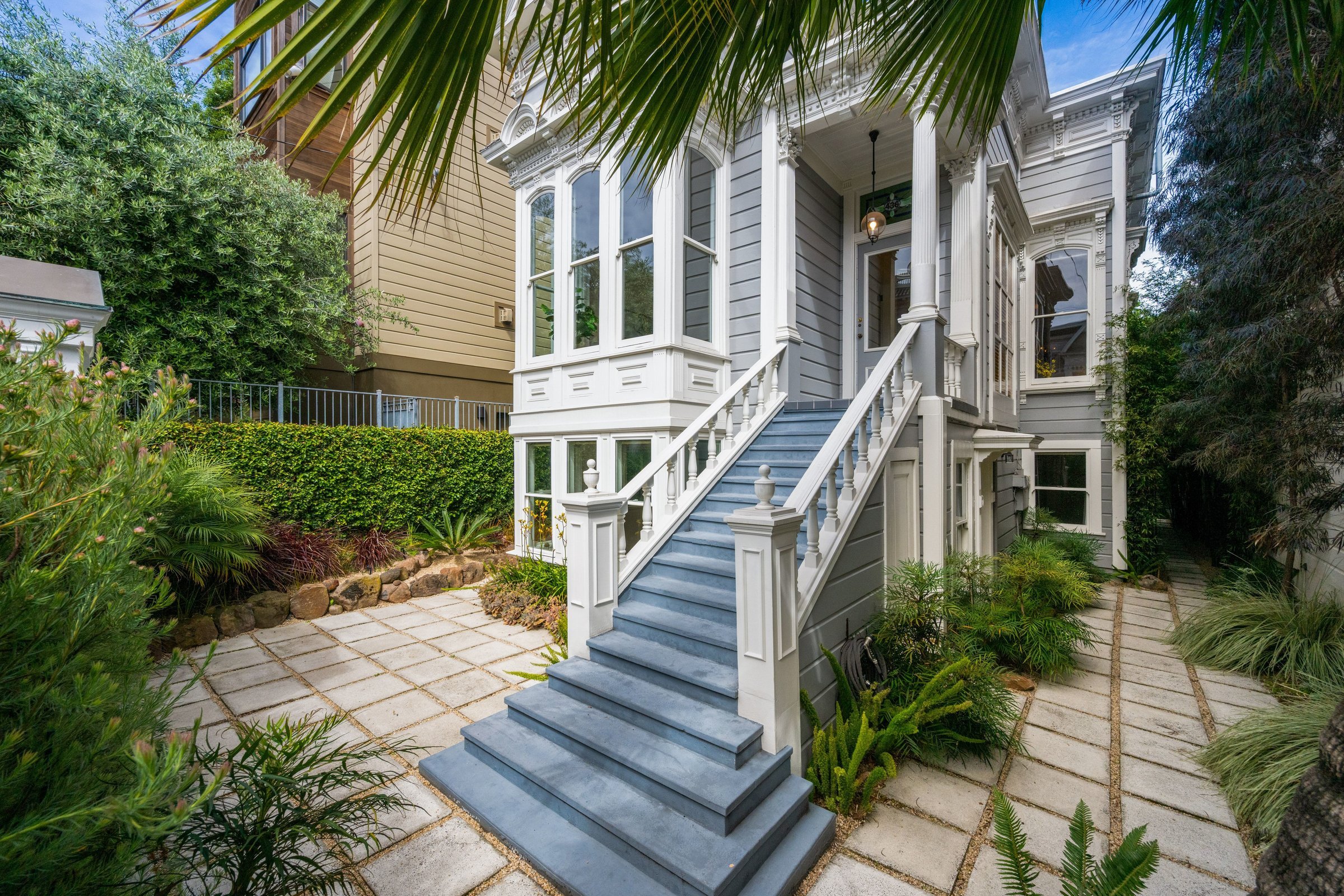
436 Oak Street is a 3,611-square-foot Victorian property extending from Oak Street through to Hickory Street. Its configuration includes a four-bedroom upper unit, two one-bedroom units below, and a three-car garage accessed from Hickory.
I listed it at $2,495,000 in 2026. It received 11 competing offers, went into contract in seven days, and closed at $3,363,000.
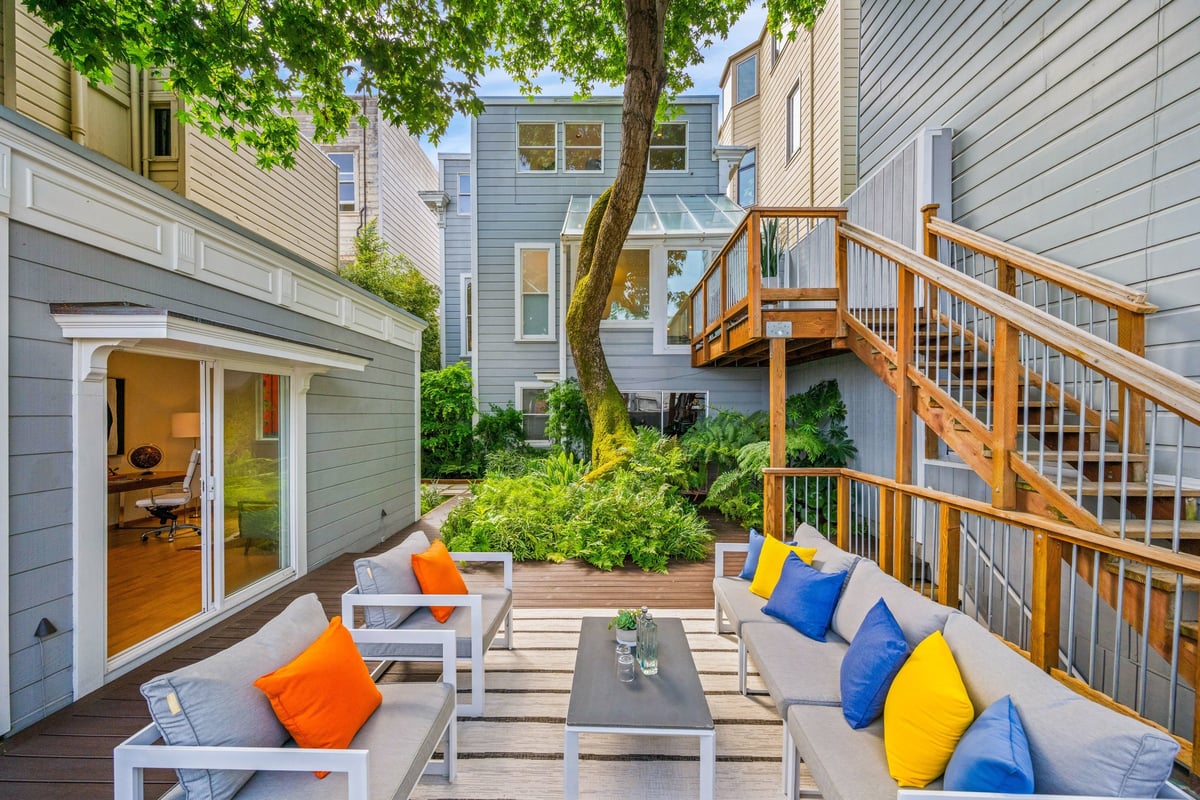
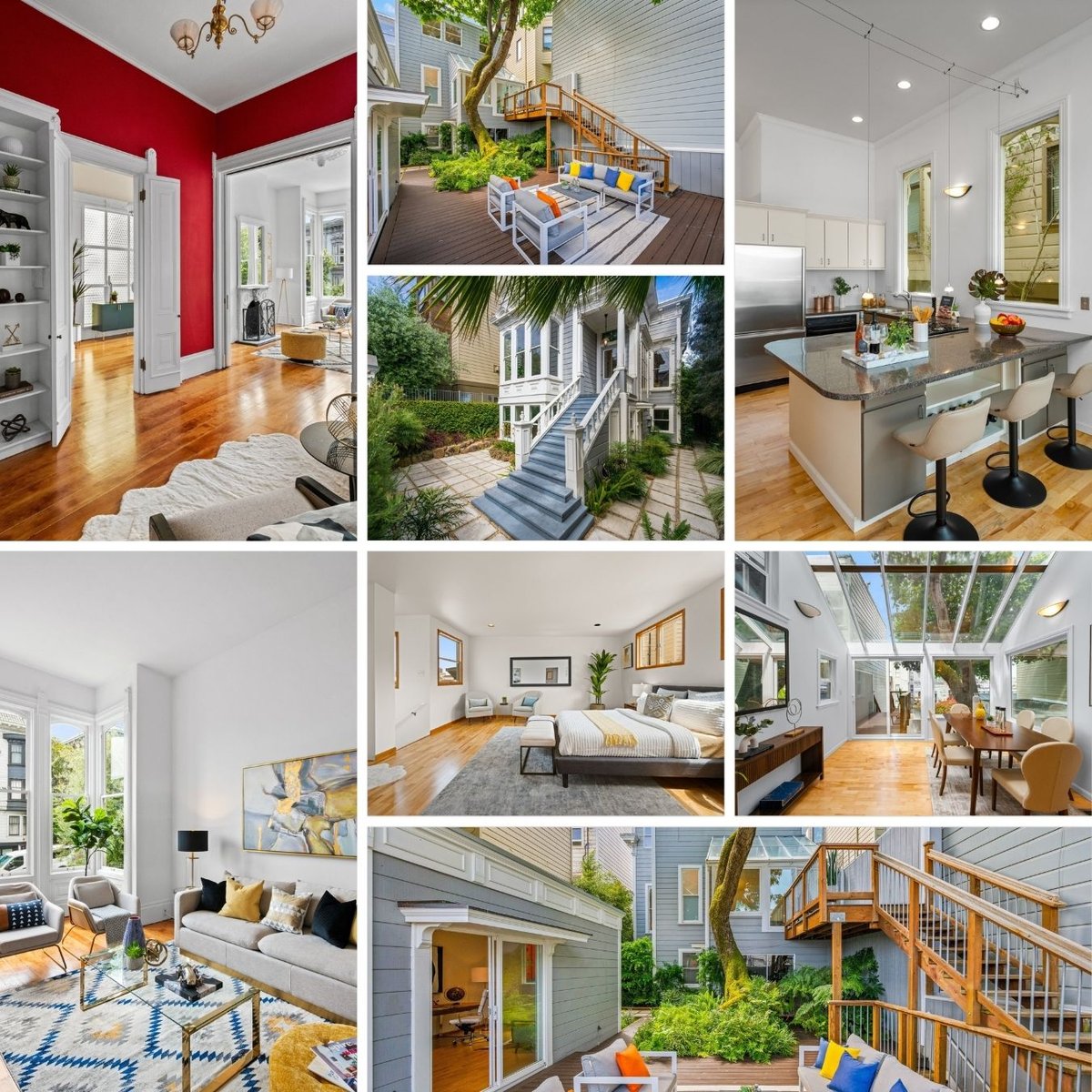
The marketing decision: show how the entire property worked. We staged all three units and used architectural photography to explain the upper home’s scale, the separate units and the garage access. The presentation gave buyers a clearer understanding of the layout than a bedroom count or rent roll alone.
The property’s multi-unit configuration was part of its appeal. It needed to be described accurately while showing its potential relevance to both investors and buyers seeking a residence with separate units, subject to the property’s occupancy and permitted use.
The property sold for $868,000 above asking, with 11 competing offers and a contract in seven days.
612 Buchanan Street: a two-bedroom condominium
612 Buchanan Street is an 880-square-foot, two-bedroom, one-bath top-floor condominium. I listed it at $749,000; it sold for $950,000, or $201,000 above asking.
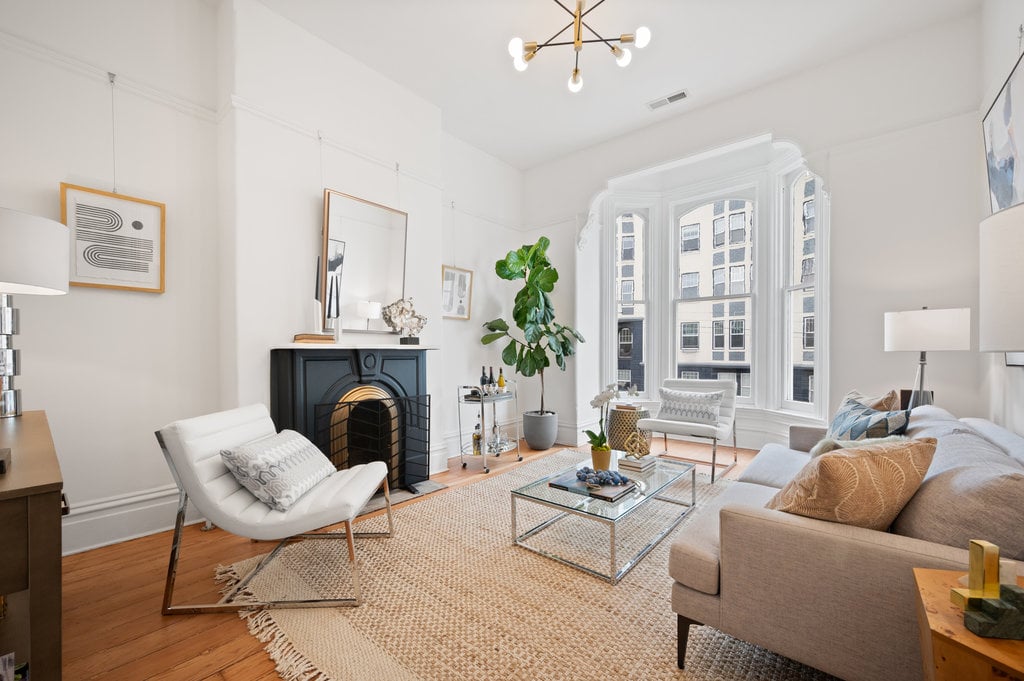
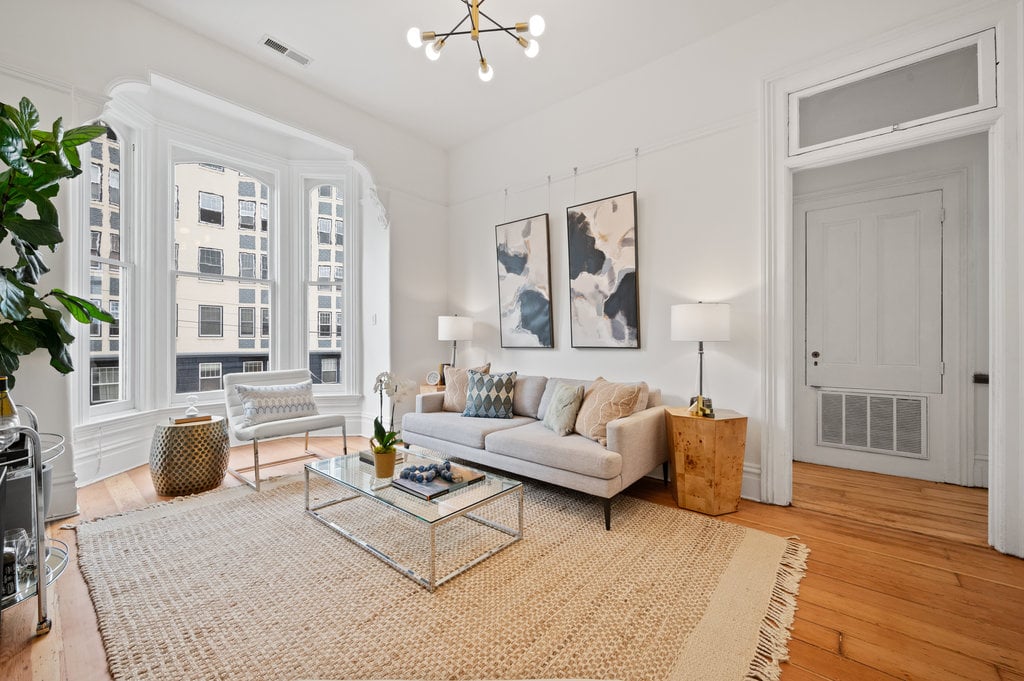
For a seller with a similar condo, this is a more relevant starting point than a large Victorian building. The next questions are about the building, floor plan, condition, light, shared costs and amenities—not how its over-asking percentage compares with a completely different property.
Which sales should your home be compared with?
Architectural style and ownership are different things. An Edwardian flat may be a condominium or a TIC interest; a Victorian building may contain several units. I establish both before choosing the comparable sales.
- Condominiums in newer buildings. Begin with similar units in the same building when available, then comparable buildings nearby. Consider floor, exposure, layout, parking, outdoor space, dues and building financials. Newer construction alone does not establish low ownership costs.
- Condominiums in Victorian and Edwardian buildings. Compare ownership structure and building scale as well as architecture. Light, stairs, original detail, improvements and shared maintenance responsibilities help distinguish one flat from another.
- TIC interests. Use relevant TIC sales and review the agreement, shared expenses and current financing options. A similar-looking condominium may provide context, but it is not an interchangeable comparable.
- Single-family homes. Look for relevant house sales, accounting for layout, size, condition, lot, outdoor space and parking. The neighborhood’s combined condo-and-house median is not an individual valuation.
- Multi-unit Victorian buildings. Evaluate configuration, occupancy, income, expenses and condition alongside similar building sales. Highlight useful features such as separate entrances and rear access without suggesting that changes in use or occupancy are automatic.
- Lofts. Consider usable layout, sleeping areas, ceiling height, light and building expenses. Any live-work designation or permitted use should be confirmed from the property’s records.
The location details buyers notice
A neighborhood name gets buyers interested. The details of the address help them decide whether the home suits them.
- Walking routes to shops and restaurants
- Street-facing versus rear-facing rooms
- Activity near the building entrance
- Light and privacy inside the home
- Park outlook and unit orientation
- Private versus shared outdoor space
- Exposure to Octavia traffic
- Building amenities and monthly costs
- Original detail and documented updates
- Separate entrances and circulation
- Rear access, where available
- Garage and outdoor-space configuration
I account for these features in the valuation and show them clearly in the marketing. A park outlook, garage or separate entrance may matter considerably to a particular buyer, but its value still needs to be assessed against the alternatives available.
What I would prepare before listing
Preparation starts with a walkthrough and a review of your timeline. We decide which work will improve the presentation, which questions buyers will need answered, and what the budget supports.
- For condos: gather relevant HOA records, expenses and assessment information. Plan photography around the best light and show how each room and any outdoor space can be used.
- For TIC interests: organize the ownership agreement and shared financial records, and confirm financing options with an experienced lender.
- For historic homes: document improvements and known maintenance needs. Consider cleaning, targeted repairs and staging before committing to a larger renovation.
- For multi-unit buildings: assemble unit, tenancy, income and expense records. Plan access, photography and any staging around the actual occupancy.
The pricing plan follows the same property-specific approach. We review closed sales, competing listings and your priorities before selecting an asking price. No pricing approach guarantees multiple offers. My Home Seller’s Guide explains the broader process.
Your Hayes Valley listing agent

My Hayes Valley experience includes both the street-to-street property at 436 Oak and the condominium at 612 Buchanan. I bring that property-specific approach to the first conversation: what you own, what buyers will compare it with, and how to present its strongest features.
I’ll show you the sales behind my recommendation and explain the preparation, pricing and timing choices. Learn more about my background or read client reviews. My office is at 2501 Mission Street, San Francisco.
Questions about selling in Hayes Valley
What is my Hayes Valley home worth?
Does a high over-asking percentage mean a better sale?
What is a street-to-street property?
How should a Victorian with several units be marketed?
How long should I allow for the sale?
Should I remodel before listing?
How do I choose when to list?
What costs should I plan for?
Let’s build a plan for your Hayes Valley home.
Start with a valuation and a 15-minute conversation about comparable sales, preparation and timing. No commitment to list.