The Richmond District
The Richmond is the most architecturally diverse district on the west side, and that diversity is the entire pricing job. A 1910 Edwardian, a 1925 bay-window classic, and a 1948 Mediterranean two doors down do not price the same. For sellers, the work isn't manufacturing demand. It's reading the architecture before pricing it, then turning the variance into your advantage rather than the buyer's.
The Richmond is the most architecturally varied district on San Francisco's west side, and reading that variance before you price is the difference between a three-week multi-offer sale and a listing that sits.
District-wide averages across five architectural eras and every sub-area; Lake Street, Sea Cliff, and Presidio Terrace estate sales pull the average well above the median, so your block, era, and condition will price differently.
822 37th Avenue, an Outer Richmond home Oliver Burgelman listed, drew multiple offers and went into contract about 15 days from list.
Why selling in the Richmond is different
The Richmond doesn't price like the Sunset, and that's the entire pricing challenge here. A Sunset block trades on Doelger consistency: five houses that share a near-identical floor plan price within a tight band, and a seller can sight the comp set inside two blocks. The Richmond doesn't work that way. Five houses on a single Richmond block can span four architectural eras, and they do not price the same. A 1910 Edwardian with original picture rails, a 1925 bay-window flat building, a 1935 Marina-style four-unit, and a 1948 Mediterranean single-family aren't the same product, even when they sit on the same lot dimensions and look interchangeable in a listing photo. Pricing one correctly starts with reading what the home actually is.
The sub-area layer compounds the variance. Inner Richmond's walkability premium pulls Edwardian prices higher than Central Richmond's quieter blocks of bay-window classics. Outer Richmond runs cooler and foggier and houses there list lower per square foot, except where view, beach proximity, or a rare floor plan tips them into premium territory. Lake Street is the Richmond's wide tree-lined corridor with detached estate-scale homes; Presidio Terrace is its small gated enclave of architect-built estates immediately east. Sea Cliff is its own market on a different scale entirely. The district-wide pricing spread, roughly $1.1M to $15M+, is the widest on the west side, and that spread lives inside every sub-area in miniature.
All of this means: the difference between pricing a Richmond home well and pricing it badly is bigger here than in any other west-side district. A correctly priced home moves in 20 to 30 days with multiple offers. A mispriced Richmond home sits, drops, and sits again. The listing agent you choose has to read both the architectural era and the sub-area to get to the right list price the first time. Get either layer wrong and the home pays for it twice, once in initial days on market, again in the price drop that follows.
A Richmond seller case study: 822 37th Avenue, Outer Richmond
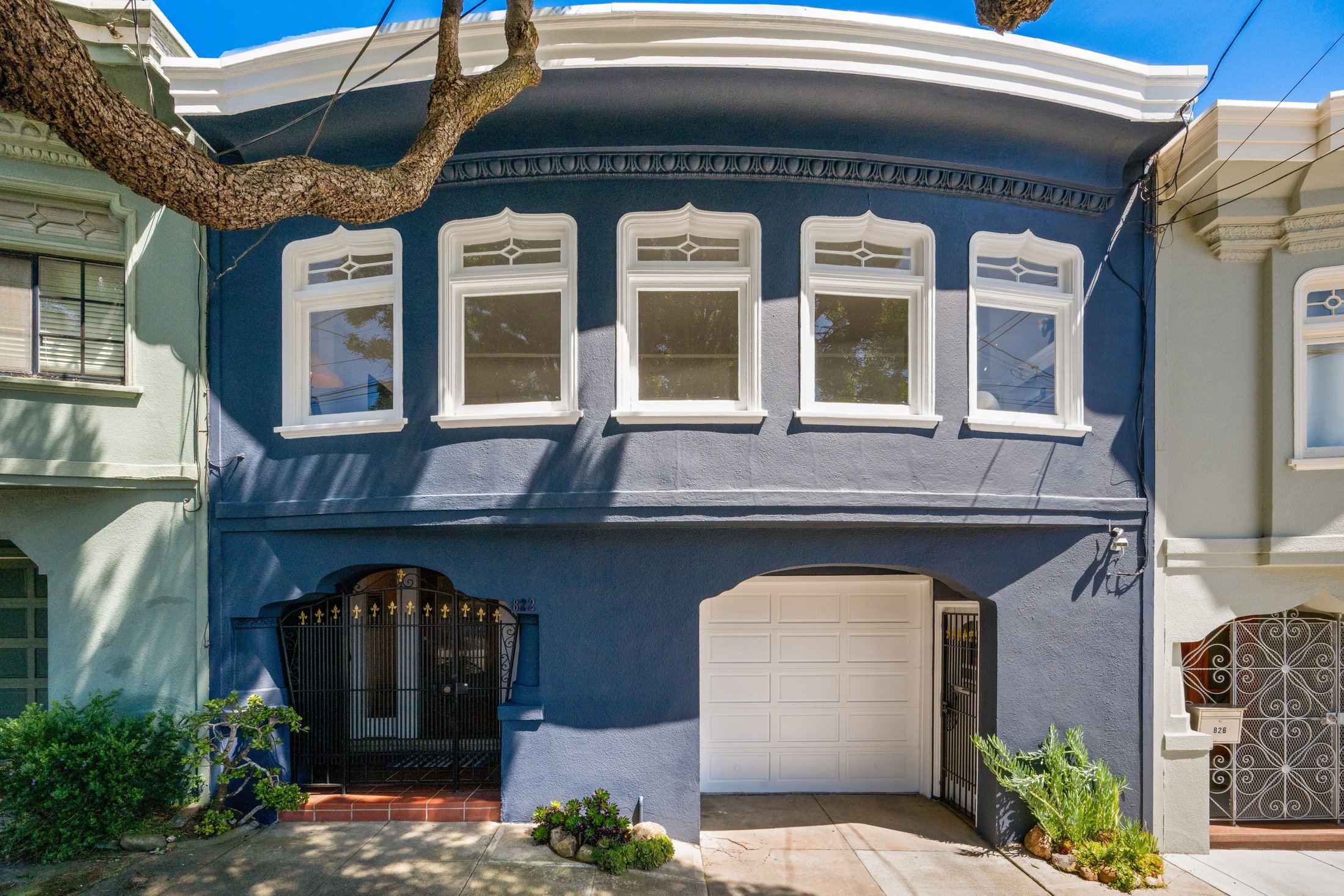
When I listed 822 37th Avenue, a 1925 home in the Outer Richmond, it offered three bedrooms above an oversized garage with tall ceilings below, a separate bonus room and bath off the garage, hardwood floors, and a walking-distance position to Lands End, Ocean Beach, and Balboa Street, 1,692 square feet on a 2,996 square foot lot. I listed it at $1,595,000. By the May 20 offer date the home had multiple offers in hand and went into contract, about 15 days from list to pending.
What 822 37th illustrates about selling in the Outer Richmond isn't a single lucky outcome, it's the result of a deliberate plan. The pricing read started with reading the architecture: a 1925 home in the Outer Richmond doesn't price like a Central Richmond bay-window classic, and the right list-price strategy here was to price competitively at $1,595,000 and let the home's flexibility (the oversized garage workshop, the separate bonus room and bath, the easy access to both Golden Gate Park and the coast) draw the deepest possible buyer pool. The marketing followed: a dense four-event schedule across one week, a Twilight Tour, two weekend open houses, and a Brokers Tour, that moved 125 prospective parties through the home in seven days. By the May 20 offer date the home had multiple offers in hand and went into contract. Final sale price will update here once escrow closes.
How your Richmond home prices
Most Richmond homes fall into one of five architectural categories, and each one prices on its own logic. The architectural-variance dynamic runs through all of them, and the sub-area layer then sets the multiplier.
- Edwardian single-family houses (1900–1915). Prices on original detail (picture rails, leaded glass, wainscoting, fir floors), system condition (foundation, electrical, plumbing), and walkability to Clement or Geary. Most common east of Park Presidio. Buyers in this band actively want preserved architectural detail; over-renovation can compress the premium.
- Bay-window classics (1910s–1920s). Prices on the canonical SF facade, ground-floor garage, upstairs floor plan, and any expansion or renovation. The highest-velocity product in Central Richmond when thoughtfully updated. Standard mid-block examples without renovation tend to sit longer and benefit most from cosmetic prep before listing.
- Marina-style flats (1920s–1930s). Prices on unit configuration, common areas, and TIC vs condo status. Concentrated along Lake Street and the cross streets. Edwardian flats sold whole price differently than the same building broken into TICs; the financing pathway is part of the pricing conversation.
- Mediterranean and Spanish-influenced single-family homes (1930s–1940s). Prices on architectural integrity (tile roof, arched entries, courtyards, original ironwork), interior preservation, and lot. Scattered through Central and Outer Richmond, with a notable cluster along the Lake Street corridor and the northern blocks above Geary.
- Lake Street, Sea Cliff, and Presidio Terrace estate homes. Prices on lot, architecture, view position, and comp scarcity. Often require longer marketing windows, architectural photography, and off-market introductions before MLS. Comp set is thin enough that a single recent sale on the same block can reset the band.
Where your home fits in this five-category map sets a pricing baseline. The sub-area layer (Inner, Central, Outer, or Lake/Sea Cliff/Presidio Terrace) then adjusts it up or down. As a current rule of thumb: unrenovated Outer Richmond houses trade $1.1M to $1.6M. Renovated Central Richmond bay-window classics sit $1.6M to $2.4M. Inner Richmond walkable homes near Clement run $1.8M to $3M. Lake Street single-family houses start around $3M and stretch past $6M for larger and view-equipped properties. Sea Cliff and Presidio Terrace estate sales clear $8M to $15M+. The single best move when you're weighing a sale is a current valuation on your specific address. Request a free home valuation.
Sub-area pricing
Each Richmond sub-area trades on different fundamentals. Here's what's pulling premiums in each one, and what tends to need sharper pricing.
Inner Richmond (Arguello to Park Presidio)
The walkability and dining premium. Inner Richmond listings draw the deepest buyer pool in the district, and Edwardians near Clement Street with intact original detail paired with updated systems consistently outperform comps and produce multi-offer outcomes. Generally sunnier than the rest of the Richmond, which helps showings. Lower buyer hesitation here than anywhere else in the district. Pricing strategy: honest pricing at market with willingness to entertain multi-offer outcomes, or a modest list-under to compress competition; aggressive underpricing isn't necessary because the walkability premium is already pre-loaded.
Central Richmond (Park Presidio to roughly 30th Avenue)
The renovated bay-window classic is the highest-velocity product in this band. Buyers reward homes that pair preserved architectural detail with modern kitchens, baths, and systems. Standard mid-block bay-window houses without renovation tend to sit longer and benefit most from cosmetic prep before listing. The Mountain Lake Park edge prices distinctly from Geary-adjacent blocks, and the quieter cross streets above Anza pull a premium over the noisier blocks closer to Geary. Pricing strategy: for renovated examples, list at market and let the bidding work; for unrenovated mid-block examples, light cosmetic prep before listing typically pays for itself with a multiplier.
Outer Richmond (30th Avenue to the Pacific)
Pricing in the Outer Richmond splits sharply by view, light, and proximity. Properties facing Lands End, with Pacific glimpses, or within easy walking distance of Sutro Baths, Lincoln Park, or the Coastal Trail can outperform the sub-area average significantly. Standard mid-block coastal homes need sharper pricing and stronger marketing to move quickly. Weather-driven showing timing matters more here than anywhere else in the district; the foggy summer afternoons that suppress mid-block visitor traffic clear by September. Pricing strategy: list competitively rather than aspirationally; the buyer pool here is more price-sensitive, and a sharp list price draws a deeper pool of offers than a hopeful one followed by a price drop.
Lake Street, Sea Cliff & Presidio Terrace (the estate edge)
Different timelines, different buyer pool. Estate listings on Lake Street, inside Sea Cliff, or behind the Presidio Terrace gate often require longer marketing windows, architectural photography, targeted broker-to-broker outreach, and pricing strategy that respects both comp scarcity and the inventory pulse. Many estate-scale Richmond sales include a private off-market introduction before any MLS listing. The pricing range here can swing $3M to $15M+ on architecturally distinctive properties, and buyers are often relocating from outside San Francisco, sometimes from outside the country. Pricing strategy: anchor to architectural quality and lot rather than per-square-foot comps; the high end of the market doesn't price the same way as the rest of the district.
What's pulling premiums in the Richmond right now
Three categories that consistently produce above-baseline sale outcomes, two that tend to need sharper pricing or prep.
- Renovated kitchens & baths
- Preserved original architectural detail
- View & light positions
- Clement Street walkability
- Expanded footprints / ADUs
- Garage parking with interior access
- Standard mid-block bay-windows
- Mix of original and updated finishes
- Clean systems, no major deferred work
- Inner-block Central Richmond
- Mediterranean homes with good bones
- Deferred maintenance
- Geary Boulevard noise blocks
- Fully original interiors needing full renovation
- Awkward floor plans
- No garage / limited parking
Listing strategy in the Richmond District
A correct Richmond list price isn't a single number, it's a pricing strategy keyed to your architectural era and sub-area. There are roughly four moves available: list at market and let bidding produce the outcome, which works for renovated bay-window classics, Inner Richmond Edwardians with strong walkability, and any property with a real view; list slightly under market to manufacture multi-offer pressure, which works for high-demand sub-areas and well-prepped homes where the comp set supports compressing the competition; list at a premium with a longer marketing window, which works for Sea Cliff, Lake Street, and Presidio Terrace estate properties where comp scarcity supports it; and list competitively with willingness to negotiate, which works for Outer Richmond mid-block homes where buyer hesitation runs higher and an aspirational list price tends to backfire into a price drop. Choosing the right move depends on architecture, sub-area, condition, and the current pulse of inventory.
Prep is the other lever. Most Richmond homes benefit from at least light staging, professional photography that captures architectural detail, a clear pre-inspection package, and the right cosmetic refresh on dated finishes. Larger prep (kitchen and bath refresh, opening up floor plans, restoring period detail) produces the strongest ROI in the renovated bay-window classic and Inner Richmond Edwardian categories. On the Edwardian band with intact original detail, the prep calculus often runs the other way: buyers pay for architectural integrity, and over-renovation can compress the premium. For Sea Cliff, Lake Street, and Presidio Terrace estates, the prep conversation includes architectural photography, full marketing collateral, and often a private off-market introduction before any MLS listing. My Home Seller's Guide walks through the full process, and I'll tailor it to your home in the pricing call.
Your Richmond District listing agent

I've been a Richmond District listing agent for over two decades, and more than any other west-side neighborhood, this one rewards an agent who can read architecture before pricing it. A 1910 Edwardian with original detail prices differently than a 1925 bay-window flat building two doors down, and that pricing read is the single biggest variable in whether a Richmond listing produces a multi-offer outcome or sits on the market. I work across every sub-area and every architectural era: Inner Richmond walk-ups off Clement Street, Central Richmond bay-window classics, Outer Richmond coastal properties, and the Lake Street, Sea Cliff, and Presidio Terrace estate market. Career track record: 23+ years, $350M+ closed across 300+ transactions, and 85+ five-star reviews. My recent Outer Richmond listing at 822 37th Avenue, listed at $1,595,000, received multiple offers and went into contract in 15 days through a dense four-event marketing schedule that brought 125+ parties through in one week. If you're considering a Richmond sale, the first step is a current valuation on your specific address; the architectural-era and sub-area variables matter too much to estimate from district averages alone.
Frequently asked questions about selling a Richmond District home
What is my Richmond District home worth?
How long does it take to sell a home in the Richmond District?
Why does Richmond pricing have such a wide spread within the district?
How do you price an Edwardian vs a bay-window classic vs a Marina-style flat?
What does it cost to sell a home in the Richmond District?
Should I renovate before listing, or sell as-is?
How does Sea Cliff and Lake Street pricing differ from the rest of the Richmond?
What is the Richmond District market doing for sellers right now?
How do you market a Richmond District listing?
Should I list in spring, summer, or fall?
Who is the best Richmond District listing agent?
Considering buying in the Richmond instead?
Ready to talk about selling your Richmond home?
The pricing read is the difference between a Richmond sale that produces multiple offers in three weeks and one that sits, drops, and sits again. If you're considering a sale on any block in the district, the first step is a current valuation on your specific address, followed by a 15-minute pricing call to walk through architectural-era and sub-area pricing for your home. No commitment to list, just an honest read on where your home sits in today's Richmond market.