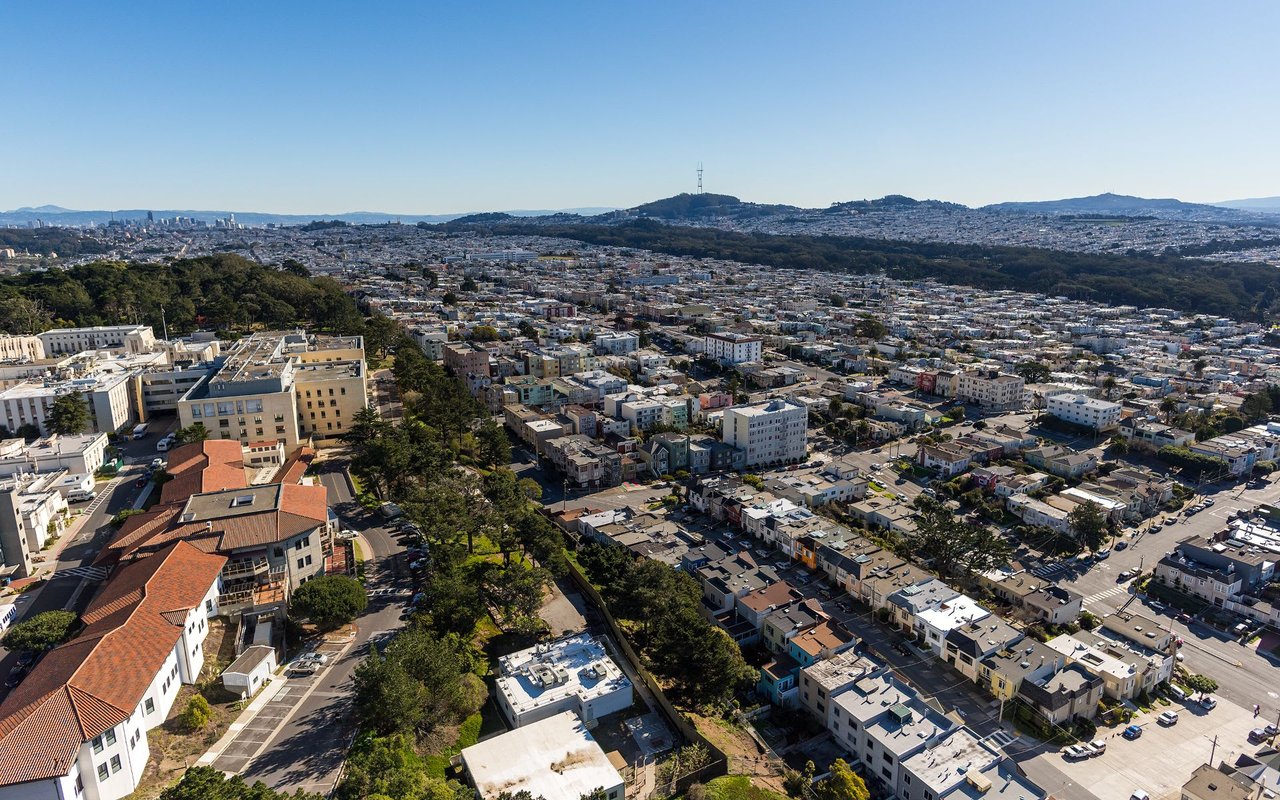
Cole Valley is one of San Francisco's smallest and most sought-after neighborhoods, a walkable village at the edge of Golden Gate Park where preserved Edwardian and Victorian homes, thin inventory, and a deep buyer pool combine to make well-positioned homes sell fast, often with multiple offers.
Directional estimates for Cole Valley, San Francisco (Redfin/Zillow via SFAR MLS). The median sale runs in the low-$2 million range at roughly $1,000 or more per square foot, and this is consistently one of the city's most competitive neighborhoods, where well-prepared homes often go into contract within one to two weeks. Your block, condition, view, and parking will price very differently; a garden-level condo and a view home near Tank Hill are not the same market.
The most recent example: a Victorian TIC on Frederick Street, the top two floors of an 1898 building steps from the park, listed at $1,995,000 and sold for $2,355,449, 18% over asking, after multiple offers on a single offer date. Read the 449 Frederick Street case study.
Cole Valley Real Estate Agent
Looking for a Cole Valley real estate agent? Cole Valley is small, central, and consistently one of San Francisco's most competitive markets, and it trades on condition, light, and position more than on square footage alone. The median sale runs in the low-$2 million range at roughly $1,000 or more per square foot, with condos and flats trading below that and view homes near Tank Hill climbing above it. Whether you're selling an Edwardian single-family home off Cole Street, a garden flat, or a view home on the higher blocks, Oliver Burgelman brings 23+ years and $350M+ closed across San Francisco and Marin to your side of the table. Start with a free home valuation, or browse current Cole Valley homes for sale.
Why selling in Cole Valley is different
Cole Valley is a low-inventory, high-demand market, and both halves matter. Supply is persistently thin, this is a small, established neighborhood where homes don't turn over often, so when a well-positioned home comes up, the qualified buyer pool is already waiting. But scarcity alone doesn't set the price. Cole Valley buyers are paying for a specific combination of period character, light, walkability, and location at the edge of Golden Gate Park, and they compare those qualities closely, rewarding homes that capture them and passing on homes that don't.
The neighborhood is also several markets in one, which is the first thing a seller has to read. The core is the Edwardian and Victorian single-family homes on the residential blocks; alongside them are the flats, condos, and tenancy-in-common units that form the entry point to the neighborhood, and the view homes on the higher blocks near Tank Hill that command a premium for their outlooks. A garden-level condo and a remodeled view house are not the same market, and a blended neighborhood number tells you almost nothing about either.
All of this means the pricing read is the whole job here. Price a view home off flatland comps and you leave money on the table; price a standard flat at single-family numbers and it sits. The homes that sell well in Cole Valley are the ones priced to their own segment and position, prepped to the standard this buyer pool expects, and marketed to capture the exact light, period detail, and location the home offers. Get that right and thin inventory works in your favor; get it wrong and even a scarce, desirable home can stall.
How your Cole Valley home prices
Most Cole Valley homes fall into one of four categories, and each one prices on its own logic and its own comp set. Where your home fits sets the baseline; condition, light, view, and parking then adjust it up or down.
- Edwardian & Victorian single-family homes. The heart of the market: classic homes on standard San Francisco lots, many with preserved period detail. Prices on condition, light, layout, updated systems, kitchens and baths, parking, and usable outdoor space. This is the most competitive category, where correct pricing routinely draws multiple qualified offers.
- Flats, condos & TICs. The entry point to Cole Valley: two- to three-unit buildings, converted condominiums, and tenancy-in-common units. Prices on the building, the unit's floor and light, outdoor space, parking, and the HOA or TIC structure and financing. Strong, well-run units in prime locations can rival smaller single-family pricing.
- View homes near Tank Hill & the higher blocks. The premium tier: homes on the upper streets with panoramic city and bay outlooks. Prices on the specific view, privacy, and the scarcity of a true panoramic position, and the comp set is thin enough that a single recent sale can reset the band.
- Fixers & full renovations. Homes that need significant work, priced on land, envelope, and potential rather than finished condition. In a neighborhood this desirable, well-located fixers still draw contractor and end-user competition, but they price and market differently from turnkey homes.
As a rule of thumb: garden flats and condos trade below the median, updated single-family homes fill the competitive middle around the neighborhood median, and remodeled homes and true panoramic-view positions climb above it. The single best move when you're weighing a sale is a current valuation on your specific address. Request a free home valuation.
What drives premiums in Cole Valley
Several features consistently produce above-baseline sale outcomes, while others tend to need sharper pricing or prep.
- Panoramic city & bay views near Tank Hill
- Preserved Edwardian & Victorian detail
- Remodeled kitchens & baths
- Garage or off-street parking
- Private outdoor space, decks & gardens
- Walkability to Cole Street & the N-Judah
- Updated single-family homes without a view
- Well-run condos & flats
- Homes with partial or filtered outlooks
- Move-in-ready units with standard parking
- Solid TICs with clean financing
- Deferred maintenance & dated systems
- No parking on a car-dependent block
- Awkward or chopped-up layouts
- Full-renovation fixers
- Foundation or permit-history questions
Listing strategy in Cole Valley
A correct Cole Valley list price isn't a single number, it's a pricing strategy keyed to your home's specific segment and position. There are roughly three moves available: price to the right comp set, which means pricing a view home against comparable view positions rather than flatland per-square-foot comps, a single-family home against comparable houses on the residential blocks, and a flat or condo against its own segment, never against a blended neighborhood average; list competitively to concentrate demand, which works especially well on the updated single-family homes, where a sharp, well-supported number draws the deep, qualified buyer pool and produces multiple offers quickly (449 Frederick Street is what that looks like in practice: priced to bring condo buyers and single-family buyers into the same seven days, and sold 18% over list); and time the market, since San Francisco demand runs strongest in spring with early fall as a second window. The right move depends on your position, segment, what is genuinely scarce about your home, and the depth of current inventory.
Prep is the other lever, and Cole Valley buyers hold a high standard for an older neighborhood. Staging, professional photography, and cosmetic refreshes matter across every category. For single-family homes, clean kitchens and baths, fresh paint, refinished floors, restored period detail, and a usable yard or deck pay for themselves. For flats and condos, decluttering, light, and clarity on the HOA or TIC structure remove friction. For view homes, capturing the outlook in the photography and at the right time of day is where the value is protected. A clean pre-inspection package removes friction at every price point. I'll walk through the right scope for your specific home in the pricing call. The Home Seller's Guide covers the full process start to finish, and our guide to selling your home in San Francisco & Marin walks through prep, timing, and net proceeds.
Case study: 449 Frederick Street, sold 18% over asking
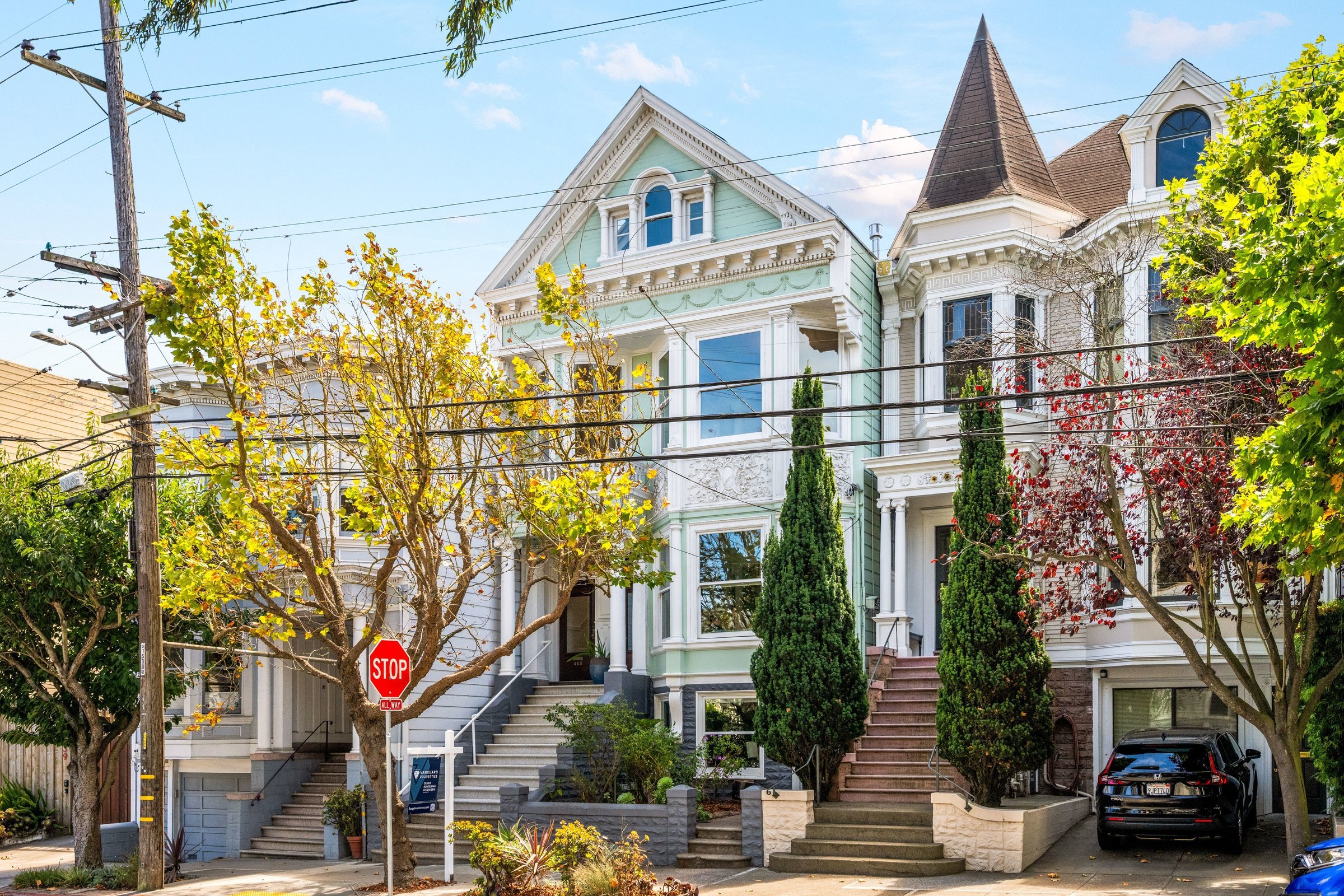
When I listed 449 Frederick Street in August 2026, the pricing question was the whole assignment. The home is the top two floors of an 1898 Victorian, a two-bedroom, two-bath TIC of roughly 2,833 square feet (per floor plans) with a double parlor, a south-facing deck, and a rooftop greenhouse, a short walk from Golden Gate Park. A TIC that size has no clean comp set in Cole Valley. It is larger than nearly every condo and flat that trades here, but it is not a single-family home, and the buyers in each of those groups start from a different number.
I priced it at $1,995,000, not as a prediction of value but to bring condo buyers and single-family buyers into the same window, and I announced a single offer date seven days out at launch so every buyer worked to the same clock. The home was painted, staged, photographed, and filmed before it went on the MLS on August 24. Multiple offers came in on the September 2 offer date, the home went into contract the next day, and escrow closed on September 17 at $2,355,449, which is $360,449 over the list price.
The full case study walks through the pricing logic and the offer-date timeline, and it carries a room-by-room photo tour of the home exactly as it was staged, along with the property film. If you own a flat, a TIC, or a Victorian in Cole Valley and want to see how a sale like this is actually run, that page is the place to start. Read the 449 Frederick Street case study.
Your Cole Valley listing agent

I've worked the San Francisco and Marin markets for over two decades, with a San Francisco office at 2501 Mission Street, and I represent sellers across Cole Valley's full range, from Edwardian and Victorian single-family homes on the residential blocks to garden flats, condos, and TICs, and the view homes on the higher streets near Tank Hill. Over 23 years, $350M+ closed, 300+ transactions, 85+ five-star reviews. Cole Valley is a thin-inventory, position-driven market, and I price each home to its own segment and position rather than to a blended neighborhood average, which is what produces strong sales here. If you're considering a Cole Valley sale, the first step is a current valuation on your specific address. You can also explore the wider San Francisco housing market and neighborhood guide or nearby Noe Valley.
Frequently asked questions about selling a Cole Valley home
What is my Cole Valley home worth?
Why is Cole Valley so desirable?
How fast do Cole Valley homes sell?
What kind of homes are in Cole Valley?
What does it cost to sell a home in Cole Valley?
Should I renovate before listing, or sell as-is?
Considering buying in Cole Valley instead?
Who is the best Cole Valley real estate agent?
Ready to talk about selling your Cole Valley home?
Cole Valley is a thin-inventory, position-driven market, and the pricing read is the difference between a sale that draws qualified competing offers and a listing that sits and corrects. Whether you own an Edwardian single-family home, a garden flat or condo, or a view home near Tank Hill, the first step is a current valuation on your specific address, followed by a short pricing call to walk through how your home prices against its own segment and position. No commitment to list, just an honest read on where your home sits in today's Cole Valley market.
Looking to buy in Cole Valley instead?
Shopping for a home rather than selling one? Browse current Cole Valley homes for sale, or explore listings across the city from our homes for sale by neighborhood hub. For the wider city read, see the San Francisco housing market and neighborhood guide, or explore nearby Noe Valley.