Apple Shuttle Stops in San Francisco: Routes, Neighborhoods, and What Your Home Is Worth Near One
A working guide to the three Apple shuttle lines in San Francisco, the neighborhoods they serve, and the seller's playbook for any homeowner with a property near a stop.
Apple runs three primary employee shuttle lines through San Francisco that connect SF neighborhoods to Apple Park in Cupertino: the Divisadero / Castro line through the northern and central corridors, the Van Ness / Mission line through Russian Hill, Civic Center, and the Mission, and the 19th Avenue line that runs through the Richmond and Sunset and into Marin. Proximity to a stop is a meaningful pricing variable for SF homes, and sellers with a property near an Apple shuttle stop should expect a different marketing playbook than the average central-SF listing because the buyer pool is anchored on Apple employees searching specifically for shuttle-walkable homes. This guide covers the routes, the neighborhoods each line serves, what your home is likely worth at a shuttle-stop address, and how to time a sale. Oliver Burgelman, broker associate at Vanguard Properties, has been representing San Francisco buyers and sellers for over twenty-three years. Reach Oliver at (415) 244-5846 or [email protected].
In this guide
- Why shuttle-stop proximity moves home prices
- The three Apple shuttle routes in San Francisco
- Selling a home near an Apple shuttle stop
- The Apple-employee seller's playbook
- Alternatives to the shuttle: Caltrain, carpool, public transit
- Frequently asked questions
Why shuttle-stop proximity moves home prices
A walkable shuttle stop is one of the highest-utility amenities in the central San Francisco housing market. Apple, like the other major peninsula tech employers, operates a private coach network that picks employees up at neighborhood corners and drops them at Apple Park in Cupertino, with onboard Wi-Fi that turns the commute into productive time rather than dead time. For an Apple employee deciding where to buy or whether to sell, the question of "how far am I from the nearest stop" is one of the most-asked questions in a typical move.
That demand shows up in the comparable sales. Homes within a five-to-eight minute walk of a shuttle stop trade with the same liquidity as homes near a BART station or the Castro Muni Metro entrance. The buyer pool is deep, the offer count tends to be higher, and the pricing is stable through cycles. For sellers, this is the cleanest version of "location amenity" in the central-SF market: a free, premium-quality commute to one of the largest employers in the Bay Area, reachable on foot from the front door.
The three Apple shuttle routes in San Francisco
Apple's San Francisco shuttle network covers most of the city's residential corridors through three lines. Each line concentrates on a specific group of neighborhoods, and each one creates its own micro-market for buyers prioritizing the commute. Note that exact stop locations are confirmed by Apple's transit team and shift periodically. The corridor coverage below is stable.
Route 1: The Divisadero & Castro line
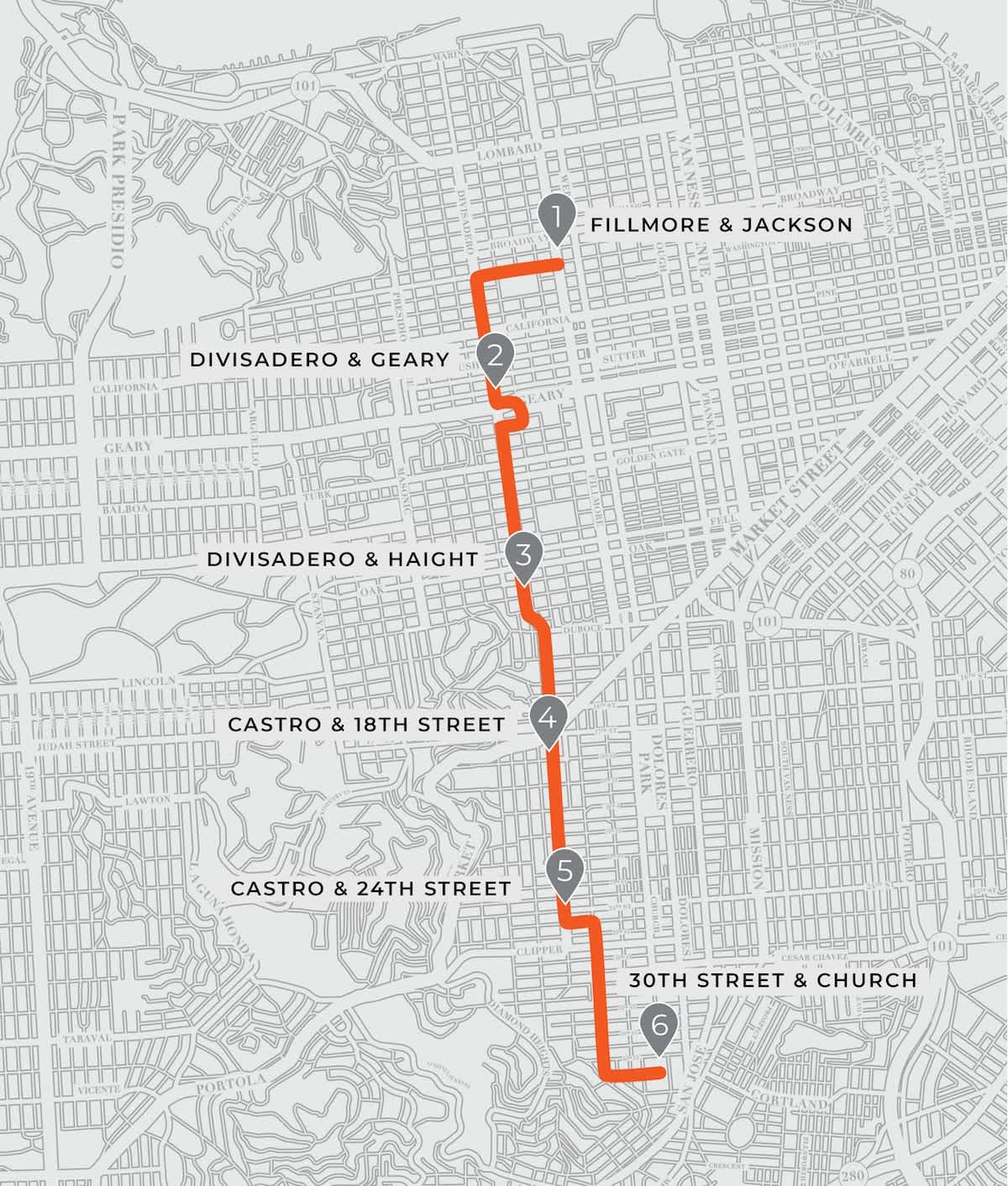
This line runs through the northern and central spine of the city, serving the Marina, Cow Hollow, Pacific Heights, Lower Pacific Heights, NOPA, Corona Heights, Eureka Valley / the Castro, and Noe Valley. The corridor combines some of the city's most architecturally desirable Victorian and Edwardian housing stock with the dense walkability of the Castro Street commercial spine and the Divisadero corridor. It is the most varied of the three routes by both price point and product type, running from Marina-style flats and single-family Edwardians in the north to Victorian houses in the central neighborhoods.
Find homes for sale by neighborhood on the Divisadero / Castro route






Route 2: The Van Ness & Mission line
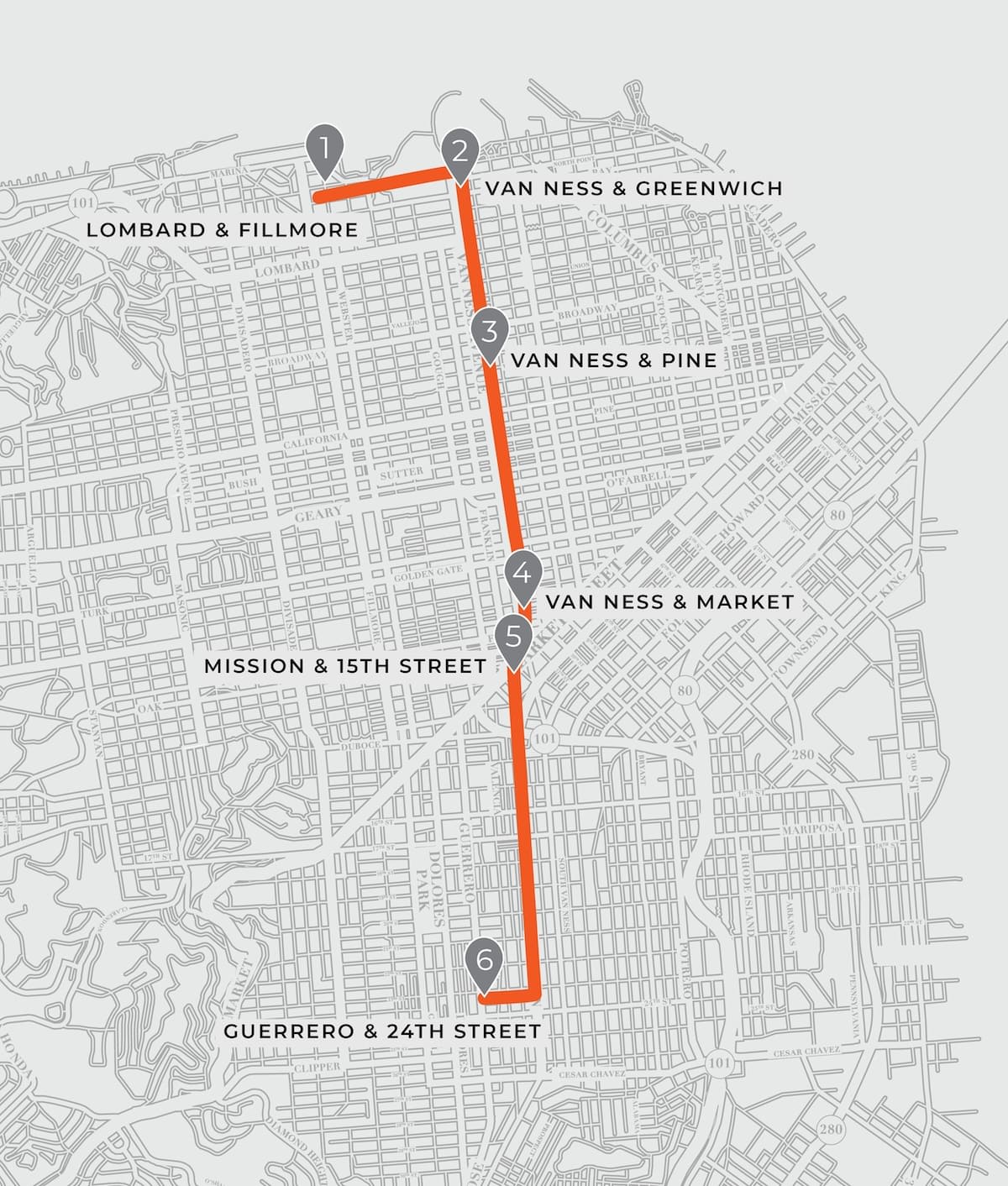
This line moves through the geographic center of the city, picking up in Russian Hill, descending through Van Ness, threading the Civic Center and Hayes Valley areas, and continuing south along Mission Street through the Mission District, Bernal Heights, the Excelsior, and Mission Terrace. It is the longest of the three SF lines and serves the broadest range of price points, from the high-priced Russian Hill view condos to the more attainable houses in Mission Terrace and the Excelsior. Buyers who want central San Francisco walkability with a direct commute concentrate on this line.
Find homes for sale by neighborhood on the Van Ness / Mission route






Route 3: The 19th Avenue line (plus Marin)
This line runs the western edge of the city along 19th Avenue / Park Presidio, serving Sea Cliff, the Richmond District (Central and Inner), the Inner Sunset, and Parkside. The Marin extension of the line picks up across the Golden Gate in Mill Valley, San Anselmo, Sausalito, and San Rafael for employees commuting in from Marin County. For SF buyers, this is the route that delivers the most house for the money: larger single-family homes, garages, yards, and an established residential character, with a direct commute to Apple Park that compares favorably to driving from the same neighborhood.
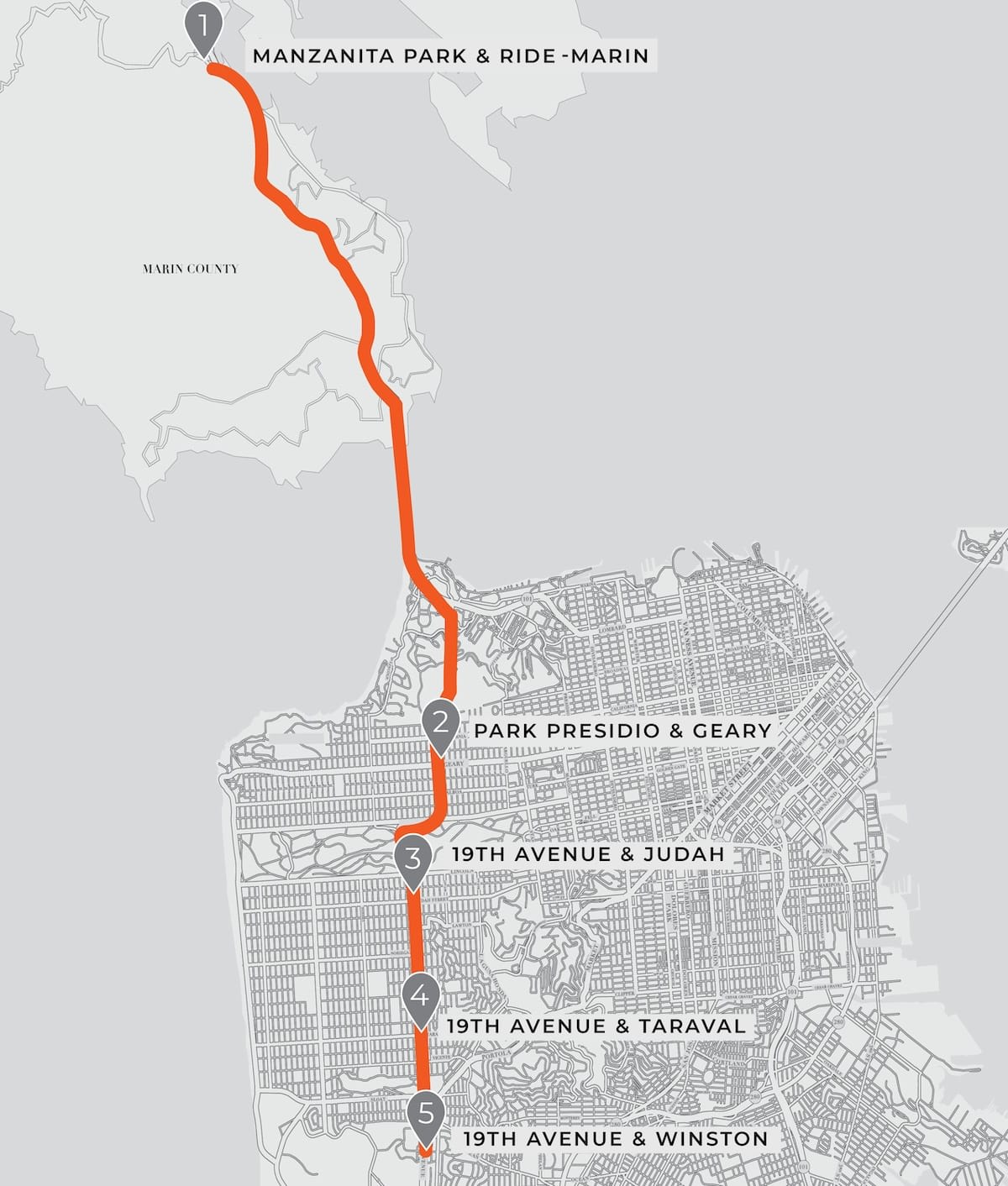
Find homes for sale by neighborhood on the 19th Avenue route






Selling a home near an Apple shuttle stop?
If you own a San Francisco home within walking distance of a shuttle stop and you're starting to think about selling, the shuttle proximity is one of the most marketable features your property has, regardless of where you work. The next buyer is very likely an Apple employee searching specifically for what you have. Pricing the shuttle premium correctly and marketing to that specific buyer pool are the two variables that drive the strongest outcomes. Start with a real number on what your home is worth in this market.
The seller's playbook for a home near an Apple shuttle stop
A San Francisco home sale is a real estate transaction. A sale of a home near an Apple shuttle stop, marketed to the next tech-sector buyer, is a slightly different transaction. The seller doesn't need to work at Apple themselves; most don't. What matters is that the property sits inside a walk radius that Apple employees are actively searching. Four parts of the playbook tend to matter most.
1. Price the shuttle premium correctly, not generously
A home four blocks from a shuttle stop and a home one block from a shuttle stop are not the same product, even when the square footage matches. The right pricing strategy treats walkable-stop proximity as a discrete, line-item amenity, not a vague halo. When a property sits inside the genuine walk radius (five to eight minutes flat, dry), the comparable sales pool narrows, and the right comps are the other shuttle-stop sales in the same corridor, not the broader neighborhood average. When the property is outside that radius, leading with the shuttle stop in marketing creates buyer disappointment at the open house. The honest read of the lot drives both the price and the marketing.
2. Market to the next Apple buyer, not the average buyer
The next likely buyer of a shuttle-stop home is another tech-sector commuter. That changes the marketing mix. Photography should highlight working-from-home space, fiber-ready connectivity, and the realistic morning routine: front door, coffee, walk to the stop. The listing description should name the specific corridor, the realistic walk time, and the surrounding amenities the next commuter will care about. Open houses should be timed for commuter-friendly windows. None of this is rocket science; most listings just don't do it.
3. Time the sale around your own calendar, not the market's
The right time to list is rarely "as soon as you can." It's usually the moment that aligns the proceeds with the next move, whatever that move is, downsize, upgrade, relocation, retirement, life change. That timing question deserves a conversation before you fix the price or pick a launch date. If you happen to work in tech yourself, additional considerations may apply: RSU vest cliffs, stock-sale tax-year windows, or a transition to a different employer can all shape the calendar. None of that is financial or tax advice. It is the working observation that the best outcomes come from selling around a personal calendar, not the market's. Loop in your CPA and financial advisor; loop me in for the real estate side.
4. Decide on your next move before you list
The single most common pairing for sellers near an Apple shuttle stop is "sell here, buy somewhere else." That somewhere is usually one of three: an SF move within the city, a peninsula relocation (Cupertino, Sunnyvale, Mountain View, Los Altos, Palo Alto, all of which behave differently than San Francisco), or an out-of-state move. The timing between your sale and your next purchase is one of the highest-leverage decisions in the entire transaction. List too early and you carry your SF proceeds while the next market moves against you. List too late and you face contingency pressure on the buy side. We map this out before we list, regardless of where the next move is.
Alternatives to the Apple shuttle
The shuttle is the most popular way to commute from a San Francisco home to Apple Park, but it is not the only one. For Apple employees evaluating where to buy, it's worth understanding the backup options. Most SF residents who commute to Apple use a combination of the following.
Caltrain plus internal campus shuttle
Caltrain from the 4th & King station to Sunnyvale or Mountain View, paired with Apple's internal campus shuttle from the station to Apple Park. This combination is most useful for residents living near the Caltrain corridor or those who want a more flexible schedule than the SF coach line offers. The new electrified Caltrain service has improved travel times meaningfully versus the old diesel timetable.
Carpool and rideshare
Carpool apps and informal carpool groups remain a common backup for Apple-bound commuters, especially for employees with non-standard hours. Highway 280 carries HOV-eligible carpools and is generally the fastest peninsula corridor outside of peak rush windows.
Public transit (BART plus VTA)
BART to Millbrae or to a Caltrain transfer, then VTA Light Rail, can get you to Apple Park without a car. This option is real but slow; it's most useful as an occasional backup rather than a daily commute. Most SF residents who try it for a week return to the shuttle or to driving.
Driving
Driving from SF to Cupertino on 280 takes 45 to 75 minutes each way depending on the hour. Parking at Apple Park is available, but most residents who can take the shuttle do, because the productive-Wi-Fi time changes the math even when the door-to-door minute count is similar.
If you're an SF buyer comparing neighborhoods specifically for the commute, the shuttle stop is usually the deciding factor. If you're an SF seller, the same logic applies to the buyer pool you're marketing to. Most evaluating commuters end up choosing the home that's closer to the stop, even when the alternative is otherwise comparable.
Also commuting on a Google shuttle? Many of the same dynamics apply to the Google network. Read the companion guide: Google Shuttle Stops in San Francisco.
"Oliver was instrumental in getting our property sold in an unpredictable and erratic market. Oliver took the reins in getting the property ready for sale, and demonstrated incredible patience through what turned out to be a longer process than anticipated. We wouldn't hesitate to work with Oliver again."
Matt L. • Lower Pacific Heights • San Francisco

Oliver has been representing buyers and sellers in San Francisco and Marin for over twenty-three years. A meaningful share of his work has been on the peninsula commute corridors: pricing the shuttle premium accurately on a Pacific Heights flat, marketing a Noe Valley single-family home to the next Apple-bound buyer, helping a longtime SF owner near a shuttle stop time the sale to today's tech-sector buyer pool. If you own a home near an Apple shuttle stop, whether or not you work at Apple yourself, the 15-minute call is the right first step. Bring your timing question and your next-move question, if you have one. Oliver brings the local-market read and the marketing playbook for the specific buyer pool your home will attract.
Frequently asked questions
Where exactly are the Apple shuttle stops in San Francisco?
Which San Francisco neighborhoods are best for Apple employees?
Do homes near an Apple shuttle stop sell for more?
How long is the Apple shuttle commute from San Francisco to Cupertino?
I own a home near a shuttle stop. What's it worth?
Can non-Apple employees ride the Apple shuttle?
Does the shuttle premium depend on me being an Apple employee?
Are there other tech-shuttle networks in San Francisco?
Is it worth buying further from a stop to get more house?
How do I time my SF sale against my next move?
Ready to find out what your SF home is worth?
Whether you own a home near a shuttle stop and are weighing a sale, you're an Apple employee comparing neighborhoods for a buy, or you're a tech-sector buyer reading the corridor pricing, the right starting point is a real read of the current market for your specific block. Get a free home valuation, or book a 15-minute call to talk through the timing.