Eureka Valley
Eureka Valley rewards careful execution more than almost any other San Francisco neighborhood. In both the condo segment off Castro and the Victorian flats around Liberty Hill, the difference between a competent sale and a great one can run into hundreds of thousands of dollars when prep, pricing, and marketing are dialed in for the specific buyer pool. When I listed 39 Hancock Street, it sold 22% over list in six days, which is what that looks like in practice.
Eureka Valley rewards careful execution more than almost any central San Francisco neighborhood, because Castro condos, Liberty Hill Victorians, TICs, and Eureka Heights view houses all trade in one dataset, and the gap between a competent sale and a great one runs into the hundreds of thousands.
Recent neighborhood-wide closings, SFAR MLS District 5. The spread of single-family Victorians, condos, and TICs pulls the range wide; your typology, block, and condition will price differently.
39 Hancock Street, a two-bedroom condo Oliver Burgelman listed and sold, drew multiple offers and closed at $1,831,200 in six days, about 22% over its $1,495,000 list.
Why selling in Eureka Valley is different
Eureka Valley doesn't price like the surrounding central neighborhoods, and the reason is the typology mix. Noe Valley is dominated by single-family Victorians on flatter blocks. The Sunset and Richmond are dominated by single-family houses, period. Eureka Valley is the central San Francisco neighborhood where condos, TICs, Edwardian flats, and Liberty Hill Victorian single-family homes all trade meaningfully in the same closed-sale dataset. That's what produces the wide $560K to $3.2M+ range and the per-square-foot variance that's hard to read from a comp report alone.
The opportunity for sellers sits inside that variance. Eureka Valley's condo and TIC markets reward three things at once with unusual consistency: walking-distance positioning to the Castro corridor or Mission Dolores Park, move-in-ready condition, and a list price designed to invite a competitive room rather than to anchor a number. 39 Hancock Street closed at $1,831,200, 22% over the $1,495,000 list, in six days with multiple offers, and set the highest per-square-foot mark for a comparable two-bedroom Eureka Valley condo at the time. The same pattern shows up on the Victorian flats around Liberty Hill, where condition and presentation can separate two architecturally similar houses on the same block by several hundred thousand dollars at sale.
All of this means: pricing a Eureka Valley home well isn't about averaging the neighborhood and applying a correction, it's about reading which typology your property belongs to (condo, TIC, Edwardian flat, Liberty Hill Victorian, Heights view house) and pricing the strategy to match the way buyers in that segment actually move. The difference between a Eureka Valley listing that closes at the segment baseline and one that goes 15, 20, or 25 percent over (as 39 Hancock did) is rarely the home itself. It's the strategy.
A Eureka Valley seller case study: 39 Hancock Street, Liberty Hill
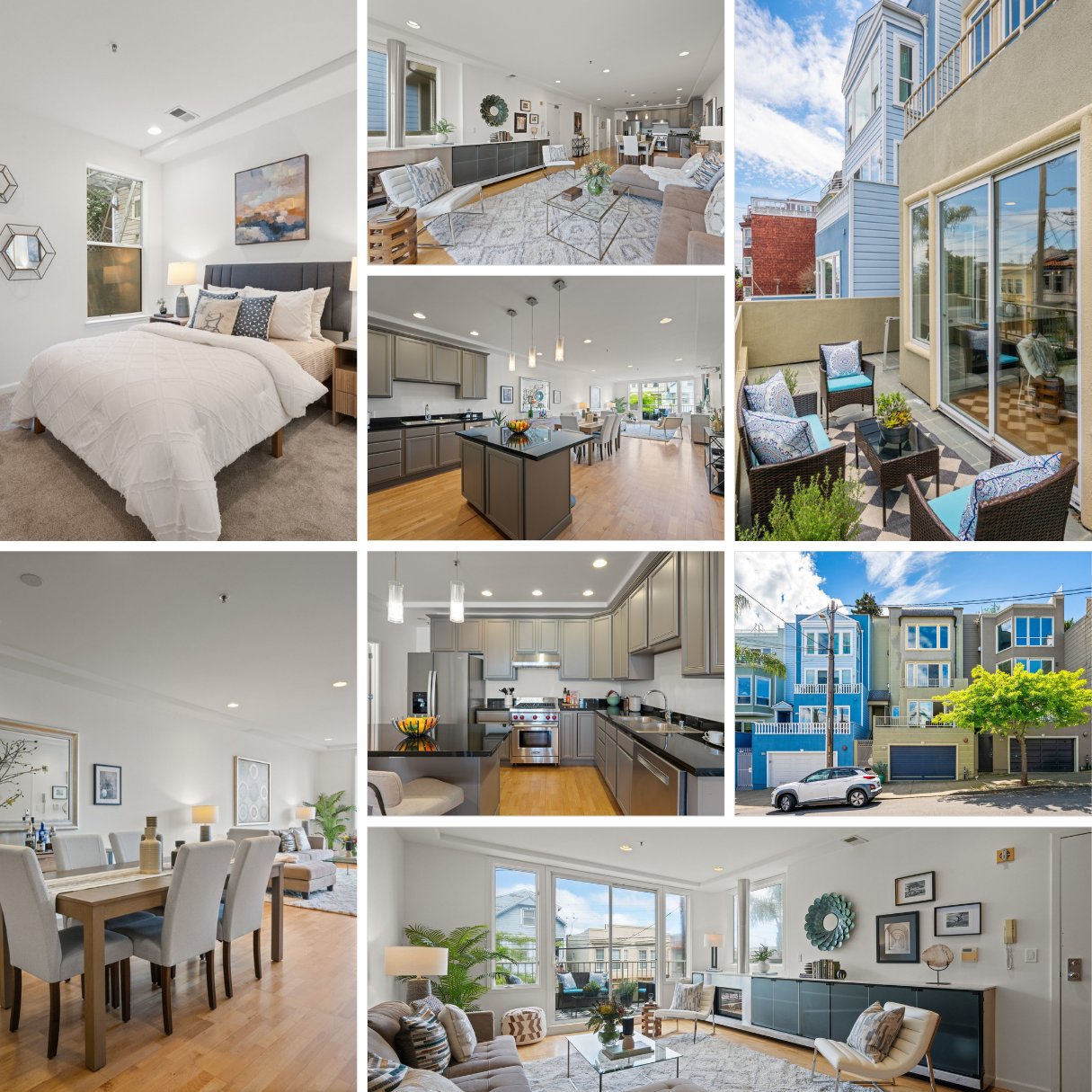
39 Hancock Street is a two-bedroom, two-bath, 1,228-square-foot condo on the Liberty Hill side of Eureka Valley, a short walk from Mission Dolores Park, the Castro corridor, and the Valencia Street restaurant row. I listed it at $1,495,000; it went into contract in six days with multiple competing offers and closed at $1,831,200. That's $336,200 over list, or 22% above asking, at approximately $1,491 per square foot, the highest comparable mark for a two-bedroom Eureka Valley condo at the time of sale.
What 39 Hancock illustrates about selling in Eureka Valley isn't a one-off. The neighborhood's condo market consistently rewards three things at once: walking-distance positioning to the Castro corridor or Mission Dolores Park, move-in-ready condition, and a list price designed to invite a competitive room rather than to anchor a number. When all three align on the same property, the neighborhood's compressed buyer demand handles the rest. The same pricing logic, segment baseline plus a deliberate read of what's actually rare about your specific property, applies to Liberty Hill Victorian flats, Edwardian condos along Castro, and view-equipped houses climbing into Eureka Heights.
How your Eureka Valley home prices
Most Eureka Valley homes fall into one of five typologies, and each one prices on its own logic:
- Liberty Hill Victorian single-family homes (1870s to 1880s). Italianate, Stick-Eastlake, and Queen Anne houses in the protected historic district. Larger footprints, more turnkey, longer-term ownership, tighter inventory. The premium end of the neighborhood. Streets like Liberty, Hancock, Hill, 20th, 21st, Sanchez.
- Two and three-bedroom condos near Castro and Dolores Park. The deepest and most competitive segment. Walking-distance positioning, move-in-ready condition, and disciplined list pricing produce results like 39 Hancock's 22% over list. Active across the central blocks of the neighborhood.
- Edwardian and Victorian flats held as TICs. Typically trade at a 10 to 20 percent discount to comparable condos, with the gap reflecting financing and ownership-structure differences. Common across the central residential blocks. Pricing requires careful comp selection (TIC comps, not condo comps).
- Eureka Heights view houses. Hillside Victorian, Edwardian, and mid-century houses on the slopes climbing toward Corona Heights and Twin Peaks. Downtown, bay, and west-side view exposures drive the premium. Renovated view houses can rival Liberty Hill at the top end. Streets like Eureka, States, Caselli, Yukon, Romain.
- Studios and one-bedroom condos in older buildings. The lower end of the closed range, typically $560K to $900K. Building age, HOA structure, elevator status, and natural-light exposure are the strongest pricing variables.
Where your home fits in this five-typology map sets a pricing baseline. The sub-area layer then adjusts it up or down. As a rule of thumb: studios and one-bedroom condos in older buildings trade $560K to $900K. Two-bedroom condos near the Castro or Dolores Park run $1.2M to $1.85M, with the strongest results clearing $1,400+ per square foot. TICs sit roughly 10 to 20 percent below comparable condos. Renovated Liberty Hill Victorians routinely list between $2.5M and $3.5M+ depending on size and condition. Renovated Eureka Heights view houses can match the Liberty Hill top. The single best move when you're weighing a sale is a current valuation on your specific address. Request a free home valuation.
Sub-area pricing
Eureka Valley reads as a single neighborhood from above, but the three sub-areas trade on meaningfully different fundamentals. Here's what's pulling premiums in each one.
The Castro
The commercial and cultural heart of the neighborhood, centered on Castro Street between Market and 19th. The Castro Theater, Harvey Milk Plaza, Pink Triangle Park, and the GLBT Historical Society Museum sit within a few blocks of each other, and the corridor draws buyers from across the country and internationally. Housing is mostly condos and converted Victorian flats above and behind the commercial frontage. Streets like Castro, 18th, 19th, Collingwood, Hartford, and Noe. The most walkable section of the neighborhood, with the trade-off being density, evening foot traffic, and Pride / Castro Street Fair weekend disruption. Disciplined list pricing on well-prepared condos in this section consistently produces multi-offer outcomes.
Liberty Hill Historic District
The blocks roughly bounded by 20th, Castro, 22nd, and Sanchez, where the highest concentration of intact 1870s and 1880s Victorians sits. Liberty Street is the namesake and one of the most architecturally distinguished blocks in the city. Houses tend to be larger, more turnkey, and held longer than the neighborhood average. The premium end of Eureka Valley by absolute price, with the historic-district designation adding both protection and resale stability. Streets like Liberty, Hill, Hancock, 20th, 21st, Sanchez. 39 Hancock Street, the recent case study, sits in this sub-area.
Eureka Heights
The slopes climbing west from Castro toward Corona Heights Park and Twin Peaks. Architecture mixes Victorian, Edwardian, and mid-century, often with rear yards and roof decks that pick up downtown and bay views. The streets get steep quickly, which sorts the buyer pool but also creates the view premium. Streets like Eureka, States, Caselli, Yukon, Romain, plus Upper Market frontage. View exposure, off-street parking, and renovation history are the three strongest pricing variables here. Renovated view houses can clear Liberty Hill numbers.
What's pulling premiums in Eureka Valley right now
Three categories that consistently produce above-baseline sale outcomes, two that tend to need sharper pricing or prep.
- Walking distance to Mission Dolores Park
- Walking distance to the Castro corridor
- Move-in-ready 2BR condos
- Liberty Hill Victorian single-family homes
- Eureka Heights view exposures
- Off-street parking (rare and rewarded)
- Standard 2BR condos one block off Castro
- Edwardian flats in good condition
- Mid-block residential streets
- Renovated systems, no major issues
- Functional floor plans without expansion
- TICs comp'd against condos (use TIC comps)
- Studios and 1BRs in older buildings
- Knob-and-tube wiring, original plumbing
- Heavy evening foot-traffic blocks
- Steep Heights blocks without view
Listing strategy in Eureka Valley
A correct Eureka Valley list price isn't a single number, it's a pricing strategy keyed to your typology. There are roughly four moves available: list under market to manufacture multi-offer pressure, the 39 Hancock play, which works for well-prepared two-bedroom condos within walking distance of Castro or Dolores Park where a sharp list price draws the compressed buyer pool into a competitive room; list at market and let bidding produce the outcome, which works for renovated Liberty Hill Victorians and Eureka Heights view houses where the demand depth supports it; list at the high end of expected with willingness to negotiate, which works for standard condos and Edwardian flats in good condition where the segment baseline is the realistic ceiling; and list at a premium with patience, which can work for genuinely unique heritage Victorians in the Liberty Hill blocks where comp scarcity supports a longer marketing window. The right move depends on your typology, your sub-area, what's actually rare about your property, and the current pulse of inventory.
Prep is the other lever, and the ROI math differs by typology. In the two-bedroom condo segment, professional staging, light cosmetic updates, and clean systems pay for themselves multiple times over (the 39 Hancock outcome was prep-driven as much as pricing-driven). On Liberty Hill Victorians, light updates that preserve original detail almost always outperform full remodels, the heritage character is what buyers pay for. Edwardian and Victorian flats benefit from kitchen and bath refreshes plus systems updates (knob-and-tube replacement, original plumbing, single-pane window upgrades). For TIC listings, the marketing conversation includes financing-pathway transparency, which materially affects offer quality. For Eureka Heights view houses, architectural photography and view-emphasis marketing are non-negotiable. I'll walk through all of this with you in the pricing call.
Your Eureka Valley listing agent

I've been a Eureka Valley listing agent for over two decades, working across all three sub-areas: condos and Edwardian flats off the Castro corridor, Liberty Hill Victorian single-family homes, and view houses climbing into Eureka Heights. The condo segment in particular rewards careful execution; my recent listing at 39 Hancock Street closed at $1,831,200, 22% over the $1,495,000 list in six days with multiple offers, and set the highest comparable per-square-foot mark for a two-bedroom Eureka Valley condo at the time of sale. The same pattern holds on the Victorian flats around Liberty Hill, where condition and presentation can separate two architecturally similar homes by hundreds of thousands of dollars at sale. Career track record: 23+ years, $350M+ closed across 300+ transactions, 85+ five-star reviews. If you're considering a Eureka Valley sale, the first step is a current valuation on your specific address.
Frequently asked questions about selling a Eureka Valley home
What is my Eureka Valley home worth?
How long does it take to sell a home in Eureka Valley?
How do you price a Liberty Hill Victorian vs a Castro condo vs a Heights view house?
What does it cost to sell a home in Eureka Valley?
Should I renovate before listing, or sell as-is?
What is the Eureka Valley market doing for sellers right now?
How do you market a Eureka Valley listing?
What's special about the Liberty Hill Historic District and how does it affect pricing?
Should I list in spring, summer, or fall?
Who is the best Eureka Valley real estate agent?
Considering buying in Eureka Valley instead?
Ready to talk about selling your Eureka Valley home?
Eureka Valley rewards execution more than almost any other San Francisco neighborhood. The 39 Hancock Street result I produced for the seller, 22% over list in six days, is what's possible when prep, pricing, and marketing line up with how Eureka Valley buyers actually move. I'll walk your specific block, look at the recent comparable sales (and the ones that didn't close), and give you a candid read on positioning. If you're considering a sale in the Castro, Liberty Hill, or Eureka Heights, the first step is a current valuation on your specific address, followed by a 15-minute pricing call to walk through typology and sub-area pricing for your home. No commitment to list, just an honest read on where your home sits in today's Eureka Valley market.