Corona Heights
Corona Heights is the most view-sensitive market in central San Francisco. The neighborhood's per-square-foot range runs from $1,123 average to $1,847 maximum, a 60%+ intra-neighborhood spread that essentially is the view premium itself. Two homes on adjacent blocks can list a million dollars apart based on what they look out at, and pricing the view correctly is the entire seller conversation here.
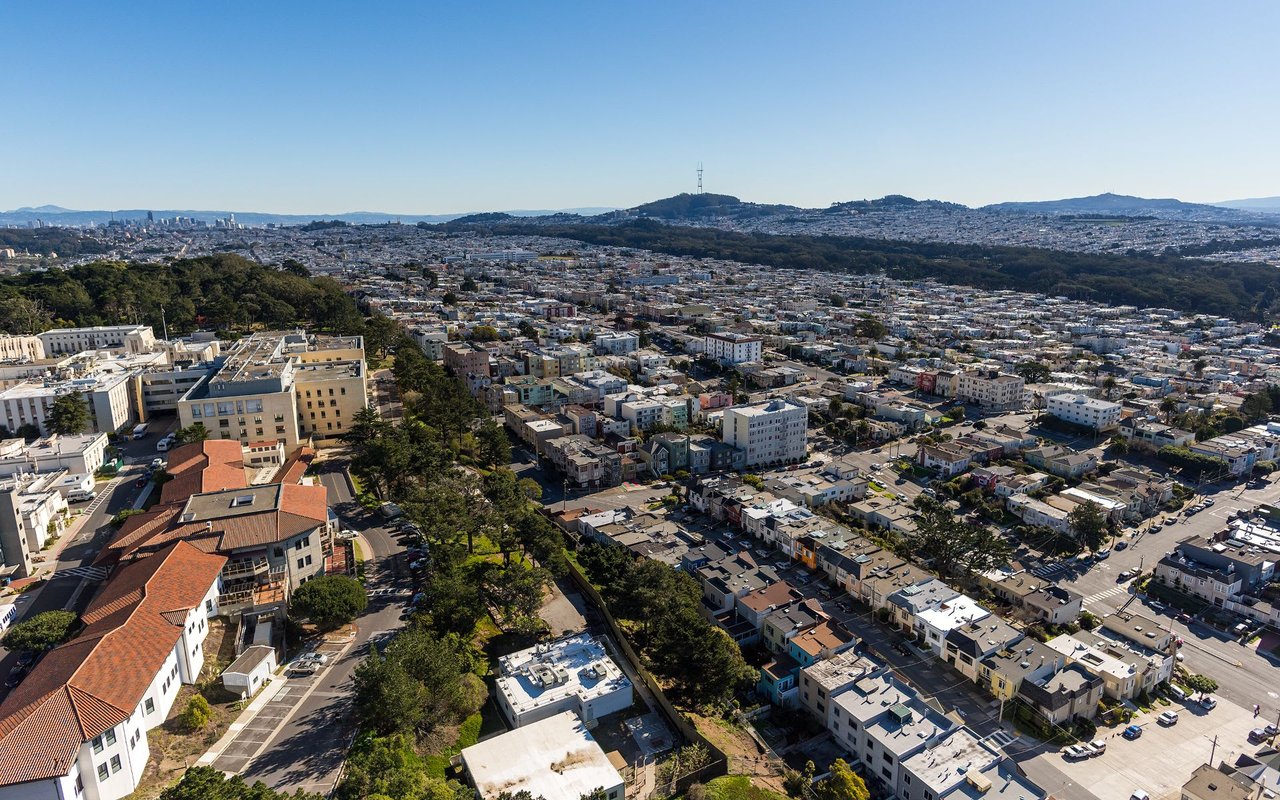
Selling a home in Corona Heights means pricing one of the most supply-constrained and view-sensitive hilltop markets in central San Francisco. The neighborhood is organized around the 16-acre Corona Heights Park and the exposed red chert peak, bounded roughly by 16th Street, Castro Street, Roosevelt Way and Buena Vista Terrace, and the slopes leading toward Cole Valley. Three distinct sub-areas trade here: the view spine (Roosevelt Way and Museum Way, where mid-century modern and custom modernist houses are sited specifically to capture downtown, Bay Bridge, and Golden Gate sightlines), the park edge (States Street, upper 15th and 16th, with park-adjacent lots that don't exist elsewhere in the central city), and the lower slopes toward Castro (Victorian and Edwardian houses with central-SF walkability and minimal view premium). Recent sale averages: $2.20M sold, $1,123 per square foot, 26 days on market, with the top of the per-square-foot range reaching $1,847 on view-premium properties and the top of the absolute market around $4.3M. ZIP 94114. Corona Heights listing agent: Oliver Burgelman, Broker Associate at Vanguard Properties (DRE #01388135), 23+ years in San Francisco real estate, $350M+ closed across 300+ transactions, 85+ five-star reviews. Contact: 415.244.5846.
Why selling in Corona Heights is different
Corona Heights doesn't price like any other central San Francisco neighborhood, and the reason is that the single most important variable in pricing here is not size, condition, or architectural era. It's what the property looks out at. Two houses with similar square footage on adjacent blocks can sell a million dollars apart, and the gap is almost entirely about elevation, orientation, and clear-line sightlines. Eureka Valley houses price on heritage and configuration. Noe Valley houses price on architectural era and walkability. Corona Heights houses price on the view itself, treated as a distinct asset layered on top of the structure.
The recent data makes this visible. Closings averaged $1,123 per square foot, while the per-square-foot maximum hit $1,847. That 60%+ intra-neighborhood spread is essentially the view premium, priced into the lot. A west-facing Edwardian on a lower slope of Corona Heights trades in line with comparable houses in Eureka Valley or Noe Valley. The same square footage on a Roosevelt Way lot with a 40-mile panorama over downtown and the Bay Bridge trades like almost nothing else in the central city. The opportunity for sellers, then, is to price the two products separately: the house and the view. Sellers who fold the view into a generic neighborhood-average comp leave money on the table. Sellers who price the view as a distinct asset with its own scarce comp set capture what the lot is actually worth.
All of this means: pricing a Corona Heights home well isn't about the neighborhood average. It's about reading what your specific lot looks out at, how much of the view the floor plan actually uses, and where in the small but durable view-premium buyer pool the right reader sits. Lots without sightlines clear in line with their flatter neighbors. Lots with full panoramas clear at a premium that reflects the scarcity of those specific lots, not the broader neighborhood market. The difference between a Corona Heights listing priced as a generic central-SF house and one priced as the view-premium asset it actually is can be a million dollars or more on the same square footage.
Corona Heights market snapshot
How your Corona Heights home prices
Most Corona Heights homes fall into one of five configurations, and each one prices on its own logic. The view variable runs through all of them.
- View-spine mid-century and custom modernist houses (Roosevelt Way, Museum Way). The premium product. Sited specifically for the downtown, Bay Bridge, and Golden Gate sightlines, with floor plans, decks, and window walls designed to use the view. The per-square-foot top of the market lives here, $1,847 on recent comps, with absolute prices reaching $4M+ for renovated or architecturally significant examples.
- Park-adjacent properties (States Street, upper 15th and 16th). The rarest configuration. Larger lots than the central-SF average, backing onto Corona Heights Park, with the Randall Museum and the summit trail at the doorstep. View exposure varies house by house, but the park-adjacency premium is durable across cycles. These don't come to market often.
- View-equipped lower-slope houses. Properties on the lower slopes that catch partial sightlines despite the elevation. Often Victorians or Edwardians with rear-deck or upper-floor exposures that pick up the panorama. Price between the view spine and the non-view lower-slope segment; the sightline depth and the floor plan's use of it are the variables.
- Lower-slope Victorians and Edwardians without major sightlines. The non-view-premium segment. Houses on the blocks closest to Castro Street that share the Corona Heights address but not the view. Trade in line with comparable Eureka Valley or upper-Castro houses, $1.8M to $2.5M for renovated examples.
- Hillside houses with integral garages. Three- and four-level houses cut into the slope, with garage levels integrated into the hillside footprint. Common across the view streets and the park edge. The integral-garage solution is rare and rewarded; on-street parking is genuinely difficult on Roosevelt Way and the upper blocks.
Where your home fits in this five-configuration map sets a pricing baseline, and the view layer then adjusts it sharply. As a rule of thumb: lower-slope Victorians and Edwardians without major sightlines trade $1.8M to $2.5M. View-equipped lower-slope houses run $2.2M to $3M. Park-adjacent properties typically clear $2.8M+, with the rarest large-lot examples reaching higher. View-spine moderns on Roosevelt Way and Museum Way regularly clear $1,500 per square foot and reach into the $1,800+ per square foot range, with absolute prices reaching $4M+ for renovated or architecturally significant houses. The single best move when you're weighing a sale is a current valuation on your specific address. Request a free home valuation.
Sub-area pricing
The neighborhood is small enough that "sub-area" really describes elevation and exposure more than block boundaries, but three distinct bands trade on meaningfully different fundamentals. Here's what's pulling premiums in each one.
The view spine: Roosevelt Way and Museum Way
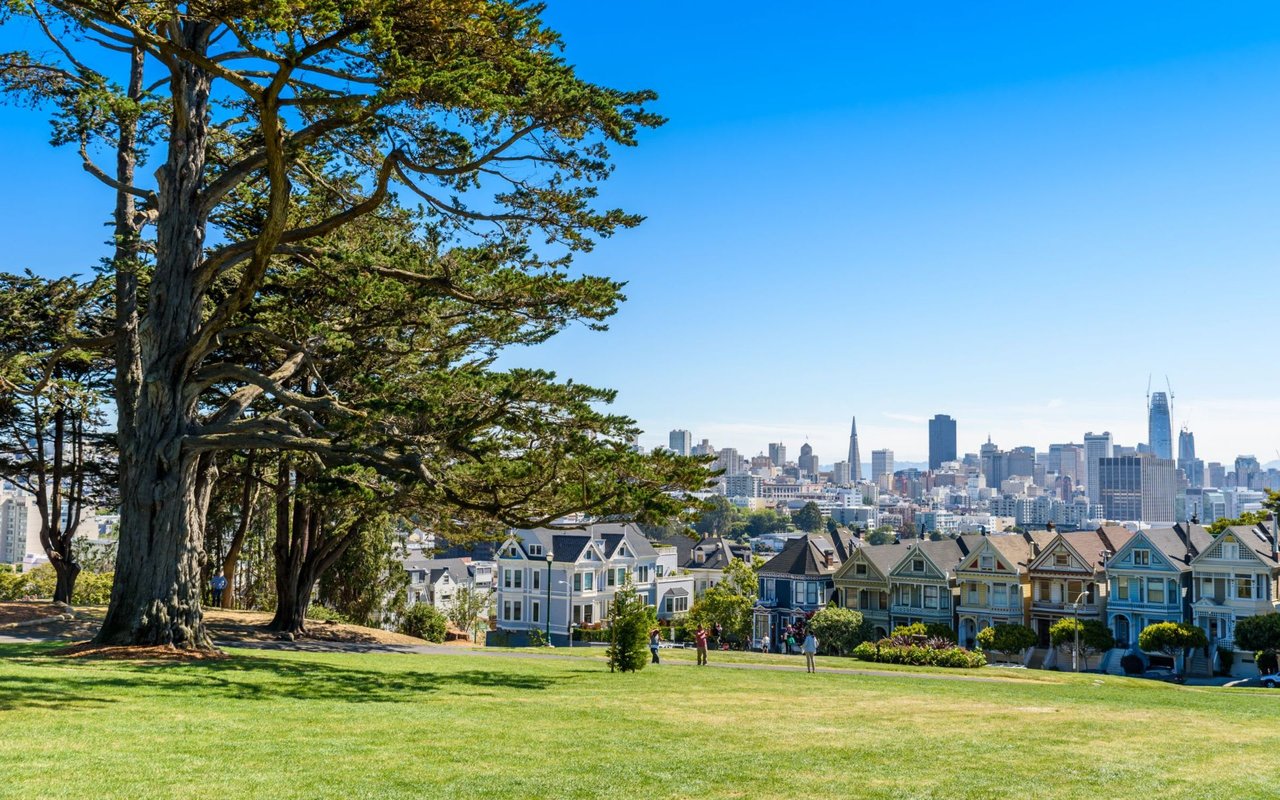
The premium-pulling sub-area. Houses climbing toward the park along Roosevelt Way and Museum Way are the view-premium properties that define the Corona Heights pricing pattern. Sightlines reach east over downtown and the Bay Bridge, north toward the Golden Gate, and on clear days into the East Bay hills. This is where the mid-century moderns and custom modernist builds concentrate, and where the per-square-foot top of the market lives. Pricing strategy here is to treat the view as a distinct asset with its own scarce comp set; the right list price for a Roosevelt Way view house is not the neighborhood average, it's the view-premium average. Steep streets and tight parking are the trade-offs buyers learn to weigh against the panorama itself, and integral-garage solutions are explicitly rewarded.
The park edge
Properties on States Street, the upper blocks of 15th and 16th, and the streets directly bordering Corona Heights Park sit at the highest-amenity intersection in the neighborhood. The park is a daily walk; the Randall Museum is two minutes from the door; the unpaved trail to the summit starts at the edge. View exposure varies house by house here; some park-edge lots have full panoramas, some look directly into the hillside. The premium follows the sightline more than the address. Park-adjacency is itself a durable premium, and the rarest large-lot park-edge properties occupy their own pricing tier when they come to market.
The lower slopes toward Castro Street
The lower-slope blocks closer to Castro Street and the southern boundary with Eureka Valley are the most walkable part of the neighborhood and the most affordable. Architecture skews Victorian and Edwardian, the grid feels more like the Castro than like the hill above, and the walk to coffee, groceries, and the F-Market line is the shortest. Buyers anchoring here are choosing central-SF walkability without paying for a view the property doesn't really have. Pricing tracks comparable Eureka Valley and upper-Castro houses more than the Corona Heights view-spine premium; the seller move is to price honestly to the lower-slope segment and let the location premium do its work.
What's pulling premiums in Corona Heights right now
Three categories that consistently produce above-baseline sale outcomes, two that tend to need sharper pricing or prep.
- Full eastern panoramic exposure
- Roosevelt Way and Museum Way view lots
- Park-adjacent properties (rare)
- Mid-century modern architecture
- Floor plans designed for the view
- Integral-garage solutions on steep blocks
- Lower-slope Victorians without major view
- View-equipped houses with partial sightlines
- Standard renovated hillside houses
- Walking-distance-to-Castro position
- Functional 3 to 4 level floor plans
- View-spine lots with blocked sightlines
- Steep blocks with no parking solution
- Floor plans oriented away from the view
- Decks & windows not designed for the panorama
- Heavy fog-pocket exposure
Listing strategy in Corona Heights
A correct Corona Heights list price isn't a single number, it's a pricing strategy keyed to your sightline. There are roughly four moves available: list at a premium with patience, which works for genuine view-spine properties with full panoramic exposure where comp scarcity is so tight that the right reader will pay the right number, and a longer marketing window is reasonable; list under market to compress competition, which works for view-equipped houses with strong sightlines where a sharp list price draws the view-premium buyer pool into a multi-offer room; list at market, which works for park-adjacent properties and well-prepared mid-segment houses where demand depth supports honest pricing; and list at the high end of the lower-slope segment with willingness to negotiate, which works for non-view Victorians and Edwardians on the lower blocks where the comp set is the Eureka Valley / upper-Castro market, not the Roosevelt Way view-premium market. The right move depends on what your lot actually looks out at, how the floor plan uses the view, and the current pulse of view-premium inventory in central San Francisco.
Prep is the other lever, and the ROI math is heavily skewed toward view-emphasis marketing. On view-spine and view-equipped properties, professional architectural photography that captures the panorama in the right light (twilight shots especially), drone footage where possible, and marketing copy that names the specific sightline (downtown / Bay Bridge / Golden Gate, with the orientation called out) consistently pay for themselves multiple times over. On park-adjacent properties, photography that captures the park-edge integration is the equivalent investment. On mid-century moderns and custom modernist houses, architectural photography and provenance research (architect attribution where available) add real value. On lower-slope Victorians and Edwardians without major sightlines, the prep playbook is the standard central-SF one: light updates that preserve original detail, kitchen and bath refreshes, systems updates. I'll walk through all of this with you in the pricing call.
Your Corona Heights listing agent

I've been a Corona Heights listing agent for over two decades, and the work here is about reading the view-premium delta correctly. A property on Roosevelt Way with full eastern exposure doesn't price like one a block away looking into the hillside, even when the two are within a hundred square feet of each other. The variables are orientation, sightline depth, and whether the floor plan was designed to make the view part of the living. I know which Roosevelt Way lots wake up in morning sun, which Museum Way blocks photograph best in the late afternoon, where on the park edge the lots are large enough to matter, and where on the lower slopes a seller should price to the Eureka Valley comp set rather than the Corona Heights view-spine set. Career track record: 23+ years, $350M+ closed across 300+ transactions, 85+ five-star reviews. If you're considering a Corona Heights sale, the first step is a current valuation on your specific address; the view variable is too sensitive to estimate from neighborhood averages alone.
Frequently asked questions about selling a Corona Heights home
What is my Corona Heights home worth?
How long does it take to sell a home in Corona Heights?
Why does the per-square-foot vary so much within Corona Heights?
How do you price a view-spine modern vs a lower-slope Victorian?
What does it cost to sell a home in Corona Heights?
Should I renovate before listing, or sell as-is?
What is the Corona Heights market doing for sellers right now?
How do you market a Corona Heights view-premium listing?
How does Corona Heights compare to Twin Peaks for sellers?
Should I list in spring, summer, or fall?
Who is the best Corona Heights real estate agent?
Considering buying in Corona Heights instead?
Ready to talk about selling your Corona Heights home?
Corona Heights is one of San Francisco’s most distinctive neighborhoods, where views, location, and architectural character can have a major impact on value. Homes with sweeping city, bay, or downtown views often command a premium, but maximizing that value requires the right pricing strategy, photography, and marketing approach. For homes without significant views, buyer demand is often driven by walkability, historic architecture, and proximity to Eureka Valley, the Castro, and surrounding neighborhoods. The first step is understanding how your specific property fits into today’s market. I’ll provide a current valuation of your home and walk you through the factors influencing its value, including recent sales, buyer demand, and any view premium that may apply. No pressure and no obligation to list—just a straightforward assessment of where your home stands in today’s Corona Heights market.