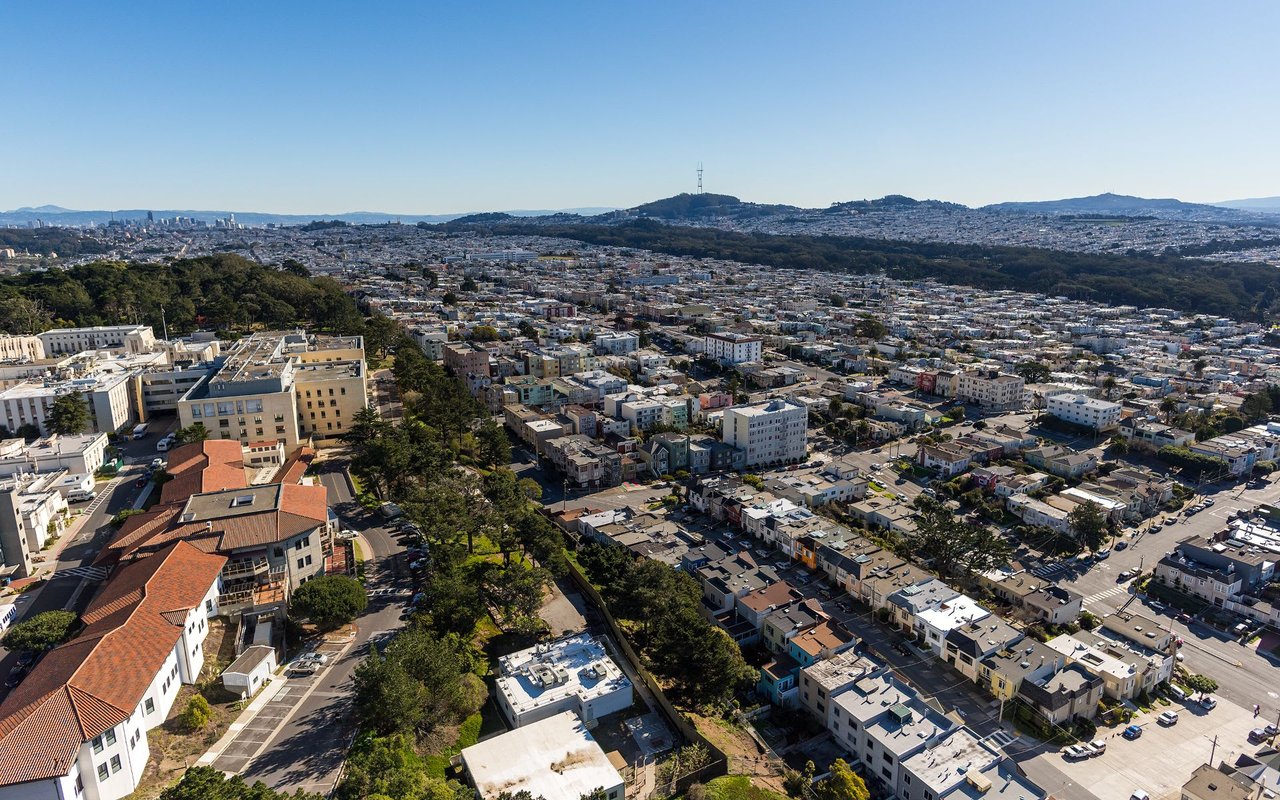
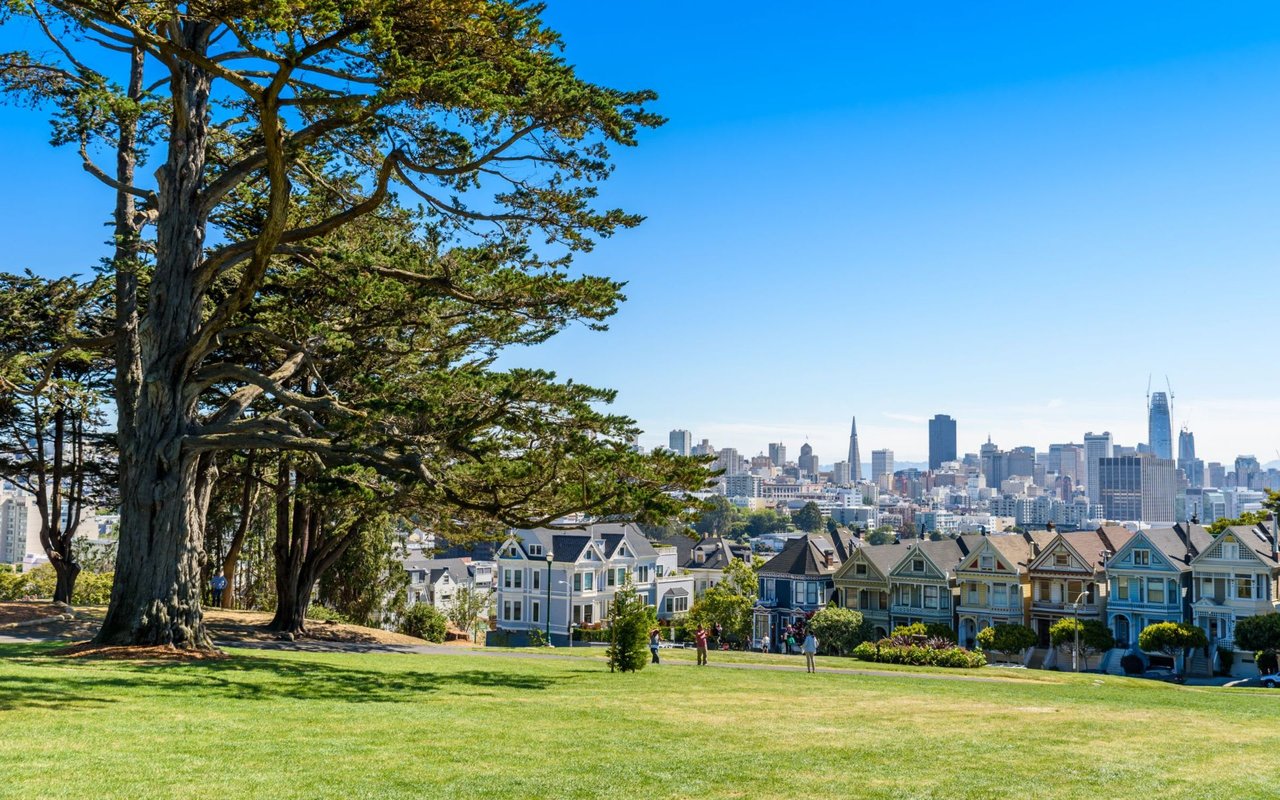
West Portal is the west side's village: detached 1920s and '30s homes with driveways, garages, and deep rear yards, a few blocks from a real main street and a direct Metro ride downtown, in a market that moves faster than the residence parks just uphill.
Directional estimates for West Portal (ZIP 94127), San Francisco (Redfin/Zillow via SFAR MLS). The median sale runs in the high-$1 million range, roughly $1.8 million and trending up, at about $1,250 per square foot, and well-prepared homes commonly go into contract in about two weeks. Two- and three-bedroom homes generally trade between $1.4 million and $2.5 million, with larger and fully renovated houses reaching $2.8 million to $3.5 million. This is a small, low-volume neighborhood and the public sources disagree on the median, which is why these are bands rather than a single figure. Your block, condition, light, and yard depth will price very differently.
What defines West Portal
West Portal is the west side's village. Where neighboring St. Francis Wood and Forest Hill were planned as residence parks, with curving streets, no commerce, and deliberate seclusion, West Portal grew up around West Portal Avenue, a genuine main street of independent shops, cafes, restaurants, a library, and a movie house, and around the West Portal Muni Metro station, where the K, L, and M lines converge and enter the Twin Peaks Tunnel for a direct ride downtown. That combination is rare in San Francisco and it is the neighborhood's whole identity: buyers get detached homes with driveways, garages, and yards, and they can still walk to dinner and step onto a train.
The homes themselves date mostly to the 1920s and '30s, when the tunnel opened the west side to development. The result is a coherent but varied streetscape, with Marina-style and Mediterranean facades alongside Tudor, Italianate, and the distinctive Rousseau designs, on lots that are noticeably deeper and greener than the Sunset grid to the north. Add Lincoln High, the West Portal Elementary catchment, quick I-280 access to the peninsula, and Mount Davidson and Stern Grove minutes away, and the neighborhood attracts a steady, family-weighted buyer pool that does not depend on any one employer or market cycle.
How West Portal homes price
West Portal is a small market with real internal variation, so a single per-square-foot average will mislead you. Most homes here fall into one of four groups, and each prices against its own comp set:
- Village-adjacent homes – within a few blocks of West Portal Avenue and the Metro station. Walkability is the premium; buyers pay for it, and these homes are the most liquid in the neighborhood. Traffic and parking on the closest blocks cut the other way.
- Classic 1920s–'30s detached homes on the sloped streets – the neighborhood's core inventory. Prices on condition, floor plan, whether the lower level has been legally and well finished, light, and yard depth.
- Upper streets and view homes – properties climbing toward Mount Davidson and the St. Francis Wood and Forest Hill edges, where outlooks, larger lots, and proximity to the residence parks push into the top of the range.
- Renovated and expanded homes – houses taken down to studs or built out into the rear or lower level. These trade at a clear premium, but only when the permit history is clean; unpermitted square footage is the single most common pricing dispute in this neighborhood.
- A legal, permitted, well-executed lower level
- A genuinely usable rear yard
- Light on the south and west sides
- An intact garage and driveway
- Updated foundation, sewer lateral, and electrical
- Unpermitted additions and square footage
- Dated kitchens and baths in an otherwise strong house
- Deferred drainage
- Floor plans that never got opened up
- Traffic and parking pressure on the closest village blocks
- West Portal Avenue shops, cafes, and restaurants
- Muni Metro K, L, and M into the Twin Peaks Tunnel
- Mount Davidson and Stern Grove
- West Portal Elementary and Lincoln High
- I-280 to the peninsula
Selling a home in West Portal
West Portal is one of the better west-side neighborhoods to sell in, precisely because of the village and the train. Demand is broad and steady, since buyers who want a detached home with a yard and a real commute option have few alternatives in San Francisco at this price, and that shows up in the pace, with well-prepared homes commonly under contract in about two weeks.
The work a West Portal listing agent does to earn that outcome is specific. Pre-sale inspections, a clean disclosure package, and resolved permit questions let buyers write non-contingent offers, which is where the price actually gets made. Preparation should target what this market pays for, meaning light, the finished lower level, the yard, and the garage, rather than generic staging. And pricing has to be set against the handful of genuinely comparable homes in the right sub-area, not the neighborhood average, because a village-adjacent flat lot and an upper-street view home are not the same asset even at the same square footage.
Thinking about selling? Start with a free West Portal home valuation, or read the full guide to selling your home in San Francisco and Marin and what it actually costs to sell. You can also see how recent listings were prepared, priced, and sold.
Buying a home in West Portal
West Portal moves faster than the residence parks around it, so buyers need to be ready before the right house appears: pre-approved, clear on sub-area, and prepared to review a disclosure package quickly. Most homes are close to a century old, which makes the inspection reports, foundation and drainage history, sewer lateral, and permit record worth real attention; the lower-level build-outs that add so much usable space here are also where unpermitted work most often turns up. Buyers who want the village walk should be honest about which blocks they will actually accept, since the difference between two blocks from the Metro and six blocks is meaningful in both price and daily life.
Get in touch to set up a search or tour a listing, or browse homes for sale by San Francisco neighborhood.
West Portal and the wider San Francisco market
West Portal anchors a cluster of west-side neighborhoods that trade together and are often shopped against one another: the residence parks of St. Francis Wood and Forest Hill just uphill, Inner Sunset to the north, and Ingleside and the Mount Davidson slopes to the south. West Portal is generally the most liquid of them and the most accessible on price, which makes it the entry point into this part of the city for many buyers, and a useful comparison set for sellers in all of them. For the citywide read and how the neighborhoods compare, see the San Francisco housing market and neighborhood guide. Oliver Burgelman is a San Francisco and Marin broker with 23+ years and $350M+ closed, working buyers and sellers across the city's west-side and central neighborhoods.
Your West Portal listing agent

I've worked the San Francisco and Marin markets for over two decades, with a San Francisco office at 2501 Mission Street, and I represent sellers across West Portal and the surrounding west-side neighborhoods, from village-adjacent homes a block off the Avenue to the view houses climbing toward Mount Davidson. Over 23 years, $350M+ closed, 300+ transactions, 85+ five-star reviews. West Portal rewards preparation: a clean disclosure package, resolved permit questions, and pricing set against the right sub-area comps rather than the neighborhood average are what turn a fast market into a strong number. If you're considering a West Portal sale, the first step is a current valuation on your specific address. You can also explore the wider San Francisco housing market and neighborhood guide or the neighboring Forest Hill and St. Francis Wood hubs.
Frequently asked questions about West Portal real estate
How much do homes cost in West Portal?
How fast do homes sell in West Portal?
What kind of homes are in West Portal?
Is West Portal a good place to live?
Who is the best real estate agent in West Portal?
Ready to talk about selling your West Portal home?
West Portal moves quickly for homes that are ready, and the gap between a prepared listing and an unprepared one is wider here than the fast average suggests. Whether you own a village-adjacent home a block off the Avenue or a view house on the upper streets, the first step is a current valuation on your specific address, followed by a short pricing call to walk through the sub-area comps that actually apply and what this market pays for light, the lower level, the yard, and the garage. No commitment to list, just an honest read on where your home sits in today's West Portal market.
Looking to buy in West Portal instead?
Shopping for a home rather than selling one? Browse listings across the city from the homes for sale by San Francisco neighborhood hub, or get in touch to set up a search. For the wider city read, see the San Francisco housing market and neighborhood guide, or explore the neighboring residence parks of St. Francis Wood and Forest Hill.