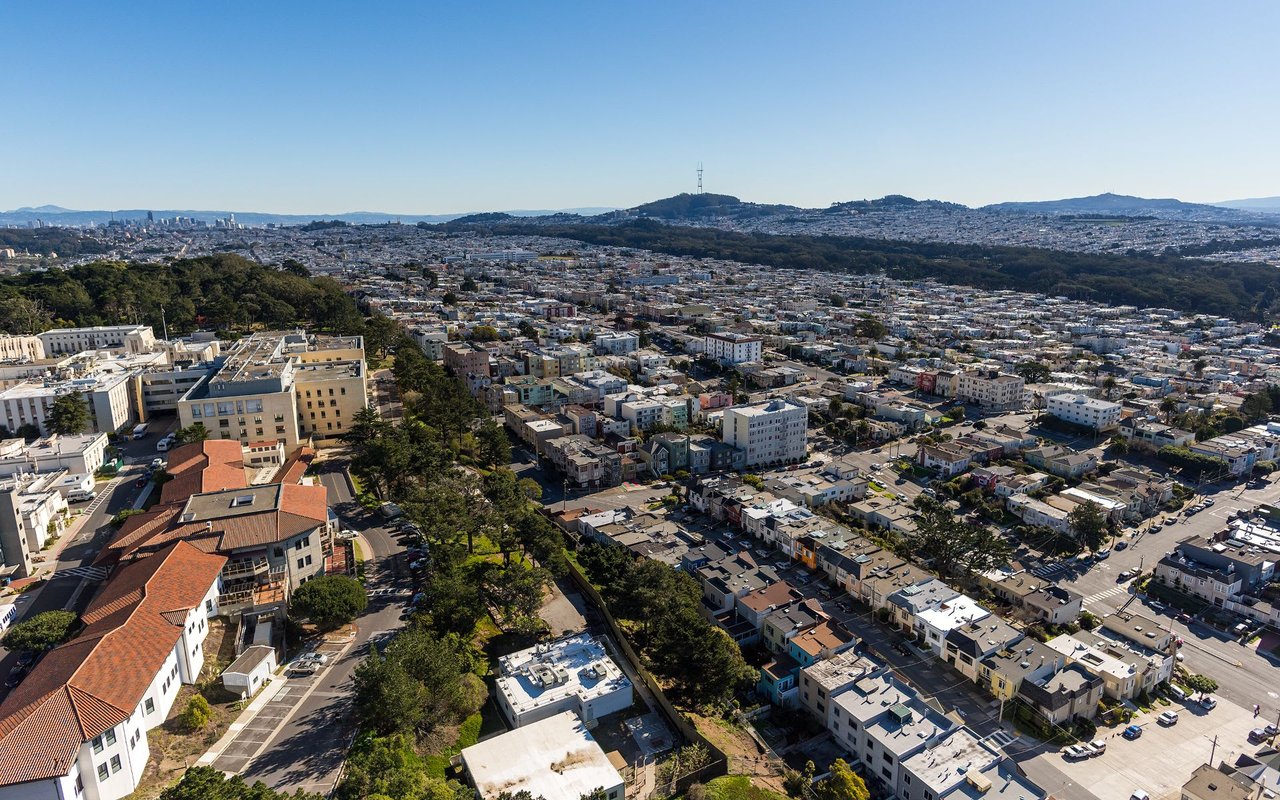
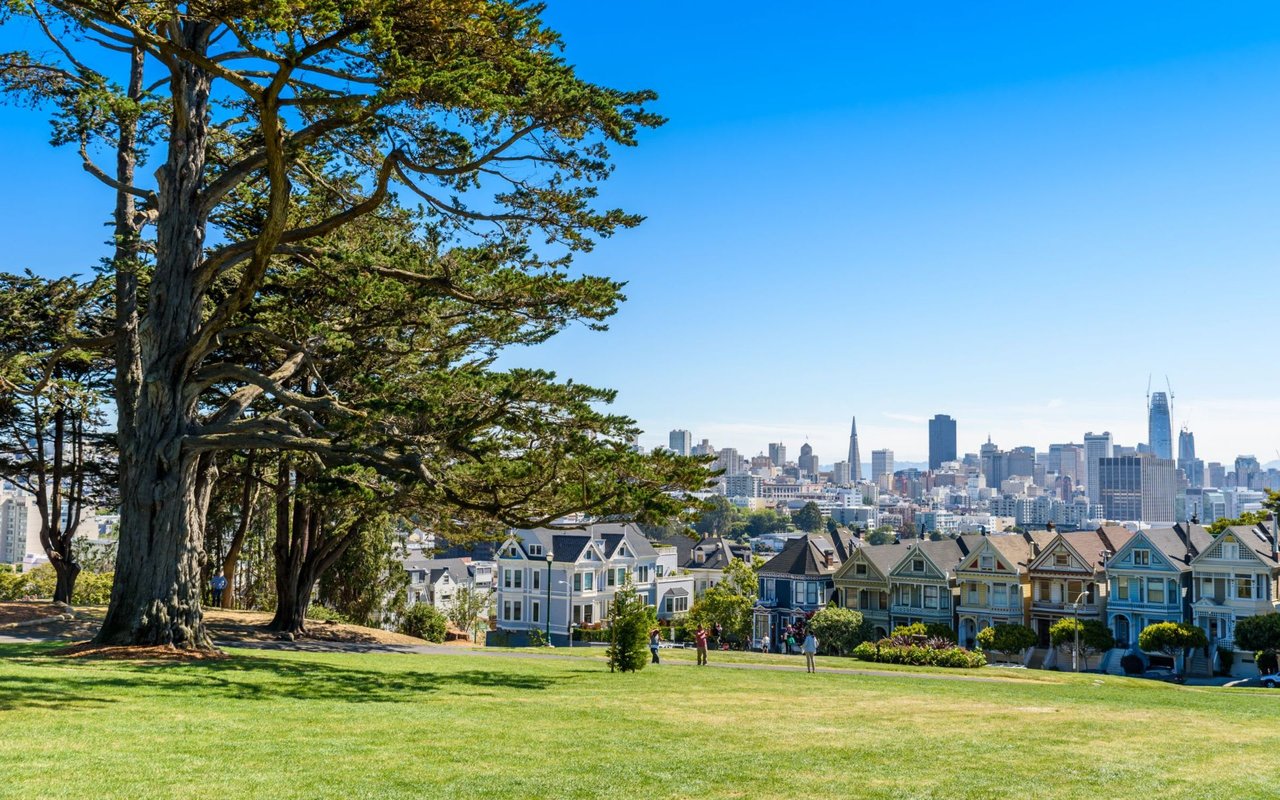
Forest Hill is one of San Francisco’s original residence parks — a hillside enclave of storybook and period-revival homes on the city’s west side (ZIP 94127), where the median home sells in the mid-$2 million range at roughly $1,220 per square foot. Laid out in 1912 and shaped by landscape architect Mark Daniels, with early homes by Bernard Maybeck, it’s defined by curving, sidewalk-free streets, dramatic brick stairways, and Tudor, Mediterranean, and storybook revival houses climbing the slopes of Mount Sutro. Well-priced homes are competitive, often selling in about three weeks, while inventory stays low.
Forest Hill was planned in 1912 as one of San Francisco’s early residence parks — the same garden-suburb movement that produced neighboring St. Francis Wood — and it still feels distinct from the grid around it. Landscape architect Mark Daniels routed the streets to follow the hillside rather than fight it, so the neighborhood winds upward in curves connected by the city’s signature brick and concrete stairways, many blocks without sidewalks at all. Early architects including Bernard Maybeck gave the neighborhood some of its most storied homes, and the 1919 Maybeck-designed Forest Hill Clubhouse remains its social anchor.
Day to day, residents have their own Forest Hill Muni Metro station — a rarity for a west-side hill neighborhood — plus the shops and restaurants of West Portal, the trails of Mount Sutro and Laguna Honda open space, and quick access to I-280 and the peninsula, all while staying in one of the quietest, greenest pockets of the city.
Forest Hill rewards prepared, decisive buyers. Only a modest number of homes sell here in any given year, so the buyers who succeed are pre-approved, clear on their priorities, and working with an agent watching for both listed and off-market opportunities. Most homes are close to a century old, so the disclosure package, inspections, and any foundation, drainage, systems, and permit history deserve careful review — hillside lots in particular reward a close look at grading and retaining walls. And because comparable sales are few and the housing stock varies from Maybeck-era originals to updated remodels and Forest Hill Extension mid-centuries, pricing an offer correctly means understanding the handful of genuinely comparable homes and the premiums this market pays for architecture, views, and condition — not the citywide average.
Browse current Forest Hill homes for sale → or set up a search or tour a listing.
Forest Hill is a strong seller’s neighborhood for a well-prepared home, but it is a discerning market. Buyers at this level pay for architecture, light, condition, and setting, and they scrutinize systems in century-old hillside houses closely. A Forest Hill listing agent earns their fee by handling pre-sale inspections so buyers can write clean offers, presenting the home to highlight what this market values — original period detail, updated systems, outdoor space, and views — and pricing to the small set of true comparables to create competition rather than chase it. With so few sales a year, positioning and preparation, not luck, decide the outcome.
Forest Hill is one of a cluster of prestigious west-side residence parks, alongside neighboring St. Francis Wood, Monterey Heights, and Ingleside Terraces, and it sits just above the West Portal and Inner Sunset corridors. For the citywide read and how the neighborhoods compare, see the San Francisco housing market and neighborhood guide, or explore adjacent St. Francis Wood and Ingleside. Oliver Burgelman is a San Francisco and Marin broker with 23+ years and $350M+ closed, working buyers and sellers across the city’s west-side and central neighborhoods.
Forest Hill is one of San Francisco’s more expensive neighborhoods. The median sale price runs in the mid-$2 million range — roughly $2.5 million over the last year — at about $1,220 per square foot, and the largest, best-positioned period homes trade well above $3.5 million. Smaller homes and Forest Hill Extension properties are the more attainable entry point, but even those sit near the top of the citywide market.
For buyers who want architecture, greenery, and quiet, Forest Hill is one of the most distinctive neighborhoods in San Francisco — storybook and Maybeck-era homes on winding hillside streets, a century of preserved character, and a genuinely leafy setting with its own Muni Metro stop minutes from West Portal. The trade-offs are price, patience, and hillside upkeep: homes are expensive, inventory is scarce, and the sloped lots and stairway streets reward buyers who know what to inspect.
Almost entirely single-family homes built between the 1910s and 1930s in Tudor, Mediterranean, Spanish, and storybook revival styles — several from the Maybeck era — set on curving hillside lots, plus a band of mid-century homes in the adjoining Forest Hill Extension. Many have garages and tree, forest, or ocean outlooks, and higher streets toward Mount Sutro can add real view premiums. There are very few condos or multi-unit buildings — this is a single-family neighborhood by design.
It depends on the home, but well-prepared, well-priced homes are competitive: they often go into contract in about three weeks despite the high price points. Only a modest number of homes sell here in a typical year, and homes that are dated, over-priced, or need significant systems or drainage work can sit for months. Preparation and disciplined pricing matter more here than in higher-volume neighborhoods.
Oliver Burgelman is a San Francisco and Marin broker with 23+ years of experience and more than $350M in closed sales, working buyers and sellers across the city’s west-side neighborhoods including Forest Hill. He offers hands-on, one-on-one guidance, off-market sourcing, and data-informed pricing strategy. Start with a free home valuation or schedule a call.
Shopping for a home rather than selling one? Browse current listings in our neighborhood hub.
1,846 people live in Forest Hill, where the median age is 55 and the average individual income is $140,071. Data provided by the U.S. Census Bureau.
Total Population
Median Age
Population Density Population Density This is the number of people per square mile in a neighborhood.
Average individual Income
Forest Hill has 721 households, with an average household size of 2. Data provided by the U.S. Census Bureau. Here’s what the people living in Forest Hill do for work — and how long it takes them to get there. Data provided by the U.S. Census Bureau. 1,846 people call Forest Hill home. The population density is 25,539 and the largest age group is Data provided by the U.S. Census Bureau.
Total Population
Population Density Population Density This is the number of people per square mile in a neighborhood.
Median Age
Men vs Women
Population by Age Group
0-9 Years
10-17 Years
18-24 Years
25-64 Years
65-74 Years
75+ Years
Education Level
Total Households
Average Household Size
Average individual Income
Households with Children
With Children:
Without Children:
Marital Status
Blue vs White Collar Workers
Blue Collar:
White Collar:
Address
2501 Mission St San Francisco CA 94110 1118 Magnolia Ave Larkspur CA 94939