Mission Dolores
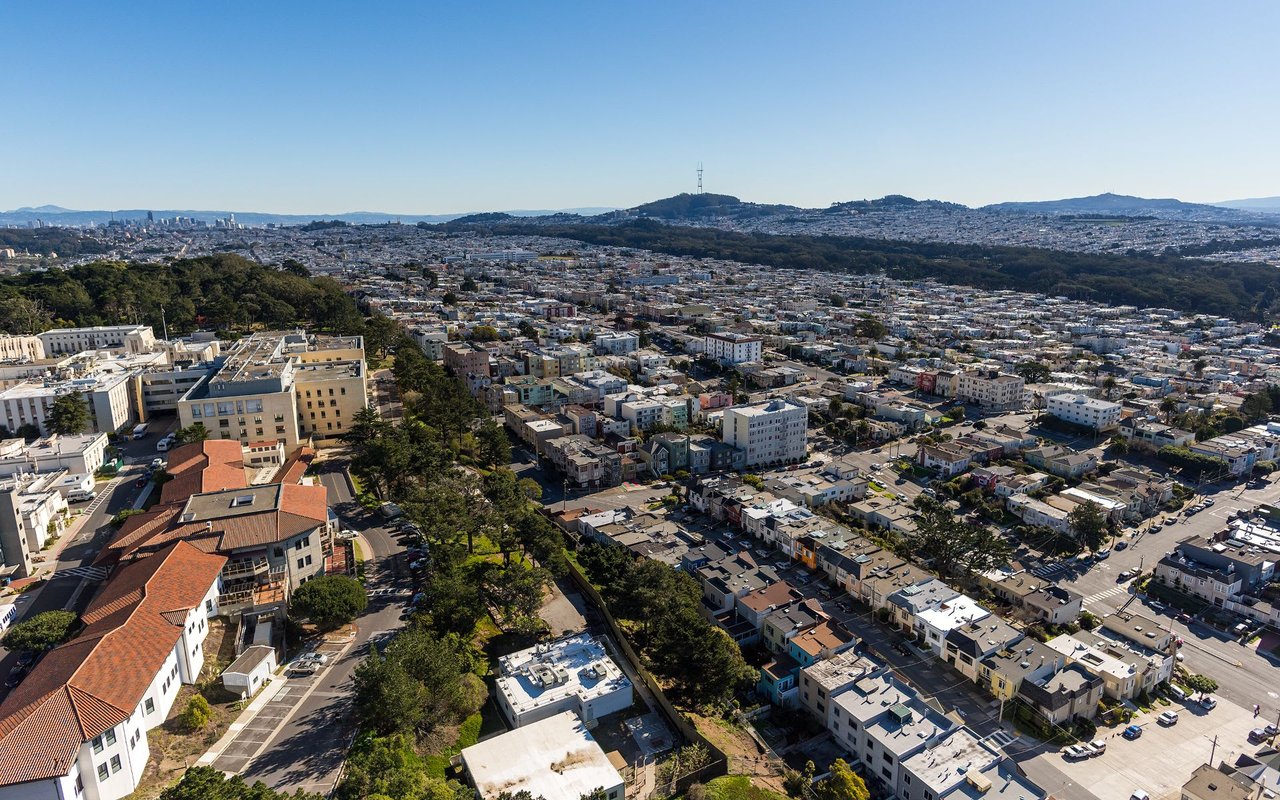
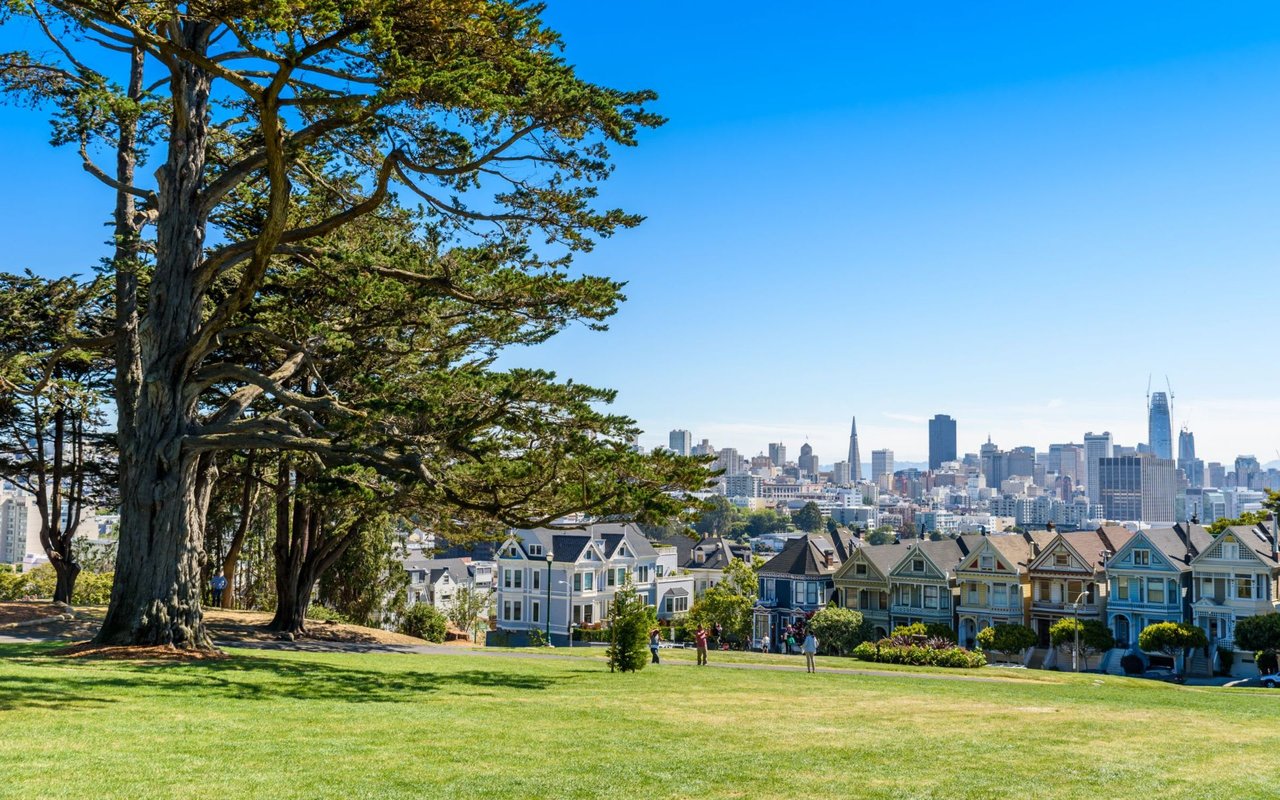
Mission Dolores is the rare central San Francisco neighborhood where Dolores Park, the Valencia restaurant corridor, 16th Street BART, and the sun pocket sit inside a six-block walk of each other. Demand here is durable across every type of home, and the pricing job is reading your specific configuration (Victorian single-family, Edwardian flat, condo, TIC) and matching it to the buyer pool already shopping for that combination.
Mission Dolores packs more housing types (Victorians, Edwardian flats, condos, TICs) into a smaller, more walkable square than anywhere in central San Francisco, and demand runs deep across all of them.
SFAR MLS District 5 closings, reported together with Eureka Valley. The wide typology mix spreads the range; your block, typology, condition, and outdoor space will price differently.
39 Hancock Street, a two-bedroom condo at the Mission Dolores edge that Oliver Burgelman listed and sold, drew multiple offers and closed at $1,831,200 in six days, about 22% over its $1,495,000 list.
Why selling in Mission Dolores is different
Mission Dolores is the most layered central-SF neighborhood for housing typology, packed into one of the smallest geographies in the city. Victorian single-family homes, Edwardian flats held as condos or TICs, mid-century condo conversions, and recent new-construction condos all trade meaningfully in the same six-block square. That layering produces a wide closed-sale range and a per-square-foot variance that doesn't read cleanly off a single comp report. The job is reading which typology your home actually belongs to before anything else.
What turns that typology variety into an unusually active market is the depth and durability of demand. The combination Mission Dolores offers (Dolores Park, the Valencia restaurant corridor, 16th Street BART, the Twin Peaks sun pocket, the F Market streetcar, the J Church Muni Metro) doesn't exist in this density anywhere else in central San Francisco. Tech professionals want walkability to Valencia and the BART commute. Families want Dolores Park. Restaurant and nightlife buyers want the corridor. Empty nesters downsizing from larger SF homes want the walkability and dining. Investors and 1031 buyers want the Edwardian flats and the small multi-unit buildings. The neighborhood holds a strong buyer pool for each typology at the same time.
All of this means: pricing a Mission Dolores home well is about matching home to buyer pool, not about averaging the neighborhood and applying a correction. 39 Hancock Street on the Mission Dolores edge closed at 22% over the $1,495,000 list in six days by pairing a competitive list price with move-in-ready prep and marketing built around Dolores Park lifestyle, the specific combination that two-bedroom condo buyers in this neighborhood actively shop for. The same approach (read the home, identify the buyer pool, build the strategy around that pool) drives strong outcomes for Victorian single-family homes on the residential blocks, Edwardian flats sold whole or held as TICs, new-construction condos along the corridors, and the smaller condo conversions throughout the neighborhood.
A Mission Dolores seller case study: 39 Hancock Street
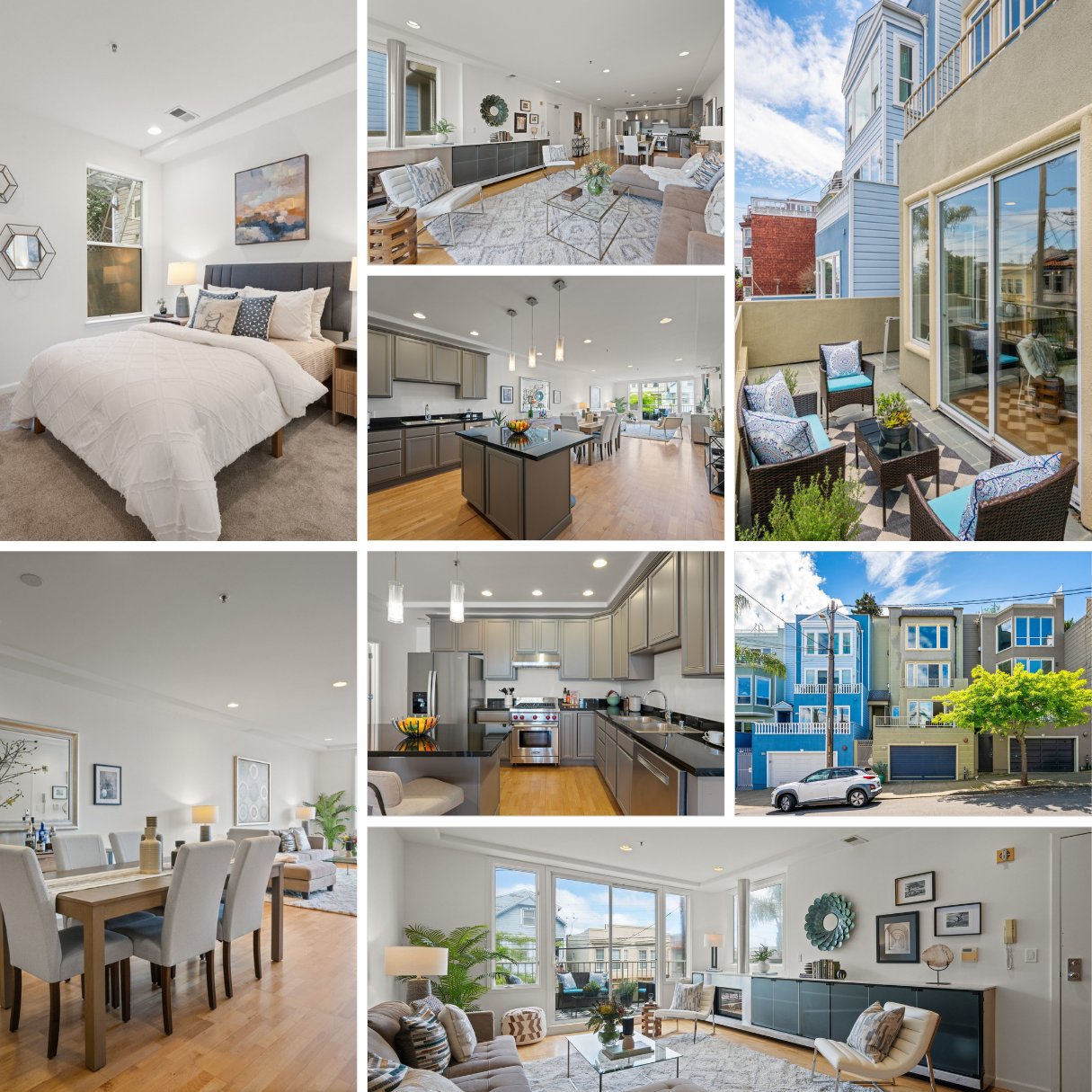
When I listed 39 Hancock Street, a two-bedroom, two-bath, 1,228-square-foot condo at the Mission Dolores / Eureka Valley boundary, steps from Mission Dolores Park, the Valencia corridor, and the Castro, I priced it at $1,495,000. It went into contract in six days with multiple competing offers and closed at $1,831,200. That's $336,200 over list, or 22% above asking, at approximately $1,491 per square foot, the highest comparable mark for a two-bedroom condo in the Mission Dolores / Eureka Valley MLS subdistrict at the time of sale.
What 39 Hancock illustrates about the Mission Dolores market is the value of matching home to buyer pool. The strategy was specific to the two-bedroom condo segment in this neighborhood: list competitively to drive engagement rather than anchor a number, prep the home to move-in-ready with staging that emphasized the indoor-outdoor flow, and build the marketing around Dolores Park proximity and the lifestyle (Valencia walks, the sun pocket, the F Market streetcar to downtown). The two-bedroom condo buyer pool in Mission Dolores is deep and well-informed, and the right strategy let that pool compete cleanly. The same approach (read the home, identify the buyer pool, build the strategy around that pool) drives outcomes for Victorian single-family homes on the residential blocks, Edwardian flats sold whole or as TICs, family-oriented homes around Dolores Park, and new-construction condos along the corridors.
How your Mission Dolores home prices
Most Mission Dolores homes fall into one of five typologies, and each one prices on its own logic. The category sets a starting band; condition, block, outdoor space, light exposure, parking, and walkability then move the number within that band.
- Victorian single-family homes. Italianate, Stick-Eastlake, and Queen Anne houses on the residential blocks, typically held for long stretches before turnover. The historic anchor of the neighborhood's architecture, and the larger-footprint product for buyers wanting a real single-family home in walking distance of Dolores Park. Prices on size, architectural integrity, condition, outdoor space, and parking. Streets like 19th, 20th, Hancock, Liberty, Cumberland, and the cross streets between Church and Guerrero.
- Edwardian flats held whole or as condos. The most common building type in the neighborhood. Trades on floor plan, light exposure, original detail preservation, and unit configuration (a top-floor flat with full original detail prices differently than a bottom-floor condo conversion in the same building). Common across the central residential blocks.
- Two and three-bedroom condos near Dolores Park or the corridors. The deepest condo segment. Walkability to Dolores Park, the Valencia corridor, or 16th Street BART is what the buyer pool actively wants; move-in-ready condition and disciplined list pricing combine to produce results like 39 Hancock's 22% over list.
- New-construction and recent condos. Concentrated along Market, Mission, and 16th Street, plus a handful of mid-block infill projects. Typically larger floorplates with private outdoor space, parking, modern systems, and HOA amenities. Trades on building, floor, exposure, outdoor space, and the relative recency of construction.
- Studios, one-bedrooms, and TICs in older buildings. The entry-tier product across the neighborhood, often the most accessible way into Mission Dolores for first-time buyers. TICs typically trade at a 10 to 20 percent discount to comparable condos, with the gap reflecting financing and ownership-structure differences.
Where your home fits in this five-typology map sets a starting band. The sub-area, condition, outdoor space, light, and parking then move the number within that band. As a current rule of thumb: studios and one-bedroom condos in older buildings trade $560K to $900K. TICs sit roughly 10 to 20 percent below comparable condos. Two-bedroom condos near Dolores Park or the corridors run $1.2M to $1.85M, with the strongest results clearing $1,400+ per square foot (39 Hancock at $1,491/sqft is the recent benchmark). New-construction condos with parking and outdoor space typically sit $1.4M to $2.5M+ depending on building and floor. Renovated Victorian single-family homes routinely list between $2.5M and $3.5M+ depending on size and condition. Every category has a strong buyer pool active right now. The best first move when you're weighing a sale is a current valuation on your specific address. Request a free home valuation.
Sub-area pricing
Mission Dolores is small enough to walk across in fifteen minutes, but three sub-areas trade on meaningfully different fundamentals. Here's what's pulling premiums in each one.
Dolores Park frontage and the adjacent residential blocks
The blocks immediately bordering Mission Dolores Park (along Dolores, Church, 18th, 19th, and 20th) and the quieter residential blocks between Dolores and Church a short walk away. The park amenity is real and durable, and the Twin Peaks sun pocket gives this stretch of the neighborhood measurably more sun than the blocks closer to Market. The single-family Victorian segment concentrates here, along with the Edwardian flat buildings that draw families and longer-term owners. Pricing strategy: emphasize the park proximity and the residential character; the buyer pool here actively wants the combination of walkability, sun, and the park amenity, and is willing to pay for it.
The Valencia and 16th Street corridor sides (eastern Mission Dolores)
The blocks between Guerrero and Valencia, plus the 16th Street corridor running east toward BART. Denser, with stronger restaurant and nightlife exposure, new-construction condos along the corridors, and the 16th Street Mission BART station within a short walk. Draws a buyer pool that explicitly wants the Valencia dining scene, the BART commute, and the urban energy. Pricing strategy: emphasize transit and the Valencia walk in marketing; price the condo segment competitively to invite the deep buyer pool that's actively shopping for this exact combination.
The Church and southern blocks (western Mission Dolores)
The blocks closer to Church Street and the southern edge of the neighborhood toward 22nd Street, transitioning into Eureka Valley and Noe Valley. Quieter, more residential, with the J Church Muni Metro on Church Street as the transit anchor and easy walks to both Dolores Park and the Castro. Pricing strategy: emphasize the quieter residential character, the J Church commute, and the proximity to both Mission Dolores and Eureka Valley amenities; the buyer pool here often comes from people specifically choosing the quieter side of the neighborhood, and the strategy can be calibrated to that profile.
What's pulling premiums in Mission Dolores right now
Features that consistently produce premium sale outcomes, features that trade in the middle of the spread, and conditions that tend to need sharper pricing or prep.
- Dolores Park frontage or short walk
- Renovated kitchens & baths
- Top-floor units with strong light
- Private outdoor space (deck, yard, patio)
- Parking with interior access
- Preserved Victorian or Edwardian detail
- Mid-floor 2BR condos in good buildings
- Edwardian flats in good condition
- Mix of original and lightly updated
- Quiet interior-block positions
- New-construction condos without outdoor space
- TICs comp'd against condos (use TIC comps)
- Deferred maintenance
- North-facing dark units
- Mission Street or Market noise corridors
- Older buildings without elevators or modern systems
Listing strategy in Mission Dolores
A correct Mission Dolores list price isn't a single number, it's a pricing strategy keyed to which buyer pool your home actually serves. There are roughly four moves available, each one matching a different combination of home strength and buyer profile: list competitively to invite engagement, which works for two and three-bedroom condos near Dolores Park or the corridors where a deep buyer pool is actively shopping for the specific combination of walkability, condition, and floor plan (the 39 Hancock play); list at market and let the bidding work, which fits renovated Victorian single-family homes on the residential blocks, well-prepped Edwardian flats sold whole, and new-construction condos with private outdoor space; list at the high end of the band with willingness to negotiate, which fits Edwardian flats and condos in good condition where the buyer pool prioritizes character and configuration over a specific premium feature; and list at a premium with patience, which can work for genuinely unique properties (large renovated Victorian single-family homes, full-floor flats with significant outdoor space, view-equipped top-floor condos) where comp scarcity supports a longer marketing window. The right move depends on what's strongest about your home and which buyer pool is actively shopping for that combination.
Prep is the other lever, and in Mission Dolores the ROI math is heavily skewed toward pre-listing preparation that matches the buyer pool. For two and three-bedroom condos, light staging plus the right cosmetic refresh (paint, refinished surfaces, light kitchen and bath touches) usually pays for itself many times over; over-renovation in the condo segment can compress the appeal because the buyer pool values move-in-ready condition rather than aggressive updates. For Victorian single-family homes, the prep conversation centers on preserving original architectural detail while updating systems (kitchen, baths, electrical, plumbing); buyers in this band pay for architectural integrity, and over-renovating heritage homes can compress the premium. For Edwardian flats held as TICs, the prep work includes financing-pathway transparency in the marketing materials. For new-construction condos, the prep is usually light. Pre-listing inspection reports (foundation, roof, sewer lateral, pest) consistently produce stronger offers across all configurations because they remove buyer-contingency negotiating room. I'll walk through all of this with you in the pricing call.
Your Mission Dolores listing agent

I've been a Mission Dolores listing agent for over two decades, representing sellers across every typology the neighborhood trades: Victorian single-family homes on the residential blocks, Edwardian flats sold whole or held as condos and TICs, two and three-bedroom condos near Dolores Park and the corridors, new-construction condos along Market, Mission, and 16th Street, and the smaller condo conversions throughout the neighborhood. The Mission Dolores pricing job is matching home to buyer pool: the layering of typologies in such a small geography means each property serves a meaningfully different buyer profile, and choosing the strategy and marketing that reaches the right pool is the central work. Career track record: 23+ years, $350M+ closed across 300+ transactions, 85+ five-star reviews. A recent example at the Mission Dolores edge: 39 Hancock Street, a two-bedroom condo, sold at $1,831,200, 22% over the $1,495,000 list, in six days with multiple offers, on a strategy specifically built for the two-bedroom Mission Dolores condo buyer pool. The same approach (read the home's strengths, match to the buyer pool, choose the strategy that fits) drives outcomes across every Mission Dolores block. If you're considering a sale, the first step is a current valuation on your specific address.
Frequently asked questions about selling a Mission Dolores home
What is my Mission Dolores home worth?
How long does it take to sell a home in Mission Dolores?
Why does each Mission Dolores block draw a different buyer pool?
How do you price a Victorian single-family home vs an Edwardian flat vs a condo?
What does it cost to sell a home in Mission Dolores?
Should I renovate before listing, or sell as-is?
What is the Mission Dolores market doing for sellers right now?
How do you market a Mission Dolores listing?
What's the difference between Mission Dolores and Eureka Valley?
Should I list in spring, summer, or fall?
Who is the best Mission Dolores real estate agent?
Considering buying in Mission Dolores instead?
Ready to talk about selling your Mission Dolores home?
Mission Dolores has the most layered housing typology in central San Francisco packed into one of the smallest geographies, and that layering is the seller's opportunity. Each typology, each block, and each configuration serves a meaningfully different buyer pool, and the pricing work is matching your home's specific strengths to the pool already shopping for that combination. Well-positioned and well-prepped homes across every part of the neighborhood are producing strong outcomes, from two-bedroom condos near Dolores Park to Victorian single-family homes on the residential blocks to Edwardian flats sold whole. If you're considering a sale on any block, the first step is a current valuation on your specific address, followed by a 15-minute pricing call to walk through typology, buyer-pool, and prep strategy for your home. No commitment to list, just an honest read on where your home sits in today's Mission Dolores market.