Twin Peaks
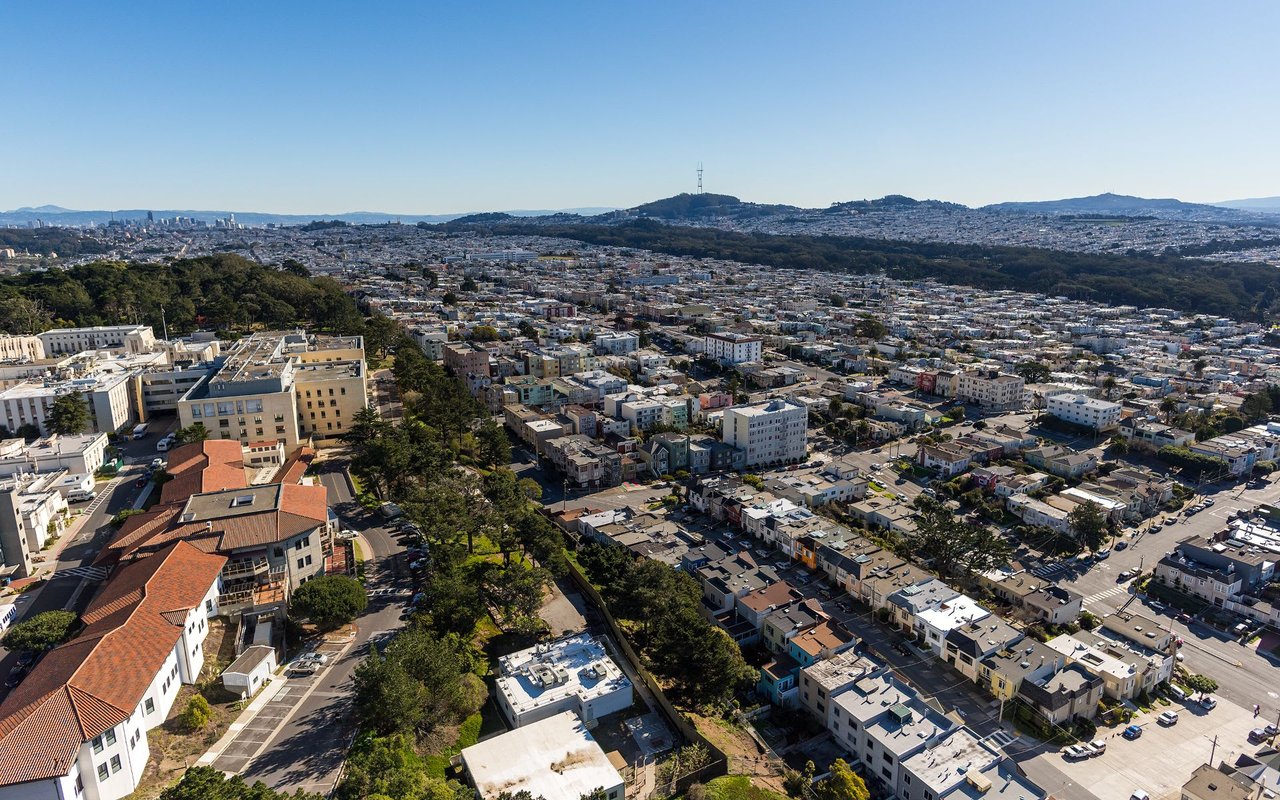
Twin Peaks is the highest residential ground in central San Francisco, and the seller conversation here is shaped by elevation, orientation, and which direction your specific lot looks. Two homes on the same block can clear a million dollars apart based on whether they wake up to the Bay Bridge, look out at the Pacific, or sit in the fog belt. Pricing the view honestly, and pricing the rest of the house against the right comp set, is the whole game.
Selling a home in Twin Peaks means pricing the highest residential elevation in central San Francisco, a quiet hillside neighborhood organized around the twin summits and Twin Peaks Boulevard, bounded roughly by Clarendon Avenue and Mountain Spring on the north, Portola Drive and Diamond Heights on the south, the Castro and Eureka Valley on the east, and Forest Hill on the west. Four distinct sub-areas trade here: the eastern slope (Romain, Burnett, Vicksburg, and the blocks rolling down toward Eureka Valley, where Downtown and Bay views dominate and fog is lightest), the summit and upper Twin Peaks Boulevard (Crestline, Skyview, and the highest blocks, where 360-degree panoramas are the rule and the fog belt is the trade-off), the western slope (Marview, Cityview, Aquavista, looking toward the Pacific and Sutro Tower), and the southern slope (Burnett southern blocks and the streets reading toward Glen Canyon and Diamond Heights). Recent sale averages: $2.35M sold, $1,100 per square foot, 28 days on market, with a range that runs from $1.6M for unrenovated mid-century houses on lower-view blocks to $4M+ for view-spine moderns on the eastern slope and summit. Recent proof point: 275 Romain Street sold at $2,435,000, 11% over the $2,195,000 list price, a 3-bedroom Twin Peaks view home with chef's kitchen, solar, and EV charging. ZIP codes 94114 and 94131. Twin Peaks listing agent: Oliver Burgelman, Broker Associate at Vanguard Properties (DRE #01388135), 23+ years in San Francisco real estate, $350M+ closed across 300+ transactions, 85+ five-star reviews. Contact: 415.244.5846.
Why selling in Twin Peaks is different
Twin Peaks doesn't price like the neighborhoods at its feet, and the reason is elevation. Almost every house here sits on a slope, almost every house has some kind of view, and the variable that moves price most is which view, in which direction, with how much fog. A Romain Street house on the eastern slope wakes up to the Downtown skyline and the Bay Bridge with relatively little fog cover. A summit house on Crestline catches the full 360-degree panorama and pays for it in summer afternoon fog. A western-slope Marview house looks toward Sutro Tower and the Pacific with longer marine-layer days. Three homes inside the same neighborhood, three different pricing conversations.
Layered on top of orientation is the architecture story. Twin Peaks built out primarily between the late 1930s and the 1960s, so the dominant inventory is detached mid-century single-family houses on larger-than-average San Francisco lots, often three to four levels cut into the slope with an integral garage at the entry level. Renovated mid-century moderns and custom-designed view homes set the top of the market. Untouched original mid-centuries with strong bones set the value tier. The lot itself matters: Twin Peaks routinely has lots that are wider, deeper, or simply more usable than the standard SF parcel, and a true level back yard with an outdoor room is a rare and rewarded configuration up here.
All of this means pricing a Twin Peaks home well isn't about reading the neighborhood average and adjusting by square footage. It's about reading the lot honestly: which direction your home faces, how much of the view the floor plan actually uses, where your block sits on the fog map, what condition the house is in, and where the right buyer pool is sitting today. The difference between a Twin Peaks listing priced as a generic central-SF mid-century and one priced as the specific view home it actually is can be hundreds of thousands of dollars on the same square footage. 275 Romain Street, which closed at $2,435,000 (11% over list) earlier this year, is one recent illustration.
Twin Peaks market snapshot
A Twin Peaks seller case study: 275 Romain Street, eastern slope
275 Romain Street is a three-bedroom, two-bath single-family home plus office on the eastern slope of Twin Peaks, with panoramic Downtown and San Francisco Bay views, a chef's kitchen with Thermador appliances, a wall of folding glass doors opening to a Trex deck and landscaped yard, two fireplaces, solar panels, two EV chargers, Marvin windows, central air, and a rebuilt rear exterior. Listed at $2,195,000 and closed at $2,435,000, 11% over the list price. Built in 1948 with a thoughtful slate of modern upgrades layered in over time, the home represented exactly what Twin Peaks buyers in this market actively look for: a true single-family view home with a floor plan that uses the panorama and modern systems that take the typical SF maintenance question off the table.
What 275 Romain Street illustrates about selling in Twin Peaks isn't a one-off outcome. It's the kind of competitive result the neighborhood produces when pricing strategy, preparation, and marketing line up. The list price was set to invite the right segment of the buyer pool in rather than filter them out. Photography and copy were built around the view, the indoor-outdoor flow through the folding glass wall, and the quiet stack of modern systems (solar, two EV chargers, smart home wiring, central air, Marvin windows, a newer roof) that buyers in this segment value but rarely encounter ready-made. The result was a strong open-house weekend, competitive bidding, and an 11% over-asking close at $2,435,000. The same logic, reading what's actually rare about your specific home and pricing to attract the right buyer pool, applies to view-spine moderns on the summit, renovated mid-centuries on the western slope, and well-prepared lower-view interior homes alike.
How your Twin Peaks home prices
Most Twin Peaks homes fall into one of five configurations, and each one prices on its own logic. The view and orientation variables run through all of them.
- Eastern-slope view homes (Romain, Burnett east, Vicksburg, lower Twin Peaks Blvd east). The downtown-and-Bay-view product. Sites along the eastern slope catch the sunrise, the Bay Bridge, and the skyline with the lightest fog exposure in the neighborhood. Renovated examples with floor plans that use the view (window walls, decks, primary suites oriented east) command the strongest per-square-foot numbers in this segment. 275 Romain Street closed here at $2,435,000, 11% over list.
- Summit and upper Twin Peaks Boulevard mid-century moderns (Crestline, Skyview, upper Twin Peaks Blvd). The full-panorama tier. Houses on the highest blocks catch 360-degree views, often with east-facing morning sun, west-facing sunsets, and Marin and East Bay sightlines on clear days. The fog belt is more present here on summer afternoons, which buyers learn to weigh against the panorama. Architecturally significant moderns and custom builds on these blocks set absolute prices in the $3M to $4M+ range.
- Western-slope houses (Marview, Cityview, Aquavista). The Pacific-facing and Sutro Tower-adjacent segment. Sightlines run west toward the ocean and south toward Forest Hill and the Sunset, with longer marine-layer mornings than the east slope. Distinctive mid-century moderns and a handful of custom builds, with prices that reflect both the view and the slightly cooler exposure.
- Southern-slope and interior houses. Properties on the southern slope rolling toward Diamond Heights, Glen Canyon, and Midtown Terrace, plus interior blocks without full eastern or western exposure. Often the most usable lots and floor plans in the neighborhood, with backyards that actually function and parking that actually works. Trade closer to the neighborhood average, with the strongest examples reaching into the view-segment range.
- Original mid-century houses with strong bones. Unrenovated or lightly updated mid-centuries on any slope. The value tier. Often original kitchens and baths, original windows, no central air or solar, but solid structures on real Twin Peaks lots. Price on lot, view, and renovation upside.
Where your home fits in this five-configuration map sets a pricing baseline, and the view, orientation, and fog layer then adjust it. As a rule of thumb: original mid-century houses on lower-view interior blocks trade $1.6M to $2.2M. Renovated mid-centuries with partial view exposure run $2.2M to $2.8M. Eastern-slope view homes with downtown and Bay sightlines, like 275 Romain, typically clear $2.4M to $3.2M. Summit and upper Twin Peaks Boulevard view-spine moderns with full panoramas regularly reach $3M to $4M+, with architecturally significant or rare-lot examples pushing higher. The single best move when you're weighing a sale is a current valuation on your specific address. Request a free home valuation.
Sub-area pricing
Twin Peaks is a single neighborhood at the elevation map, but four sub-areas trade on meaningfully different fundamentals. Here's what's pulling premiums in each one.
The eastern slope (Romain, Burnett, Vicksburg)
The Downtown-and-Bay-view sub-area, and the warmest microclimate in the neighborhood. Homes here catch morning sun, the Bay Bridge sightline, and the skyline, with the lightest fog exposure of any Twin Peaks slope. The eastern blocks also enjoy the quickest walks down into Eureka Valley and the Castro Street corridor. Renovated mid-century single-family homes with modern systems and floor plans that use the view set the strongest pricing here. 275 Romain Street's $2,435,000 close at 11% over list is a current data point for this sub-area; well-prepared eastern-slope view homes are consistently producing competitive multi-offer outcomes when priced to invite the right segment of the buyer pool in.
The summit and upper Twin Peaks Boulevard (Crestline, Skyview)
The full-panorama tier. The highest residential blocks in central San Francisco, with 360-degree sightlines that take in Downtown, the Bay, the Golden Gate, Marin, and the Pacific from a single living room on the right floor plan. The trade-off is exposure: summer afternoon fog reaches these blocks more consistently than anywhere else in Twin Peaks, and the wind can be real. Architecturally significant mid-century moderns and custom-designed view homes on these blocks set absolute price ceilings in the neighborhood, and the comp set is thin enough that pricing and marketing strategy matter a great deal.
The western slope (Marview, Cityview, Aquavista)
The Pacific-facing sub-area. Sightlines orient west and southwest toward the ocean, the Sunset, and Sutro Tower, with longer marine-layer mornings than the eastern slope. The architecture skews toward distinctive mid-century moderns and a handful of custom builds taking advantage of the unusual lot orientations the slope produces. Buyers anchoring here often prioritize sunset views, quiet, and a removed feel from the eastern-slope commuter pattern. Pricing reflects the view itself, the cooler microclimate, and the slightly thinner comp pool.
The southern slope and interior blocks
Properties on the southern slope reading toward Diamond Heights and Glen Canyon, plus the interior blocks that don't have full eastern or western view exposure, anchor the most usable end of the Twin Peaks inventory. Lots tend to be flatter, backyards more functional, parking more practical, and the daily logistics of living on a hillside slightly easier. The view premium is more variable here, but lot quality, floor-plan livability, and proximity to Glen Park BART and the West Portal commercial corridor support real value. The pricing strategy on these blocks reads less view-driven and more standard mid-century with strong fundamentals.
What's pulling premiums in Twin Peaks right now
Three categories that consistently produce above-baseline sale outcomes, two that tend to need sharper pricing or prep.
- Eastern-slope Downtown and Bay views
- Summit 360-degree panoramas
- Floor plans designed for the view
- Modern systems (solar, EV, central air)
- Indoor-outdoor flow to deck or yard
- Integral-garage solutions on the hillside
- Renovated mid-century moderns
- Western-slope Pacific-view homes
- Southern-slope homes with usable yards
- Standard 3 to 4 level hillside floor plans
- Interior blocks with partial sightlines
- Heavy fog-belt summit exposure
- Floor plans oriented away from the view
- Steep blocks with no parking solution
- Unrenovated kitchens and baths
- Aging mechanical and electrical systems
Listing strategy in Twin Peaks
A correct Twin Peaks list price isn't a single number, it's a pricing strategy keyed to your slope, orientation, and condition. There are roughly four moves available: list at a premium with patience, which works for genuine summit panoramas and rare architecturally significant moderns where comp scarcity is tight enough that the right reader will pay the right number and a longer marketing window is reasonable; list competitively to invite the buyer pool in, which is what worked at 275 Romain Street, where the list price was set to draw broad early engagement and let competitive bidding produce the final result (an 11% over-asking close at $2,435,000); list at market, which works for well-prepared mid-segment houses with partial view exposure where demand depth supports honest pricing; and list at the high end of the value tier with willingness to negotiate, which works for unrenovated mid-centuries where the comp set is the broader Twin Peaks value segment and the buyer is often looking at renovation upside. The right move depends on what your lot actually looks out at, how the floor plan uses the view, and the current depth of view-segment inventory in central San Francisco.
Prep is the other lever, and the ROI math is heavily skewed toward view-emphasis marketing. On view homes at any slope, professional architectural photography that captures the panorama in the right light (twilight shots especially), drone footage where possible, and marketing copy that names the specific sightline with orientation called out (Downtown / Bay Bridge / Golden Gate / Pacific) consistently pays for itself multiple times over. On mid-century moderns and custom modernist houses, architectural photography and provenance research add real value. On homes with strong indoor-outdoor flow, like 275 Romain's folding glass wall, staging and photography built around how the home actually lives are the difference between a feature buried in the listing description and a feature buyers feel on the first step inside. On interior blocks and value-tier houses, the prep playbook leans toward light updates that don't over-invest, kitchen and bath refreshes, systems updates, and clean staging that lets the lot and the bones do the work. I'll walk through all of this with you in the pricing call.
Your Twin Peaks listing agent

I've been a Twin Peaks listing agent for over two decades, and the work here is about reading the lot honestly. A house on the eastern slope with morning sun and a Bay Bridge sightline doesn't price like the same square footage two blocks higher in the fog belt, and a renovated mid-century with a folding glass wall opening to a flat back yard doesn't price like an unrenovated mid-century with the same view. The variables are orientation, fog exposure, floor-plan use of the view, and the specific stack of upgrades the house carries. I know which Romain Street and Burnett blocks photograph best in morning light, which upper Twin Peaks Boulevard lots catch 360 degrees without sitting under the afternoon marine layer, where on the western slope the sunset views actually live, and which southern-slope blocks read more like Diamond Heights than Twin Peaks proper. 275 Romain Street, which I listed and sold for $2,435,000 (11% over the $2,195,000 list price) earlier this year, is a current example of the strategy applied to an eastern-slope view home. Career track record: 23+ years, $350M+ closed across 300+ transactions, 85+ five-star reviews. If you're considering a Twin Peaks sale, the first step is a current valuation on your specific address, the slope and orientation variables are too sensitive to estimate from neighborhood averages alone.
Frequently asked questions about selling a Twin Peaks home
What is my Twin Peaks home worth?
How long does it take to sell a home in Twin Peaks?
Why do views matter so much in Twin Peaks pricing?
How do you price an eastern-slope view home vs a summit panorama?
What does it cost to sell a home in Twin Peaks?
Should I renovate before listing, or sell as-is?
What is the Twin Peaks market doing for sellers right now?
How do you market a Twin Peaks view-home listing?
How does Twin Peaks compare to Corona Heights for sellers?
Should I list in spring, summer, or fall?
Who is the best Twin Peaks real estate agent?
Considering buying in Twin Peaks instead?
Ready to talk about selling your Twin Peaks home?
Twin Peaks sales reward pricing that reads the lot honestly: which direction your home faces, how the floor plan uses the view, where your block sits on the fog map, and what condition the house is in. The properties that command the strongest results are the ones positioned around their actual story, photography that captures the specific sightline in the right light, marketing that names the orientation, and a list price that invites the right buyer pool in rather than filtering them out. 275 Romain Street's 11% over-asking close at $2,435,000 is one current example of the strategy applied to an eastern-slope view home. Interior and value-tier homes follow a different playbook anchored in lot quality, livability, and the broader central-SF comp set. Either way, the path starts with reading the home honestly. The first step is a current valuation on your specific address, followed by a 15-minute call to walk through pricing strategy and prep choices for your home. No commitment to list, just an honest read on where your home sits in today's Twin Peaks market.