Potrero Hill
One of San Francisco's sunniest neighborhoods, a hillside of Victorian cottages and modern view homes above the eastern bay, minutes from downtown, SoMa, and Mission Bay.
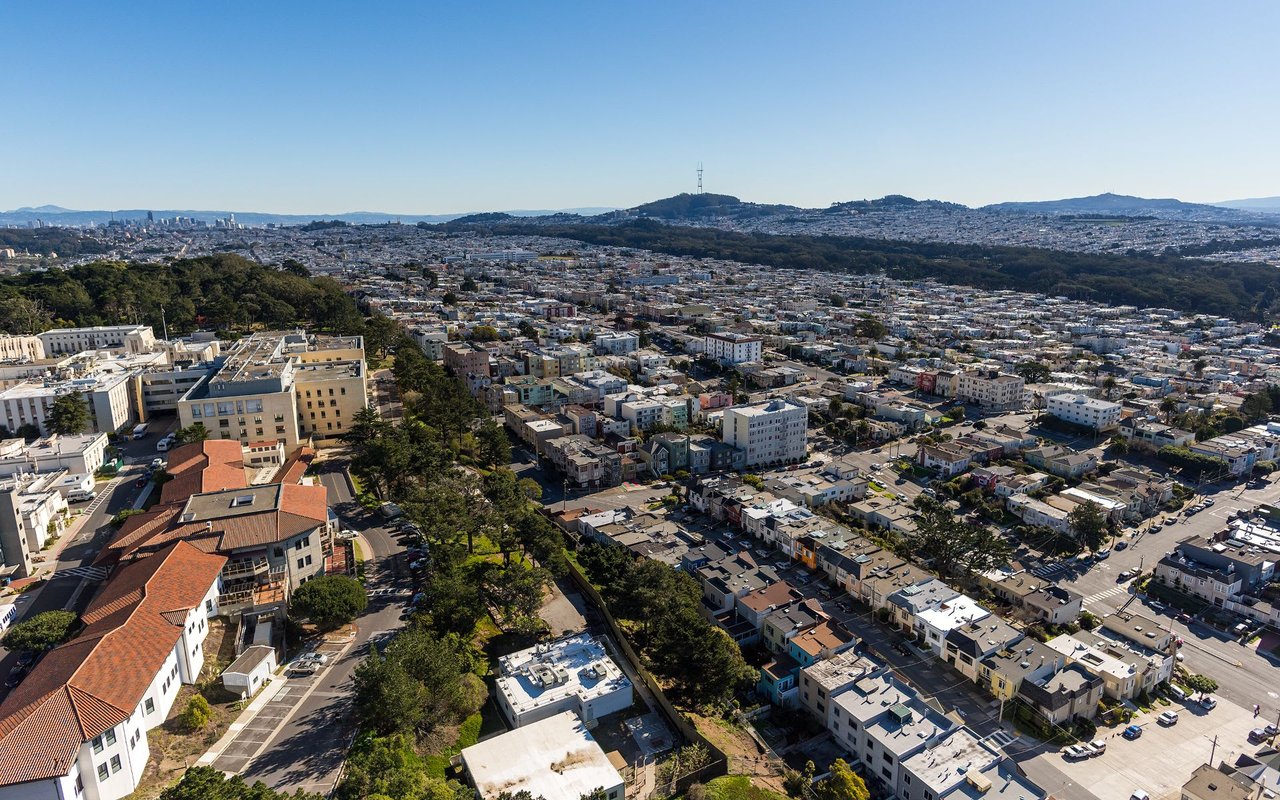
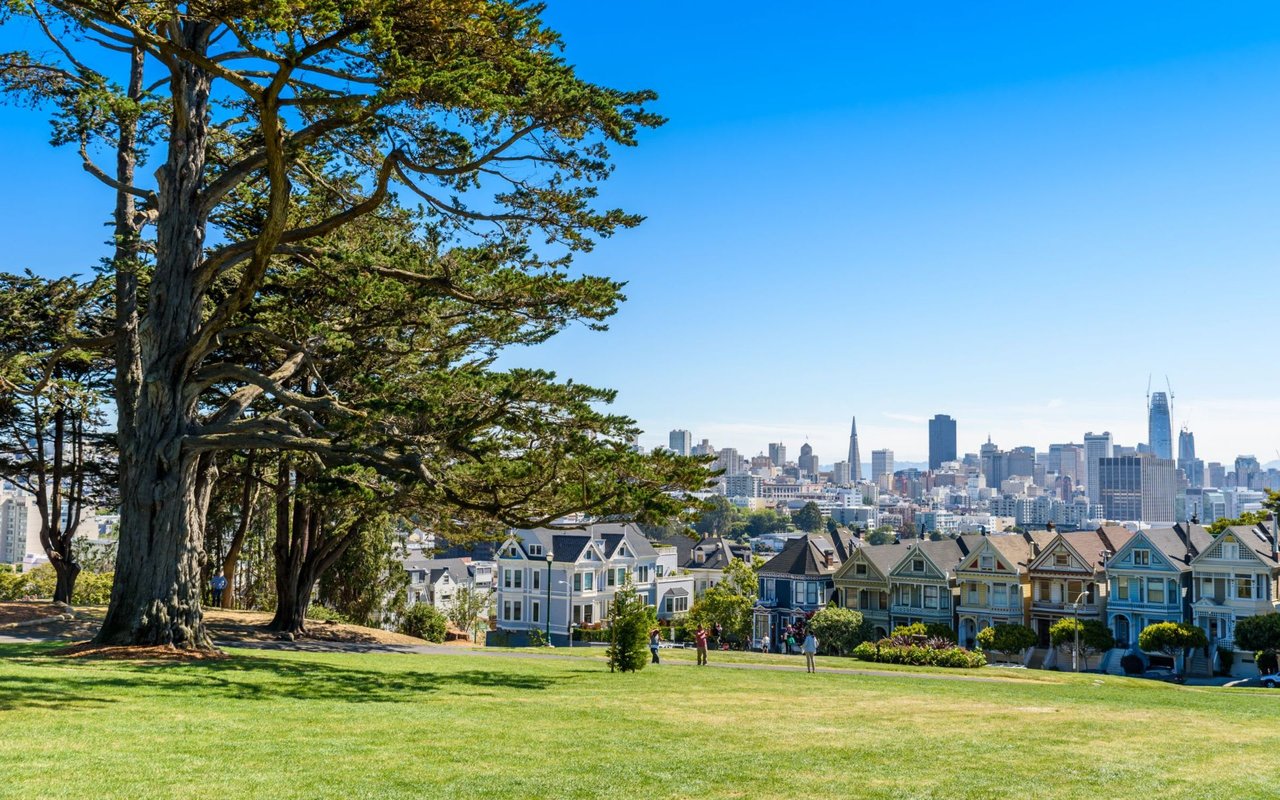
Selling a home in Potrero Hill means pricing one of San Francisco's sunniest and most centrally located neighborhoods, a hillside in the eastern part of the city with wide views of downtown, the Bay Bridge, and the bay. Potrero Hill sits east of the Mission District across Highway 101, south of SoMa and the Showplace Square design district, west of Dogpatch and the central waterfront, and north of Bernal Heights and the Bayview. The 18th Street corridor is the neighborhood's walkable commercial center, with coffee shops, restaurants, and small businesses; Connecticut Street anchors a second small cluster. Housing stock is predominantly single-family: Victorian and Edwardian homes and cottages from the late 1800s and early 1900s, mid-century houses, expanded and remodeled single-families, and a growing tier of modern view homes and new construction, with live-work lofts and condos clustered on the flatter northern edge toward Showplace Square. Lots run close to the San Francisco standard of 2,500 square feet. The neighborhood occupies its own subdistrict within SFAR MLS District 9. Across single-family sales, the median sold price runs around $2.1M, roughly $1,450 per square foot, with a median near 12 days on market; the average sits higher, above $2.4M, pulled up by a small number of large view homes and new builds that reach past $5M, while the smallest cottages and partial-condition homes start in the mid-$700,000s. The median Potrero Hill house is about 3 bedrooms, 2 baths, 1,500 square feet, built in the 1920s. Served by the 22 Fillmore, 19 Polk, 10 Townsend, and 48 Quintara Muni lines, the T Third light rail and 22nd Street Caltrain nearby, and direct on-ramps to Highways 101 and 280 (no BART in the neighborhood; the closest station is 16th Street / Mission). ZIP code 94107. Potrero Hill listing agent: Oliver Burgelman, Broker Associate at Vanguard Properties (DRE #01388135), 23+ years in San Francisco real estate, $350M+ closed across 300+ transactions, 85+ five-star reviews. Contact: 415.244.5846.
Why selling in Potrero Hill is different
Potrero Hill prices on three durable strengths that very few San Francisco neighborhoods combine. The first is the weather. Potrero Hill sits in one of the sunniest, most fog-protected pockets of the city, shielded from the marine layer that grays out the western avenues. For a large share of buyers, that reliable sun is a primary reason to live here, and it is a real and lasting marketing asset for a seller. The second is the view geography. The hill rises in the middle of the neighborhood and the streets fall away from the top in every direction, so a meaningful number of homes look out over downtown, the Bay Bridge, the bay, or the East Bay hills. View position is one of the strongest single drivers of price in the neighborhood, and reading it correctly is central to pricing a Potrero Hill home.
The third strength is location. Potrero Hill sits between the downtown and SoMa job centers to the north, the Mission Bay and UCSF medical and biotech campuses to the east, and the Highway 101 and 280 on-ramps that connect to the Peninsula. That central position draws a deep, steady buyer pool: professionals who want a short commute, families who want sun and space close to the core of the city, and buyers reaching east from pricier central neighborhoods. The walkable village along 18th Street, with its coffee, restaurants, and small businesses, is the unifying anchor that ties the daily rhythm of the neighborhood together.
Because of those strengths, well-positioned and well-prepared Potrero Hill homes tend to sell quickly and competitively. The neighborhood consistently posts some of the shorter days-on-market figures in San Francisco. The pricing job here is not manufacturing demand; it is reading the slope, the view, the architecture, and the condition together, identifying which buyer pool your specific home serves best, and matching the strategy and marketing to that pool. The difference between a Potrero Hill sale that lands at the baseline and one that draws multiple offers well over list is rarely the house itself. It is the strategy and the preparation.
Potrero Hill market snapshot
How your Potrero Hill home prices
Most Potrero Hill homes fall into one of five configurations, and each one prices on its own logic. The configuration sets a starting band; slope, view, condition, expansion, and proximity to the 18th Street village then move the number up or down within that band.
- Victorian and Edwardian homes and cottages. The architectural backbone of the neighborhood, built from the late 1800s through the early 1900s. Typically 2 to 3 bedrooms, often on a garage or a dug-out lower level, with period detail and a range of footprints from compact cottages to full two-story houses. Prices on condition, block, view position, and any expansion or update work. A restored Victorian on a quiet view block draws a meaningfully different buyer pool than an original-condition cottage on a busier street, and both are well-priced when matched to that pool.
- Expanded and remodeled single-family homes. Original houses opened up, raised, or pushed back, with 3 to 4 bedrooms, modern kitchens, view decks, finished lower levels, and often a ground-floor ADU. An increasingly common type as long-tenured owners update for modern family living. Draws a buyer pool actively shopping for a turnkey larger footprint and willing to pay a premium for prep work already done.
- Modern view homes and new construction. Architect-designed houses and ground-up new builds, usually on the slopes with downtown or bay views, full-floor living, roof decks, and high-end finishes. The top of the Potrero Hill market. Comp scarcity means these price on the view, the architecture, and the finish level as much as on square footage.
- Mid-century and post-war houses. The later infill type, often with cleaner floor plans, integral garages, and conventional layouts. The buyer pool overlaps with adjacent eastern SF neighborhoods and with buyers who want a move-in-ready house without a renovation project.
- Live-work lofts and condos on the northern edge. Clustered on the flatter blocks toward Showplace Square and the design district, these draw a distinct buyer pool that prioritizes proximity to SoMa, Mission Bay, and the downtown job centers over the hillside-house experience.
Where your home fits in this map sets a starting band. Slope, view, condition, expansion, and proximity to the 18th Street village then move the number within that band. As a current rule of thumb: smaller original-condition cottages typically trade in the mid-$700,000s to roughly $1.4M. Standard updated houses sit between $1.5M and $2.2M. Larger renovated family homes and well-expanded houses run $2.2M to $3.2M. Modern view homes, new construction, and the largest architecturally significant properties reach $3.5M to $5M+, with the strongest view-and-architecture examples pushing higher. Every configuration has a strong buyer pool active for it; the pricing job is reading the right band and the right pool for your specific home. The single best move when you are weighing a sale is a current valuation on your specific address. Request a free home valuation.
Sub-area pricing
Potrero Hill reads as one neighborhood from outside, but four loosely defined sub-areas trade on meaningfully different fundamentals. Here is what tends to pull premiums in each one.
North Slope
The northern face of the hill, looking toward downtown, the Bay Bridge, and SoMa. The most view-rich and most central part of the neighborhood, closest to the 18th Street village and the downtown job centers. Victorians, modern view homes, and new construction concentrate here. The buyer pool prioritizes the downtown views and the short commute. Pricing strategy: treat the view and the central position as distinct assets with their own comp set, and price to the North Slope band rather than to the neighborhood average.
South Slope
The southern face of the hill, with wide southern and bay-facing views, the warmest and sunniest exposure in a neighborhood already known for sun, and a quieter, more family-residential feel toward the Potrero Hill Recreation Center. Historically a relative value within the neighborhood, the South Slope draws families and buyers who want sun, space, and views without the North Slope premium. Pricing strategy: emphasize the southern light, the views, and the family-residential setting; the buyer pool here often weighs space and sun over proximity to the downtown core.
The 18th Street village & central blocks
The walkable core around 18th Street and the surrounding blocks, where the coffee shops, restaurants, and small businesses set the daily rhythm. The strongest walkability position in the neighborhood. Pricing strategy: emphasize the walk-to-everything access and the village character; the buyer pool here pays for the ability to live without leaning on a car for daily errands.
Lower Potrero & the northern edge
The flatter blocks on the northern edge toward Showplace Square, the design district, and SoMa, with more live-work lofts, condos, and converted industrial buildings alongside houses. Closest to the downtown and Mission Bay job centers and the freeway on-ramps. Pricing strategy: for houses here, emphasize the commute access and the proximity to the job centers; the buyer pool overlaps with buyers who might otherwise shop SoMa or Mission Bay.
What drives premiums in Potrero Hill
Features that consistently produce premium sale outcomes, features that trade in the middle of the spread, and conditions that tend to need sharper pricing or prep.
- Downtown, Bay Bridge & bay views
- Sunny southern and western exposure
- Modern view homes & new construction
- Expanded or remodeled family homes
- Walking distance to the 18th Street village
- Garage with interior access & finished lower levels
- Updated houses without a standout view
- Lightly updated kitchens & baths
- Mid-century homes on quiet residential blocks
- Clean systems, no major deferred work
- Functional 2 to 3 bedroom floor plans
- Deferred maintenance
- Fully original interiors needing full renovation
- Steep-street access & difficult parking
- Freeway-edge noise exposure
- Awkward layouts without expansion potential
Listing strategy in Potrero Hill
A correct Potrero Hill list price is not a single number, it is a pricing strategy keyed to which buyer pool your home actually serves. There are roughly four moves available: list competitively and let the depth of the pool drive bidding, which works when a specific buyer pool is actively shopping for a feature your home has (a downtown view, sunny exposure, a full expansion, an ADU, walkability to 18th Street); list at market and let the bidding work, which fits expanded and remodeled family homes in good condition and well-prepared mid-segment houses; list at the high end of the band with willingness to negotiate, which fits Victorian and Edwardian homes in good condition where the buyer pool prioritizes character and rewards a list price that signals room to talk; and list at a premium with patience, which can work for genuinely unique properties, modern view homes, new construction, and architecturally significant houses, where comp scarcity supports a longer marketing window. The right move depends on what is strongest about your home and which buyer pool is actively shopping for that combination.
Prep is the other lever. Most Potrero Hill homes benefit from at least light staging, professional photography that captures the view and the light, a clear pre-inspection package, and the right cosmetic refresh on dated finishes. For homes with a view, photography and staging that frame the outlook are among the highest-return investments you can make. Larger prep produces the strongest return in the expanded-family-home category: kitchen and bath updates, finished lower-level work, ADU completion, roof-deck and view-deck restoration. For Victorian and Edwardian homes, prep that respects and highlights the period detail consistently outperforms generic updating. I walk through all of this with you in the pricing call, and you can read more about the process in my San Francisco sellers guide.
Your Potrero Hill listing agent

I have been a San Francisco listing agent for over two decades, representing sellers across Potrero Hill and the eastern neighborhoods: Victorian and Edwardian homes and cottages on the slopes, expanded and remodeled family homes throughout the central blocks, modern view homes and new construction on the North and South Slopes, and houses on the flatter northern edge toward Showplace Square. The Potrero Hill pricing job is reading the slope, the view, the architecture, and the condition together, then matching the strategy and marketing to the buyer pool actively shopping for that specific combination. With one of the sunniest microclimates in the city, wide downtown and bay views, and a central location between the downtown, SoMa, and Mission Bay job centers, Potrero Hill draws a deep and durable buyer pool, and well-prepared homes consistently sell quickly and competitively. Career track record: 23+ years, $350M+ closed across 300+ transactions, 85+ five-star reviews. If you are considering a sale, the first step is a current valuation on your specific address.
Frequently asked questions about selling a Potrero Hill home
What is my Potrero Hill home worth?
How long does it take to sell a home in Potrero Hill?
Why is Potrero Hill so sunny?
How much does a view add to a Potrero Hill home's value?
What does it cost to sell a home in Potrero Hill?
Should I renovate or expand before listing, or sell as-is?
What's the difference between the North Slope and the South Slope?
How do you market a Potrero Hill listing?
Who is the best Potrero Hill real estate agent?
Considering buying in Potrero Hill instead?
Ready to talk about selling your Potrero Hill home?
Potrero Hill draws a deep and durable buyer pool: sun, wide downtown and bay views, and a central location between the downtown, SoMa, and Mission Bay job centers. Well-positioned and well-prepared homes across every slope and every architectural category sell quickly and competitively. The pricing work is matching your home's specific strengths, the view, the light, the architecture, the condition, to the buyer pool already shopping for that combination. If you are considering a sale on any block in the neighborhood, the first step is a current valuation on your specific address, followed by a 15-minute pricing call to walk through buyer-pool, position, and prep strategy for your home. No commitment to list, just an honest read on where your home sits in the Potrero Hill market.