Crocker Amazon
Crocker Amazon is one of the last corners of San Francisco where buyers can still find a real single-family home with garage and yard at a price point close to the city's median. That value proposition draws an unusually broad buyer pool, and for sellers it means the right preparation and pricing can produce outcomes that look more like premium-neighborhood numbers than the per-square-foot assumption might suggest.
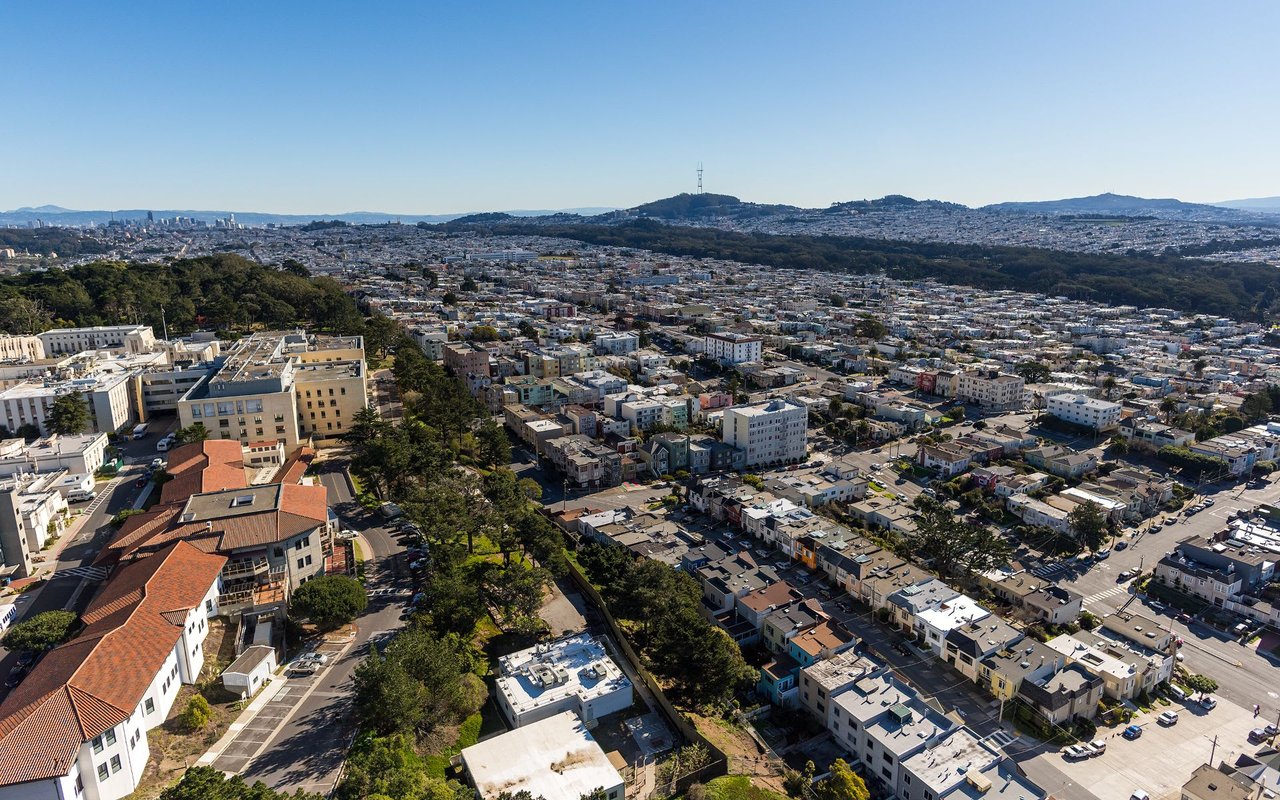
Selling a home in Crocker Amazon means pricing one of San Francisco's most single-family-dominant neighborhoods, perched on the winding hillside blocks at the foot of San Bruno Mountain at the southern edge of the city. The neighborhood sits south of Geneva Avenue and Mission Street, bordered by the Excelsior and Mission Terrace to the north, the Outer Mission to the west, Visitacion Valley to the east, and the Daly City line to the south. Housing stock is overwhelmingly single-family: Marina-style stucco homes, Victorian and Edwardian flats along the northern blocks, midcentury modern hillside homes on Naples, Munich, and Cordova, plus a growing set of expanded and renovated SFHs that have added square footage to the original floor plans. Crocker Amazon and the adjacent south-side neighborhoods report through SFAR MLS District 4. Recent neighborhood sale data: $1.05M median sold, approximately $820 per square foot, around 28 days on market, with a closed range that runs from roughly $899K for smaller starter SFHs and the rare condo to $1.4M+ for larger renovated homes with views, expanded floor plans, and parking. Anchored by Crocker Amazon Playground (one of the largest park spaces on the south side of the city) and bracketed by the Geneva Avenue commercial corridor and Mission Street to the north. Served by the M Ocean View Muni Metro along Geneva, plus the 8 Bayshore, 8BX Bayshore Express, 14R Mission Rapid, 43 Masonic, 49 Van Ness/Mission, and 54 Felton buses. Balboa Park BART is a short ride or walk from the northern blocks. ZIP code 94112. Crocker Amazon listing agent: Oliver Burgelman, Broker Associate at Vanguard Properties (DRE #01388135), 23+ years in San Francisco real estate, $350M+ closed across 300+ transactions, 85+ five-star reviews. Office at 2501 Mission Street, a short ride up Mission from the neighborhood. Contact: 415.244.5846.
Why selling in Crocker Amazon is different
Crocker Amazon is one of the last places in San Francisco where the standard product is a real single-family home with a garage, a yard, and enough room to live a full family life inside the city limits. That single fact shapes everything about how the neighborhood trades. The buyer pool is unusually broad and unusually durable: first-time SF buyers who've been outbid for years in the Sunset, the Excelsior, or Bernal Heights; growing families who need the SFH configuration and the yard; multigenerational households drawn to the floor plans that accommodate extended family; Daly City-adjacent buyers who want to be inside San Francisco for taxes, services, schools, or city identity; and longtime south-side renters finally able to buy near where they already live.
What makes Crocker Amazon unusual among San Francisco neighborhoods is that the value proposition (real SFH, garage, yard, walkable to parks and transit, sub-median price point) holds across nearly every block. Mid-block homes, hillside homes, view homes, expanded homes, and original-condition homes all participate in the same buyer dynamic. Well-prepped homes here regularly attract competitive offers because the buyer pool is deep at this price point and the housing stock is genuinely scarce: single-family homes with garages under $1.2M are becoming harder to find anywhere in the city, and Crocker Amazon is one of the last sources of supply.
For sellers, the pricing work is straightforward in shape and specific in execution. The neighborhood-wide buyer pool is already shopping; the question is whether your home presents in a way that gets it onto their shortlist. Preparation, staging, and disciplined pricing strategy consistently move sale prices by tens to hundreds of thousands of dollars. The recent near-comp at 318 Madrid Street, in the Excelsior just over the northern boundary, sold at 15% over asking in six days on exactly this pattern: a single-family home with original character, modern updates, and a real backyard, priced to invite the broad buyer pool in rather than filter it out.
Crocker Amazon market snapshot
A recent near-comp from just over the northern edge: 318 Madrid Street
A recent single-family sale just over the northern boundary in the Excelsior gives a useful read on what's happening in the comparable SFH segment that drives Crocker Amazon outcomes. 318 Madrid Street is a two-bedroom, one-bath single-family home with original architectural character (fireplace, wainscoting, coved ceilings), an updated kitchen with stone counters and stainless appliances, main-level laundry, and a professionally landscaped multi-level backyard. The same housing typology, the same buyer pool, and the same value proposition that defines Crocker Amazon. Listed competitively to invite the broad buyer pool in, the home went into contract in six days with multiple competing offers and closed at 15% over the list price.
For Crocker Amazon sellers, the takeaway isn't about Madrid Street specifically. It's about what well-prepped single-family homes with garages, yards, and the right preparation are clearing when the strategy is matched to the buyer pool actively shopping this part of the city. The approach at 318 Madrid was specific to the segment: highlight original character rather than replace it, invest in staging that emphasized the indoor-outdoor flow and the backyard, lead the marketing with the lifestyle the home actually delivers, and list competitively so the broad buyer pool engages on the first weekend rather than filters past on price. The same approach drives outcomes for Crocker Amazon's Marina-style stucco SFHs on the central blocks, the Victorian and Edwardian flats along the Mission Street border, the midcentury hillside homes on Naples, Munich, and Cordova, and the expanded and renovated SFHs reaching the upper end of the neighborhood band.
How your Crocker Amazon home prices
Crocker Amazon is single-family dominant, but the SFH stock itself splits into five identifiable typologies and each one prices on its own logic. The typology sets a starting band; condition, block, view, lot size, expansion potential, and parking then move the number within that band.
- Marina-style stucco single-family homes. The dominant typology across the central and southern blocks. Built mostly mid-century, typically two to three bedrooms over a tuck-under garage, with a small front yard and a usable back yard. Trades on condition, kitchen and bath updates, light, outdoor space, and parking. The deep buyer pool here is families and first-time buyers wanting the SFH configuration at a workable price point.
- Victorian and Edwardian flats and single-family homes. Concentrated along the northern blocks toward Geneva Avenue and the Mission Street border, often shared with the Excelsior and Mission Terrace edges. Older housing stock with original architectural detail (fireplaces, wainscoting, coved ceilings, bay windows). Trades on the preservation of original detail, the updated systems, and the walkability to the Mission Street and Geneva commercial spines.
- Midcentury hillside homes on Naples, Munich, and Cordova. The terraced streets climbing toward San Bruno Mountain hold a strong cluster of midcentury homes, many with significant view potential to the south, the bay, and the mountain. Trades on view exposure, lot orientation, modern systems, and the architectural integrity of the original midcentury floor plans.
- Expanded and renovated single-family homes. A growing segment of homes that have added square footage to the original SFH floor plan (down-additions, rear additions, attic conversions), often pairing the expansion with full kitchen and bath remodels and modern systems. Trades on total finished square footage, the quality of the expansion, permitting status, and parking. This is the upper end of the neighborhood band.
- Smaller starter single-family homes, plus the rare condo, TIC, or duplex. The entry tier of the neighborhood: smaller original-condition SFHs, occasional condos and TICs in the few multi-unit buildings, and a small number of duplex configurations. Often the most accessible way into the neighborhood for first-time buyers and the buyer pool here is broad.
Where your home fits in this five-typology map sets a starting band. Condition, block, view, expansion status, and parking then move the number within that band. As a current rule of thumb: smaller starter SFHs and the rare condo or TIC typically start $850K to $1M. Standard Marina-style SFHs and Edwardian flats in good condition run $1M to $1.2M. Larger or renovated SFHs and the Victorian and Edwardian homes with significant updates sit $1.15M to $1.35M. Midcentury hillside homes with views and parking trade $1.2M to $1.5M. Expanded and fully renovated homes with view exposure and modern systems can reach $1.4M to $1.7M+. Every category has a strong buyer pool active right now. The best first move when you're weighing a sale is a current valuation on your specific address. Request a free home valuation.
Sub-area pricing
Crocker Amazon reads as a single neighborhood from above, but four sub-areas trade on meaningfully different fundamentals. Here's what's pulling premiums in each one.
Geneva Avenue corridor & Crocker Amazon Playground
The northern edge of the neighborhood, anchored by Geneva Avenue and the 17-acre Crocker Amazon Playground (with playing fields, tennis courts, and one of the largest open spaces on the south side of the city). The blocks here have the strongest walkability scores in the neighborhood and the most direct access to the M Ocean View Muni Metro, Balboa Park BART, and the Mission Street commercial spine. Draws families who prioritize the park, transit-oriented commuters, and buyers wanting the most active part of the neighborhood. Pricing strategy: emphasize the park frontage or proximity, the M Metro access, the walkability to Mission Street and Geneva businesses, and the family-friendly amenity profile in the marketing.
Naples, Munich & Cordova hillside blocks
The central terraced streets climbing toward San Bruno Mountain. The midcentury home cluster lives here, often with the strongest views in the neighborhood (south to Daly City, east toward the bay, up to the mountain), and the quietest residential character. Lot orientation matters significantly here: south-facing and view-facing lots command real premiums, and the topography means parking and access vary block to block. Draws buyers wanting view exposure, the architectural character of the midcentury stock, and the quieter hillside streets. Pricing strategy: emphasize the view exposure, the lot orientation, the architectural integrity of the midcentury homes, and the quiet residential character.
San Bruno Mountain foothills (southern edge)
The southern blocks pressing up against the Daly City line and the foot of San Bruno Mountain. The quietest part of the neighborhood, with the most open space immediately to the south (the San Bruno Mountain State and County Park stretches out from this edge), and a slightly more suburban rhythm. Lots tend to be a touch larger here and many homes have expanded square footage as a result. Draws buyers wanting maximum quiet, the proximity to the mountain park, and the more spacious lot patterns. Pricing strategy: emphasize the open space adjacency, the lot size, the expansion potential or completed expansions, and the suburban-quiet character relative to the rest of the city.
Excelsior & Outer Mission border (northern blocks)
The blocks closest to the Excelsior and Outer Mission boundaries, often holding the oldest housing stock in the neighborhood (Victorian and Edwardian flats and single-family homes with original architectural detail). The Mission Street commercial corridor is a short walk from these blocks, and the buyer pool often overlaps with the Excelsior and Outer Mission buyer pool, drawing buyers who want the Mission Street access and the older architecture. Pricing strategy: emphasize the original architectural character, the Mission Street walkability, the corridor culture and food, and the durable cross-boundary buyer pool that shops Crocker Amazon, the Excelsior, and the Outer Mission together.
What's pulling premiums in Crocker Amazon right now
Features that consistently produce premium sale outcomes, features that trade in the middle of the spread, and conditions that tend to need sharper pricing or prep.
- South-facing or view-facing hillside lots
- Expanded square footage with clean permits
- Renovated kitchens & baths
- Real usable backyards
- Tuck-under garage with full driveway
- Walkability to Crocker Amazon Playground or M Metro
- Standard Marina-style SFHs in good condition
- Original-detail Edwardian flats
- Mix of original and lightly updated systems
- Mid-hill blocks without view exposure
- Smaller lots without expansion potential
- Deferred maintenance
- Un-permitted additions
- Geneva Avenue or Mission Street noise frontage
- North-facing dark interiors
- Older systems and roofs needing replacement
Listing strategy in Crocker Amazon
A correct Crocker Amazon list price isn't a single number, it's a pricing strategy keyed to which buyer pool your home actually serves. There are roughly four moves available, each one matching a different combination of home strength and buyer profile: list competitively to invite engagement, which works for standard Marina-style SFHs and Edwardian flats where a deep buyer pool is actively shopping for the specific combination of SFH configuration, garage, and yard at a workable price point (the 318 Madrid near-comp shows the dynamic at 15% over list in six days); list at market and let the bidding work, which fits well-prepped midcentury hillside homes with views, expanded SFHs with clean permits, and renovated homes with modern systems; list at the high end of the band with willingness to negotiate, which fits larger renovated homes and view homes where the buyer pool prioritizes the specific combination of features over the lowest possible price point; and list at a premium with patience, which can work for genuinely unique properties (the rare expanded view home with parking and a fully renovated floor plan) where comp scarcity supports a longer marketing window. The right move depends on what's strongest about your home and which buyer pool is actively shopping for that combination.
Prep is the other lever, and in Crocker Amazon the ROI math is heavily skewed toward pre-listing preparation. The buyer pool here is broad and motivated, and a well-prepped home consistently produces multi-offer outcomes while a poorly-prepped home often sits and requires a price reduction. For standard Marina-style SFHs, light cosmetic prep (paint, refinished floors, landscaping) plus professional staging usually pays for itself many times over. For Edwardian flats and Victorian homes, the prep conversation centers on preserving original detail while updating systems; buyers in this band pay for character. For hillside midcentury homes, the prep is usually focused on showcasing the view and the architectural integrity of the original floor plan. For expanded and renovated homes, the prep includes a clean permit history and the documentation that supports the renovation. Pre-listing inspection reports (foundation, roof, sewer lateral, pest, building envelope) consistently produce stronger offers across all typologies because they remove buyer-contingency negotiating room. My guide to the eight essential steps to prepare a home for sale in SF and Marin covers the prep that adds the most value, and my Home Seller's Guide walks through the full listing process. I'll walk through all of this with you in the pricing call.
Your Crocker Amazon listing agent

My office is at 2501 Mission Street, a short ride up Mission from the neighborhood. I've been a south-side San Francisco listing agent for over two decades, with deep work across the southern value tier including nearby Merced Heights, representing sellers across the full Crocker Amazon stock: Marina-style stucco SFHs on the central and southern blocks, Victorian and Edwardian flats on the northern blocks toward the Excelsior and Mission Terrace borders, midcentury hillside homes on Naples, Munich, and Cordova, expanded and renovated SFHs reaching the upper end of the band, and the entry-tier starter homes and rare condos and TICs. The Crocker Amazon pricing job is matching the home's specific strengths (SFH configuration, garage, yard, view, expansion, updates, walkability) to the broad buyer pool that's actively shopping this part of the city. Career track record: 23+ years, $350M+ closed across 300+ transactions, and 85+ five-star reviews. A useful recent comp just over the northern boundary in the Excelsior: 318 Madrid Street, a two-bedroom single-family home, sold at 15% over list in six days with multiple competing offers, on a strategy specifically built for the SFH buyer pool that shops both the Excelsior and Crocker Amazon. The same approach (read the home's strengths, match to the buyer pool, choose the strategy that fits) drives outcomes across every Crocker Amazon block and every Crocker Amazon home typology. If you're considering a sale, the first step is a current valuation on your specific address.
Frequently asked questions about selling a Crocker Amazon home
What is my Crocker Amazon home worth?
How long does it take to sell a home in Crocker Amazon?
Why does Crocker Amazon attract such a broad buyer pool?
How do you price a Marina-style SFH vs an Edwardian flat vs a midcentury hillside home vs an expanded renovation?
What does it cost to sell a home in Crocker Amazon?
Should I renovate before listing, or sell as-is?
What is the Crocker Amazon market doing for sellers right now?
What's the weather like in Crocker Amazon?
How do you market a Crocker Amazon listing?
What's the difference between Crocker Amazon and the Excelsior?
Should I list in spring, summer, or fall?
Who is the best Crocker Amazon real estate agent?
Considering buying in Crocker Amazon instead?
Ready to talk about selling your Crocker Amazon home?
Crocker Amazon is one of the last reliable sources of real single-family homes with garages and yards inside San Francisco at a price point close to the city's median. That value proposition draws a deep, durable, year-round buyer pool, and well-positioned and well-prepped homes across every typology and every block consistently produce competitive outcomes. If you're considering a sale on any Crocker Amazon block, the first step is a current valuation on your specific address, followed by a 15-minute pricing call to walk through typology, buyer pool, and prep strategy for your home. No commitment to list, just an honest read on where your home sits in today's Crocker Amazon market.