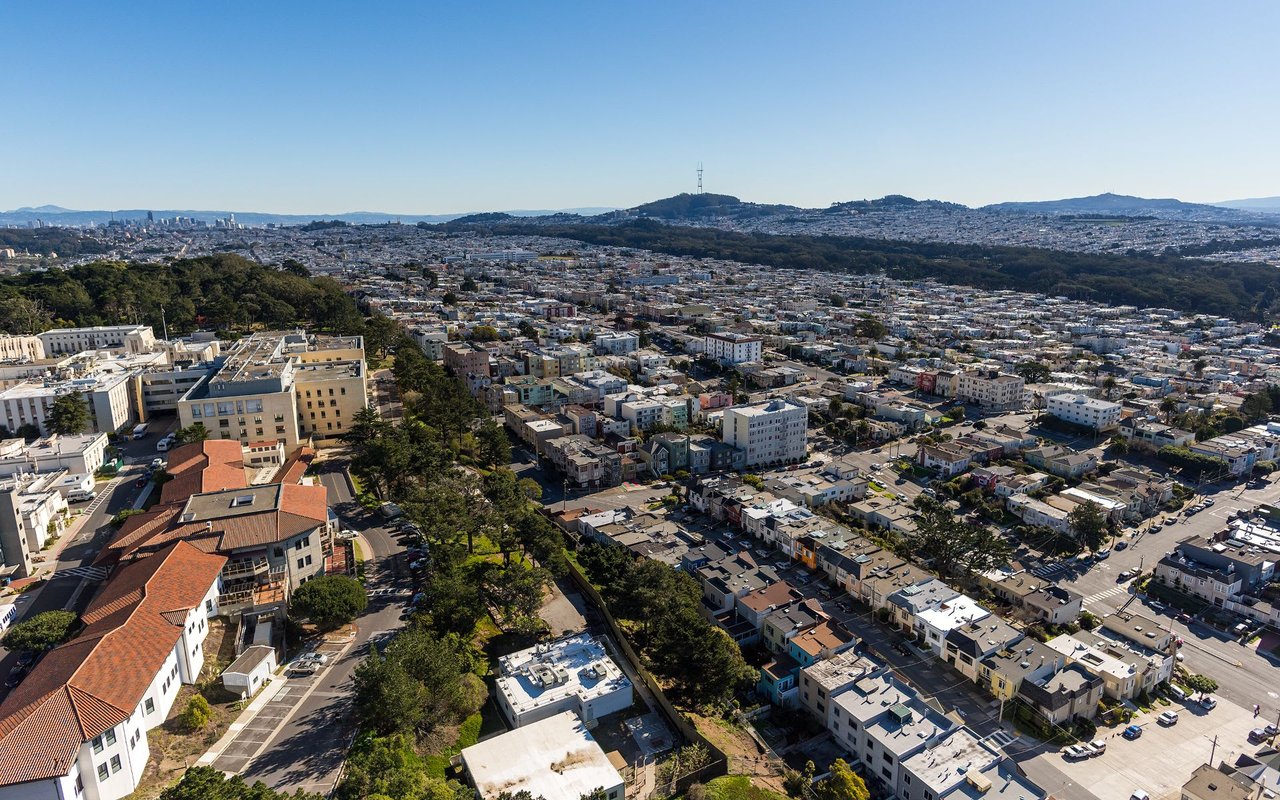
The Bayview District
San Francisco's sunny southeastern waterfront. India Basin's new shoreline park, Downtown and Bay Bridge views, and some of the most attainable single-family prices left in the city, with real upside as the waterfront develops.
The Bayview is San Francisco's sunniest, most attainable single-family market, and it's on the rise as the India Basin shoreline develops.
Recent closed single-family sales, SFAR MLS District 10. Median-forward, because a few high-end sales pull the average up; your block, condition, and view will price differently.
1449 Innes Avenue, a home Oliver Burgelman listed and sold, drew multiple offers and closed at $1,000,000 in 6 days, about 12% over its $895,000 list.
Why selling in the Bayview is different
Most San Francisco neighborhoods have a tight band of comparable homes, so pricing is a matter of small adjustments around a clear center. Bayview is wider than that. The same few blocks can hold an unrenovated 1940s stucco house, a fully remodeled single-family with bay views, a multi-unit Victorian, and a new townhome near the water. Each draws a different buyer and prices off a different set of comps. The job for a seller is to identify which market your home actually competes in and to price into that segment, rather than to a blended neighborhood average that describes no real buyer. The numbers show this directly: across recent closed single-family sales the median was about $915,000 while the average ran near $995,000, because a few high-end sales pull the average up.
The second difference is the depth and discipline of the value-buyer pool. Bayview attracts buyers who have been priced out of other parts of the city and want more light, more space, and a real yard, and it offers that at roughly $697 per square foot, well below the citywide median. That demand is deep, but it is careful: these buyers run the numbers, they notice deferred maintenance, and they read condition closely. A clean, updated, well-presented home is rewarded with strong, often competitive offers; a home with obvious work needed is priced by buyers to the cost of that work plus a margin for the risk of taking it on. The condition gap in Bayview is wider than in most of the city, so presentation and prep have an outsized effect on the final number.
The third difference is new development. India Basin's shoreline park and the larger redevelopment along the southeastern waterfront are changing what buyers will pay near the water, and new-construction townhomes and condos are adding a fresh comp set that did not exist a few years ago. For sellers of nearby homes that is good news, because rising new-build pricing tends to lift the ceiling for renovated resale homes in the same pocket. It also means stale comps can mislead. Pricing a Bayview home well requires reading the most recent sales in your specific corridor, not a number from a year ago.
A Bayview seller case study: 1449 Innes Avenue, India Basin
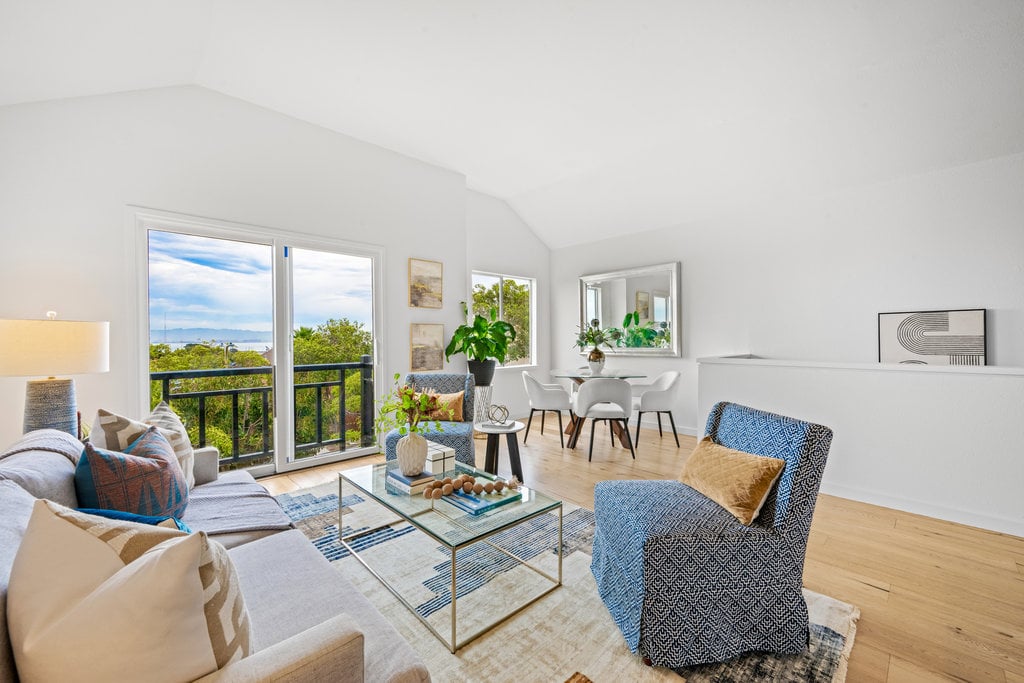
When I listed 1449 Innes Avenue, it sat above India Basin, the part of Bayview most directly shaped by the new shoreline park and waterfront development. It is a light-filled single-family home of about 1,277 square feet that lives as four bedrooms and two baths (buyer to verify permits), with sweeping Downtown, Bay, and Bay Bridge views and a flexible layout, one block from the Third Street rail. I listed it at $895,000; it drew multiple offers, an offer date set after just 6 days, and closed at $1,000,000, about 12% over list at roughly $783 per square foot, with a backup buyer in place. Even with a VA loan requiring completion of all Section 1 pest repairs, escrow closed in 21 days.
What 1449 Innes shows about selling in Bayview is that the result followed the strategy, not luck. I priced it competitively at $895,000 to concentrate demand into one strong open-house weekend and to set an offer date quickly rather than wait on the market. In Bayview, buyers rarely compete on price alone; they compete on light, view, and the rarity of flexible space. A well-prepared view home priced to invite the market in, marketed to the right buyers, is what produces a premium here, and the corridor's rising new-construction comps help by lifting the ceiling a renovated home can reach.
How your Bayview home prices
Most Bayview homes fall into one of five categories, and each one prices on its own logic:
- Stucco and Mediterranean-style single-family homes. The most common Bayview product: detached and semi-detached houses from the 1920s through the 1940s, often stucco-clad, on standard San Francisco lots. These price primarily on condition and floor plan. An updated kitchen and baths, a clean systems report, and a usable yard move them to the top of their band; deferred maintenance moves them to the bottom.
- Victorian and Edwardian homes and flats. Older pockets hold Victorian and Edwardian single-family homes and two-to-four-unit flats. Original detail paired with updated systems is the strongest version of this product. As elsewhere in the city, over-renovation that strips character can compress the premium.
- View homes on the hills. Homes on Bayview's higher ground carry a view premium that is a distinct pricing variable, not a rounding adjustment. Downtown, bay, and bridge sightlines can separate two similar homes by a wide margin, so these should be priced and marketed around the view as a primary asset.
- New-construction townhomes and condos. New townhomes and condos near India Basin and the larger southeastern waterfront redevelopment are a growing share of the market and a fresh comp set. They price on finish level, parking, outdoor space, and proximity to the new parkland, and they tend to lift the local ceiling for nearby resale homes.
- Multi-unit buildings and income flats. Two-to-four-unit buildings draw both owner-occupant and investor buyers. These price to a blend of comparable-sales value and the income math, so the right approach is a clean rent roll alongside strong residential appeal.
Where your home fits in this map sets a baseline; condition and view adjust it from there. As a rough guide, fixers and homes needing significant work generally trade toward the low end of the single-family range, near the bottom of the roughly $570,000 to $1.8M band. Solid mid-block homes in average condition sit near the $915,000 median. Renovated homes, view homes, and new construction reach the top, as 1449 Innes did at $1,000,000. Because the spread is so wide, the single most valuable conversation before listing is an honest read of which band your home is in and what, if anything, is worth doing to move it up. Request a free home valuation.
Sub-area pricing
Bayview reads as one neighborhood from a distance, but its pockets trade on meaningfully different fundamentals. Here's what's pulling premiums in each one.
India Basin and the Innes Avenue waterfront
The pocket closest to the new shoreline park and waterfront redevelopment, and where 1449 Innes sold. New construction and view homes are setting fresh, higher comps here, and proximity to the parkland is becoming a real premium driver. Sellers in this corridor benefit most from pricing to the most recent corridor sales rather than older neighborhood-wide numbers.
Central Bayview and the Third Street corridor
The most residential part of the neighborhood, with the densest mix of single-family stock and the most direct access to the T-Third Muni line, shops, and restaurants along Third Street. Pricing here is driven mostly by condition and walkable convenience. This is the deepest part of the value-buyer pool, so well-presented homes tend to move quickly.
Bayview Heights and the hilltop blocks
Higher-elevation blocks with view homes and, in places, larger lots. The view premium is strongest here, and homes with Downtown and bay sightlines should be priced and marketed around that asset. The occasional double lot also attracts buyers thinking about additions or development potential.
Silver Terrace and the northern edge
The blocks toward Portola and Bernal Heights, more residential and slightly removed from the waterfront. Buyers here often cross-shop other southern San Francisco value-tier areas such as the Excelsior, so pricing benefits from reading comps just over the boundary as well as within Bayview proper.
What's pulling premiums in the Bayview right now
A few categories consistently produce above-median outcomes, while others need sharper pricing and prep.
- Renovated, move-in-ready homes
- View homes on the hills
- New-construction townhomes near India Basin
- Flexible layouts and added bedrooms
- Larger and double lots with upside
- Strong natural light and outdoor space
- Solid mid-block single-family homes
- Average, livable condition
- Clean systems, no major issues
- Standard lots and floor plans
- Quiet residential blocks
- Heavy fixers needing full renovation
- Deferred maintenance
- Homes closest to industrial edges or noise
- Awkward layouts without upside
- Unaddressed pest or systems issues
Listing strategy in the Bayview District
Because Bayview's price spread is so wide, strategy starts with segmentation, then chooses a pricing move. There are roughly four moves available: price competitively to concentrate demand, the 1449 Innes play, where a sharp list price draws a strong open-house weekend and lets you set an offer date quickly rather than wait on the market, which works well for clean, well-presented homes with light and view; price to your segment at market and let qualified buyers come to a fair number, which works for solid mid-condition homes near the median; price to the value-add buyer for homes with clear upside, marketing to buyers who want to build equity through improvements rather than pretending the work is done; and read the new-development comps in your corridor near India Basin and the Shipyard, where rising new-construction pricing can support a stronger number for renovated and view homes nearby. The right move depends on your home's condition, view, and corridor, and on current inventory.
Prep is the other lever, and it matters more in Bayview than in neighborhoods with a tighter comp band, because the condition gap here is so wide. Targeted prep, paint, floors, a clean systems report, light staging, and strong photography that shows the light and the view, often returns more than it costs. A pre-listing inspection and a short, prioritized prep plan are especially powerful here, because they convert a buyer's uncertainty about a value-add home into a number they can underwrite, which widens your buyer pool and protects your price. My home seller's guide walks through the full process, and I tailor the plan to your specific home.
Your Bayview District listing agent

I am Oliver Burgelman, a Broker Associate at Vanguard Properties with more than 23 years selling San Francisco real estate and over $350M closed across 300+ transactions and 85+ five-star reviews. I work Bayview the way the neighborhood actually trades, by segment and by corridor, not off a single average. My India Basin listing at 1449 Innes Avenue closed at $1,000,000, about 12% over the $895,000 list, with multiple offers and a backup buyer, a good example of how to price and market a Bayview home so it reaches the neighborhood's deep, motivated buyer pool rather than sitting. If you are thinking about selling, I will give you an honest read on which segment your home competes in, what prep is worth doing, and where current comps support your price.
Frequently asked questions about selling a Bayview District home
What is my Bayview home worth?
What is the Bayview market doing for sellers right now?
How long does it take to sell a home in Bayview?
Should I renovate before selling in Bayview?
How does new development at India Basin and the Shipyard affect my sale?
Why is Bayview's price per square foot lower than the rest of the city?
What does it cost to sell a home in Bayview?
What about appraisals and financing in Bayview?
Who is the best Bayview District real estate agent to sell my home?
Considering buying in Bayview instead?
Thinking about selling in Bayview?
Start with an honest number and a clear plan. I will read your home by segment and corridor, tell you what prep is worth doing, and show you where current comps support your price. No commitment to list, just a clear read on where your home sits in today's Bayview market.