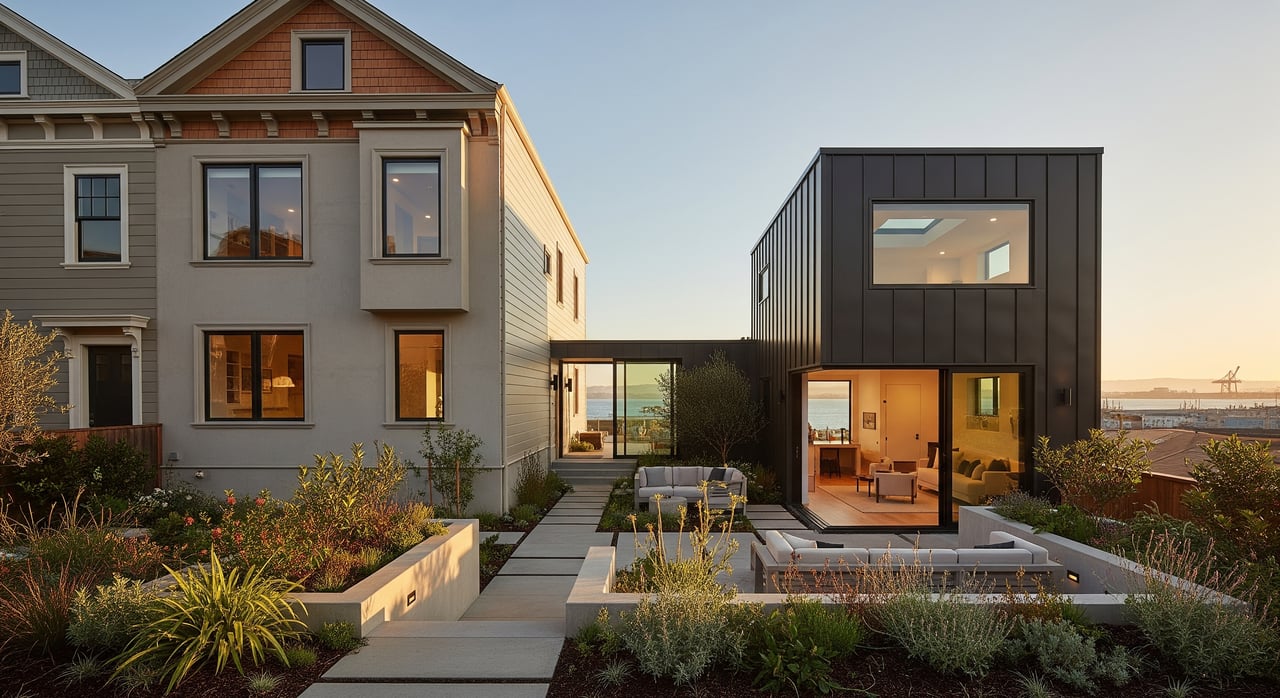
Building an ADU or JADU in Bayview, San Francisco: A Homeowner’s Guide
Adding an ADU or JADU to your Bayview home is one of the most reliable ways San Francisco homeowners offset a mortgage, generate rental income, and build long-term value. Here’s how to tell what your lot can do — and move from idea to income without losing momentum to red tape.
Thinking about adding an ADU or JADU to your Bayview property? Done right, an accessory dwelling unit can help cover your mortgage, boost long-term value, and make the most of one of San Francisco’s most ADU-friendly lots. The key is understanding what’s possible on your parcel and moving from idea to income without losing momentum to red tape. Be clear on your goal, too: an ADU that isn’t properly executed won’t add value, and a poorly permitted unit can become a drawback in the eyes of future buyers.
Below, we walk through the main ADU types, what’s realistic on a typical Bayview lot, how to run the numbers, and where projects tend to stall. Treat this as a starting point for the possibilities — but don’t break ground without speaking to an attorney, an architect, and a few contractors to confirm your plan is buildable.
ADU vs. JADU: What’s the Difference?
An ADU (Accessory Dwelling Unit) is a self-contained living space with its own kitchen, bath, sleeping area, and entrance. It can be attached to your home, detached in the backyard, or created by converting existing space such as a garage.
A JADU (Junior ADU) is smaller — up to 500 square feet — and must be created within the walls of the existing single-family home. It includes an efficiency kitchen and typically requires the owner to live on-site.
ADU
Full unit, attached or detached. Has its own kitchen, bath, and entrance. No owner-occupancy requirement — fully rentable and transferable.
JADU
Up to 500 sq. ft., built inside the existing home with an efficiency kitchen. Owner typically must live on the property.
Can You Build a Bayview ADU on Your Lot?
Bayview has some of the most ADU-friendly zoning in San Francisco, but every parcel is different. Before sketching floor plans, run a quick feasibility check:
Verify your parcel’s zoning designation on SF Planning’s Property Information Map.
Measure setbacks, rear-yard depth, and available access points.
Check the size of your electrical panel, water service, and sewer lateral.
Note shared driveways, easements, and historic overlays.
If the property has tenants or was built before 1978, check with the SF Rent Board before starting.
Even small differences in slope, access, or lot width can change what’s possible — especially when adding a detached ADU. If you’re still deciding whether Bayview is the right place to own and invest, our Bayview neighborhood guide covers the market, lifestyle, and value trends in more depth.
| Type | Description | Cost | Timeline | Owner-Occupancy |
|---|---|---|---|---|
| JADU (Interior Conversion) | Convert a room or part of the home into a smaller unit with a kitchenette. | Low | Fast | Yes |
| Garage Conversion | Turn an existing garage into a studio or one-bedroom ADU. | Medium | Moderate | No |
| Detached ADU | Build a new unit in the backyard for maximum privacy and flexibility. | High | Long | No |
| Attached ADU | Add square footage to the main home and create a separate unit. | Medium-High | Medium-Long | No |
Why Bayview Works Well for ADUs
Bayview lots often include deep rear yards or standalone garages, which makes garage conversions and detached ADUs a strong option here. They offer privacy, rental flexibility, and clear separation from the main home — features tenants value and that hold up well at resale.
Running the Numbers on a Bayview ADU
Treat your ADU like a small business project and use conservative assumptions at first:
- ✓Market rent: Check current ADU-sized rentals in Bayview and nearby districts.
- ✓Vacancy: Budget 5–10% depending on tenant profile.
- ✓Operating expenses: Include insurance, maintenance, and property-tax adjustments.
- ✓Financing: HELOCs, renovation loans, or specialized ADU programs.
- ✓Reserve: Always plan a buffer — Bayview soil and older utilities can surprise you.
Quick formula: Net rent – (vacancy + management + utilities + maintenance) = Net Operating Income
Then compare that to your all-in construction cost to find your payback period.
Financing a Bayview ADU
Fastest and simplest if feasible.
Flexible for smaller projects.
Good for larger builds.
Local lenders sometimes underwrite projected rent — ask early.
If your ADU plans and rental comps are solid, some lenders will count projected income toward qualification.
Bayview ADU Permitting and Timelines
Here’s a realistic order of operations:
2–6 weeks
4–12+ weeks
Varies widely
2–9 months
Interior conversions move quickest. Detached ADUs take longer because of trenching, utilities, and site access.
Phasing for Cash Flow
Many Bayview owners take a phased approach:
Phase 1
Convert a garage or interior space for quick rental income.
Phase 2
Upgrade utilities and complete a detached ADU later.
This spreads costs over time and lets early rent help offset the next build.
Key Practicalities on Bayview Parcels
- ✓Access and staging: Tight streets and alleys require planning.
- ✓Structure: Older foundations may need seismic work.
- ✓Utilities: Expect upgrades for separate meters and new laterals.
- ✓Fire separation: Confirm egress, sprinklers, and clearances early.
Resale and Long-Term Value
A legal, well-documented ADU adds real value — especially with records of permits, inspections, and final occupancy. It broadens your future buyer pool, supports appraisal value, and signals quality. If you’re weighing an ADU specifically to sell stronger later, it’s worth getting a current read on what your home is worth today; you can request a free Bayview home valuation here.
Keep copies of your:
- Approved plans
- Final permit set
- Occupancy certificate
- Utility-separation notes
Be aware that JADUs typically require owner occupancy, which can limit future flexibility, while full ADUs are fully rentable and transferable.
Red Flags That Deserve a Pause
- !Historic resource overlays
- !Shared access or easements
- !Steep grade or drainage issues
- !Rent-controlled tenants on-site
- !Undersized utilities
If any of these apply, get parcel-specific advice before investing in design.
A Realistic Bayview ADU Path
On a typical 25×100 Bayview lot with a rear garage, a smart sequence looks like this:
Convert a small portion of the home into a JADU for early rental income.
Roll that early rent into a garage-conversion ADU.
Down the line, if zoning allows, add a detached ADU for maximum long-term potential.
This approach builds equity steadily while minimizing disruption. Curious what well-positioned Bayview homes are selling for? Browse current Bayview homes for sale to see how added units and lot potential are priced into the market.
Bayview ADU FAQs
How much does an ADU cost in Bayview, San Francisco?
Costs vary widely by build type. Interior JADU conversions are the least expensive, garage conversions sit in the middle, and detached backyard ADUs are the most expensive because of new construction, trenching, and utility work. Always get parcel-specific bids from a few contractors before committing.
Do I have to live on-site to build an ADU in Bayview?
Not for a standard ADU — attached, detached, and garage-conversion ADUs have no owner-occupancy requirement. A JADU, however, typically does require the owner to live on the property.
Does adding an ADU increase my Bayview home’s value?
Yes, when it’s legally permitted and fully documented. A properly built ADU adds rentable square footage, broadens your buyer pool, and supports appraisal value. An unpermitted unit can do the opposite and become a liability at sale.
How long does it take to build an ADU in Bayview?
Plan on a few weeks for feasibility and concept, one to three months for design, a variable permit-review window, and two to nine months of construction. Interior conversions are fastest; detached ADUs take the longest.
Your Next Step
If you’re thinking about adding an ADU or JADU in Bayview, start with your parcel map and a clear idea of what’s possible — then run the numbers with local context. I’m Oliver Burgelman, and I can help you read your lot’s potential and what it means for resale — no pressure.
Oliver Burgelman — Broker Associate | Vanguard Properties · CRS, CRB, ePRO, SRES · DRE #01388135
Serving San Francisco & Marin · 415-244-5846 · burgelmanhomes.com
Home is where the heart is. Let’s get you there. | CA DRE# 01388135 | (415) 244-5846