Pacific Heights
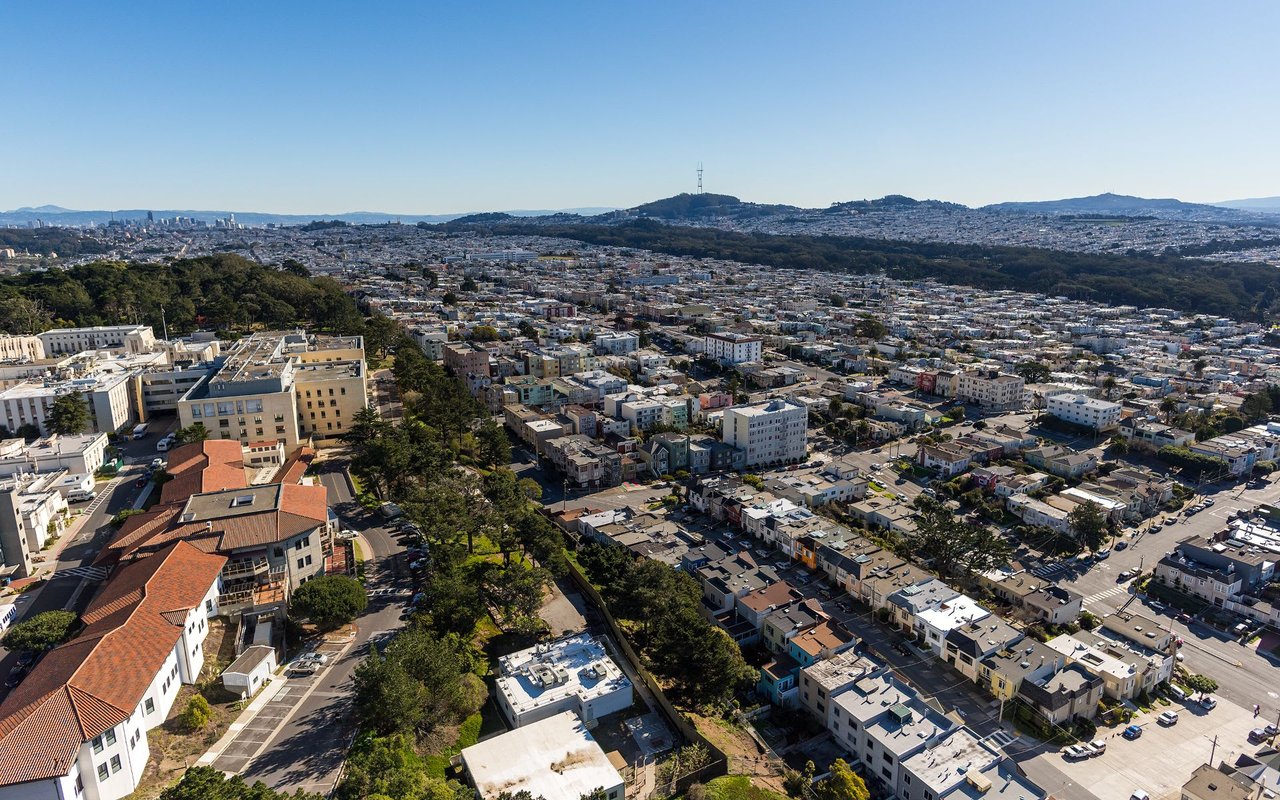
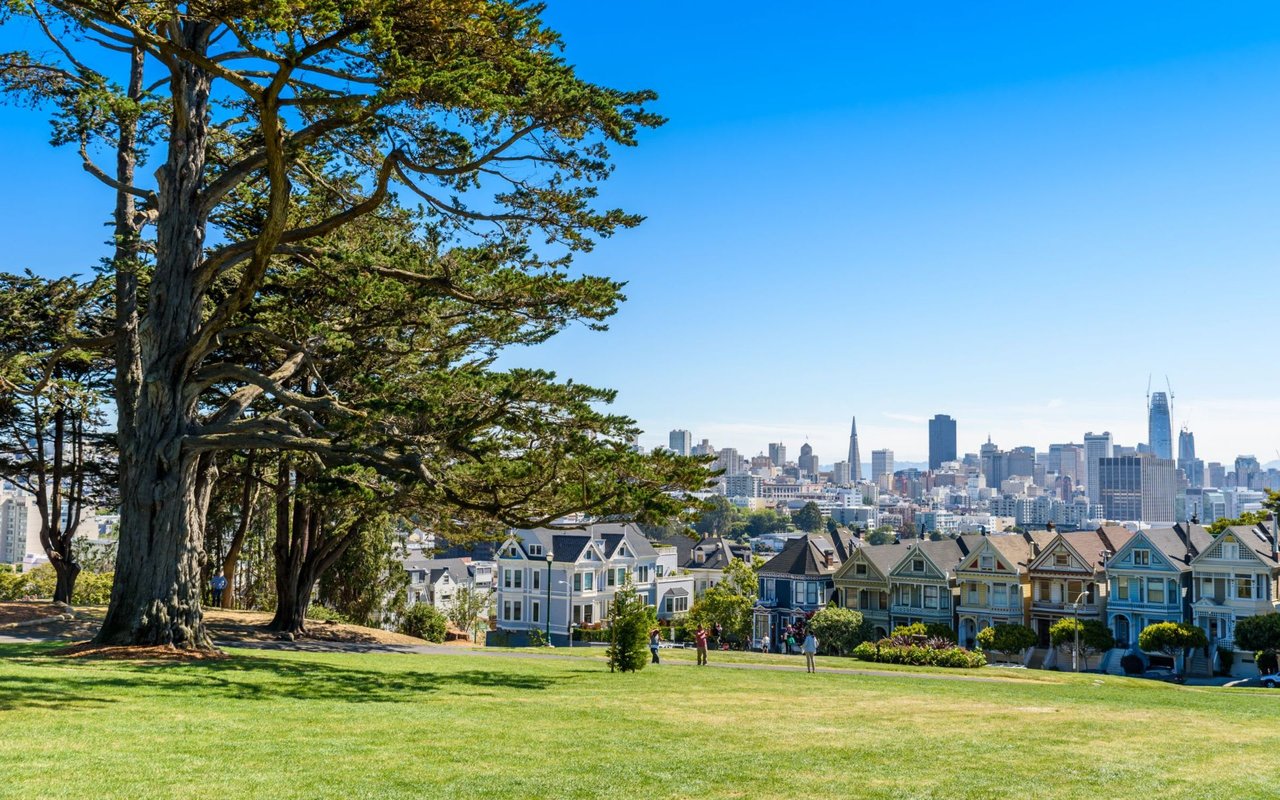
The blocks between Broadway and California Street, where the north side looks across the Bay to Marin, Fillmore Street carries the shops and restaurants, and Alta Plaza and Lafayette Parks sit at the center of the residential grid.
Pacific Heights is two markets sharing one map, and they price about $700 a square foot apart, which is why a blended neighborhood median describes almost no one's home.
SFAR MLS District 7 closings recorded on or after March 18, 2026, compiled by Oliver Burgelman: 26 single-family residences totaling $254.5 million and 88 condominiums totaling $194.9 million, roughly $449 million of combined volume. Co-op and multi-unit sales are excluded. Median-forward, because a handful of trophy sales pull the average well above the middle of the market: average days to contract ran 44 for houses and 24 for condominiums against a median of 12 for both, and the slowest house took 507 days against the slowest condominium at 244. Your property type, sub-area, view orientation, condition, and building will price differently.
Why selling in Pacific Heights is different
Pacific Heights doesn't price like the rest of San Francisco, and the reason is the housing stock. Most SF neighborhoods have a dominant home type that sets a tight pricing baseline. Pacific Heights has five markets running at once: detached Victorian and Edwardian mansions, single-family townhouses, mid-century and contemporary single-family residences, pre-war luxury condos and co-ops, and modern condos. Each one has its own buyer pool, its own comp set, its own absorption rate, and its own pricing logic. A 7,500 square foot house on Broadway and an 1,100 square foot condo on Sacramento Street can both sell well in the same week without sharing a single comparable sale. The neighborhood runs from Broadway and Vallejo Street south to California Street, and from Van Ness Avenue west to Presidio Avenue, in ZIP codes 94115, 94109 and 94123. In the MLS it is District 7, grouped with Cow Hollow, the Marina and Presidio Heights. See the San Francisco MLS district guide.
The second feature is the depth and the patience of the buyer pool. Pacific Heights is one of a small handful of San Francisco neighborhoods with a meaningful international and out-of-state buyer base, drawing from New York, Los Angeles, Tokyo, Hong Kong, London, peninsula and East Bay tech wealth, and the SF-resident move-up market. What that produces is not a slow market, it is a market with an enormous spread. Correctly positioned homes clear inside two weeks. Mispriced ones, and genuinely singular trophy properties whose buyer is not already shopping, can sit for a year or more. That spread is the whole argument for getting the list price and the listing channel right the first time, because the penalty for a wrong number here is not a small discount, it is a listing that goes stale in public view while the comp set moves on.
The third feature is the public-versus-private decision. Pacific Heights is the San Francisco neighborhood where the off-market and pre-market transaction matters most. Trophy mansions, discreet sellers, and properties whose most likely buyer sits in the international or out-of-state pool are often shown through private broker networks before public MLS, or transacted entirely off-market. So the pricing job here includes choosing whether the property is best served by a full public campaign, a strategic pre-market window with private broker outreach, or a fully off-market sale through targeted introduction. That choice changes the timeline, the buyer pool, and frequently the realized price. It is a judgment call on every listing, not a default.
How your Pacific Heights home prices
Most Pacific Heights homes fall into one of five categories, and each one prices on its own logic. Sub-area position, view orientation, condition, and (for condos and co-ops) the specific building run through all of them.
- Victorian and Edwardian mansions (1870s to 1910s). The iconic Pacific Heights detached home. Three to five stories, often 5,000 to 10,000+ square feet, on full or split city lots, with intact original detail (paneling, ceilings, hardware, stained glass) at the strongest examples. The Gold Coast corridor along Broadway and Pacific Avenue concentrates the most significant of these. They trade on architectural provenance, condition, view orientation, lot, and the cleanliness of any restoration or modernization.
- Single-family townhouses and split-lot homes (1900s to 1940s). The deepest single-family inventory in the neighborhood. Typically 3 to 4 stories, 3,000 to 6,000 square feet, attached or semi-attached, ranging from Edwardian and Beaux-Arts to Mediterranean Revival and pre-war modern. They trade on sub-area, view position, expansion or renovation history, and how the floor plan relates to the available light and view.
- Mid-century and contemporary single-family residences. A smaller tier of houses built or substantially rebuilt from the 1950s through the present, often with architect provenance and a specific view or lot orientation. They price on architectural significance, condition, and the comp set of similar architect-designed homes citywide.
- Pre-war luxury condos and co-ops. The named pre-war buildings along Pacific Avenue, Jackson, Washington, Broadway and Sacramento that anchor the condo market. Floor plans run from 1,500 square foot one-bedroom apartments to 4,000+ square foot full-floor residences. They trade on the building (each one has its own pricing logic), the floor and the view, the unit's condition, and HOA structure for condos or board approval and assessment history for co-ops.
- Modern condos and condo conversions. Mid-century and contemporary condo buildings, plus conversions of pre-war single-family and multi-unit properties, found along the Sacramento, Clay and Washington corridors and the southern blocks approaching California Street. They price on building condition, HOA structure, unit configuration, walking distance to Fillmore Street, and view exposure.
Where your home fits in that five-category map sets a starting band, and sub-area, view, condition, and (for condos) the specific building then move the number within it. Anchored to the closings above: smaller pre-war and modern condos without a view trade below the condo median, and mid-tier and larger condos in well-located buildings run from the median up toward $4 million, with the strongest full-floor residences reaching the top of the condo range in this period. Single-family townhouses in good condition sit below the house median. Detached Victorian and Edwardian mansions outside the Gold Coast corridor trade at or above it, and Gold Coast view-corridor mansions and the most architecturally significant trophy properties run well beyond it. The single best move when you're weighing a sale is a current valuation on your specific address. Request a free home valuation.
Sub-area pricing
Pacific Heights reads as a single neighborhood on a map, but three distinct sub-areas trade on meaningfully different fundamentals. Here's what's pulling premiums in each one.
One clarification first, because it affects pricing directly: Lower Pacific Heights is not part of Pacific Heights. It is a separate neighborhood south of California Street, in SFAR District 6 (subdistrict 6C) rather than District 7, grouped with Hayes Valley, Alamo Square and the Western Addition. It is denser, more urban, and generally less expensive, with housing that runs heavily to condominiums and flats. Sales there are not automatically comparable to sales here, and treating the two as one market is one of the more common pricing errors in this part of the city. If your home is south of California, start on the Lower Pacific Heights page instead.
Upper Pacific Heights and the Gold Coast (Broadway, Pacific Avenue, the view corridor)
The northernmost residential blocks along Broadway and Pacific Avenue, often called the Gold Coast. Houses on the north side of these streets look directly across the Bay to Marin, Angel Island, the Golden Gate and Alcatraz. The neighborhood's highest absolute prices live here, along with the most architecturally significant detached Victorian and Edwardian mansions, the deepest international and out-of-state buyer pool, and the most frequent off-market and pre-market transactions. Pricing strategy combines the view-corridor comp set with the judgment that the comp set is thin and the right buyer pool is patient. View-corridor mansions reach $15M to $35M+ on the strongest examples, and non-view Pacific Avenue and Broadway blocks stay in the upper single-family band.
Central Pacific Heights (between Pacific and California, parks-edge)
The blocks bounded north by Pacific Avenue and south by California Street, with Alta Plaza Park and Lafayette Park at the center. Single-family townhouses, mid-tier mansions, and pre-war luxury condos concentrate here. The parks-edge blocks pull a meaningful premium for the green space, the walking circulation and the open sightlines. Walking distance to Fillmore Street, Sacramento Street, the schools and the parks shapes a buyer pool that is more local and SF-resident than the Gold Coast pool, and the cadence is faster: central Pacific Heights homes typically transact in less time than the Upper Pacific Heights blocks.
The Fillmore Street corridor (shops, restaurants, walkable residential edges)
Fillmore Street runs north and south through the middle of Pacific Heights and carries most of the neighborhood's shops and restaurants. The residential blocks immediately adjacent pull a walkability premium that shows up across single-family townhouses, mid-tier condos and Edwardian flats. Buyers here are paying for the morning coffee, the bookstore, the boutiques, the restaurants and the cross-neighborhood foot traffic. Pricing strategy: emphasize the walking radius, name the proximity to Fillmore in the marketing, and treat corridor proximity as a distinct asset alongside view orientation, sub-area and condition.
What's pulling premiums in Pacific Heights right now
Features that consistently produce premium sale outcomes, features that trade in the middle of the spread, and conditions that tend to need sharper pricing or prep.
- Gold Coast view positions (Broadway, Pacific Avenue)
- Renovated detached mansions with original detail preserved
- Architect-designed contemporary single-family residences
- Full-floor and high-floor pre-war luxury condos
- Alta Plaza and Lafayette Park-edge blocks
- Fillmore Street walking-distance proximity
- Properties with documented architectural provenance
- Single-family townhouses in good condition without a view
- Mid-floor pre-war condos in well-maintained buildings
- Modern condos in well-located newer buildings
- Standard mid-tier mansions outside the Gold Coast corridor
- Clean systems, no major deferred work
- Deferred maintenance at the mansion scale
- Mid-block positions without view or park access
- Aging condo buildings with high HOA dues or pending assessments
- Floor plans oriented away from the available view
- Properties on the busiest corridor blocks (Van Ness, California)
Listing strategy in Pacific Heights
A correct Pacific Heights list price isn't a single number, it's a strategy keyed to your property type, your sub-area, your buyer pool and your timeline. There are roughly four moves available. List publicly at market on full MLS, which fits well-prepared single-family townhouses, mid-tier mansions outside the Gold Coast corridor, and well-located condos where the comp set is rich and the SF-resident buyer is the most likely match. List publicly at a premium with patience, which works for view-corridor mansions, architecturally significant properties and unique contemporary residences where the comp set is thin enough that the right buyer will pay the right number and a longer marketing window is reasonable. Pre-market through private broker outreach before public MLS, which works when the property is best served by the international or out-of-state pool, when the seller wants discretion before broad exposure, or when the right positioning is set by the private market read before the public number prints. And list fully off-market through targeted broker introduction, which fits trophy mansions, sensitive seller situations, and properties whose buyer is best reached without a public sign and a marketing campaign. None of the four is a default, and each one changes the timeline, the buyer pool and frequently the realized price.
Prep is the other lever. Most Pacific Heights homes benefit from architectural and twilight photography, drone footage where the view supports it, staging matched to the property's scale and architectural character, a complete pre-inspection package with foundation, roof, sewer lateral and pest reports, and a property-specific website. Larger prep budgets produce the strongest return in the renovated-mansion, architect-designed-contemporary and full-floor pre-war condo categories. For Victorian and Edwardian mansions with intact original detail, the playbook is preservation-forward: protect the paneling, the ceilings, the hardware and the architectural character, document the provenance, and pair preservation with systems documentation. For pre-war condos and co-ops, prep includes building documentation (HOA financials, reserve studies, recent assessments) and unit-specific positioning against the building's own pricing arc. For Gold Coast view-corridor mansions, the marketing scope expands to architectural video, international and out-of-state broker outreach, and, when appropriate, a private preview window before public exposure. I'll walk through all of this with you in the pricing call.
Your Pacific Heights listing agent

I've been representing sellers in Pacific Heights for over two decades, and the work here is about reading five overlapping markets at once. A Gold Coast view mansion on Broadway and a parks-edge condo on Sacramento Street can both transact well in the same season, but they don't share a strategy. The variables that move a Pacific Heights number are sub-area position, view orientation, architectural provenance, the building for condos and co-ops, and the public-versus-private listing choice.
I know which Broadway and Pacific Avenue blocks command the highest view premium, which Sacramento and Jackson Street pre-war buildings have the strongest buyer pool, which Fillmore-walkable townhouses photograph best in afternoon light, and when the right move is a private pre-market window before public MLS. I also sell in Lower Pacific Heights, the separate neighborhood south of California Street in District 6, so I can tell you which side of that line your home actually prices on. Career track record: 23+ years, $350M+ closed across 300+ transactions, 85+ five-star reviews. If you're considering a sale, the first step is a current valuation on your specific address, because the variables here are too sensitive to estimate from a neighborhood average.
Frequently asked questions about selling a Pacific Heights home
What is my Pacific Heights home worth?
Is Lower Pacific Heights part of Pacific Heights?
How long does it take to sell a home in Pacific Heights?
How do you price a Victorian mansion vs a townhouse vs a pre-war condo?
What does it cost to sell a home in Pacific Heights?
Should I renovate before listing, or sell as-is?
What is the Pacific Heights market doing for sellers right now?
How do you market a Pacific Heights listing?
Should I list publicly on MLS or off-market?
Who is the best Pacific Heights real estate agent?
Considering buying in Pacific Heights instead?
Ready to talk about selling your Pacific Heights home?
Pacific Heights is the San Francisco neighborhood where the pricing work is most genuinely bespoke: five overlapping markets, three sub-areas, and the public-versus-private listing decision interact differently for every property, and the neighborhood-level average is rarely the right number for any specific home. If you're considering a sale on any block, the first step is a current valuation on your specific address, followed by a 15-minute pricing call to walk through property type, sub-area, comp set, listing channel and prep strategy for your home. No commitment to list, just an honest read on where your home sits in today's Pacific Heights market.