Sun Valley
A small Marin valley between downtown San Rafael and the open-space ridge, where the schools, the sun, and a tight supply of mid-century homes all push the same direction. People move in and they stay. I'm one of them.
Sun Valley is a small residential neighborhood of a few hundred homes in San Rafael, Marin County, tucked between San Rafael's West End and downtown, with the open-space ridge of Sorich Park to the west and Highway 101 access to the east. The neighborhood is anchored by Sun Valley Park, Sun Valley Elementary School, and Andy's Local Market on the corner. Housing stock is dominated by 1950s and 1960s mid-century single-family homes on flat-to-rolling lots, with renovated and rebuilt homes scattered throughout. Sun Valley is part of one of San Rafael's most sought-after school zones, which shapes both inventory turnover and pricing premium. Downtown San Rafael, the SMART train, and Highway 101 are minutes away; the Larkspur Ferry to San Francisco is about 15 minutes by car. ZIP code 94901. For market analysis or a 15-minute call, reach Oliver Burgelman, a Sun Valley resident and Vanguard Properties broker, at (415) 244-5846 or [email protected].
About Sun Valley
I sell real estate across San Francisco and Marin, and I live in Sun Valley. The first thing to know is that this is one of those neighborhoods that explains why people stay in Marin for thirty years. Small, tree-lined, residential to its core, and yet minutes from downtown San Rafael, the freeway, and some of the best open space in the Bay Area. The name describes the geography honestly. The valley catches the light, and the difference is felt walking out of a tour into the afternoon sun while Mill Valley or coastal Marin sit under fog a few miles away.
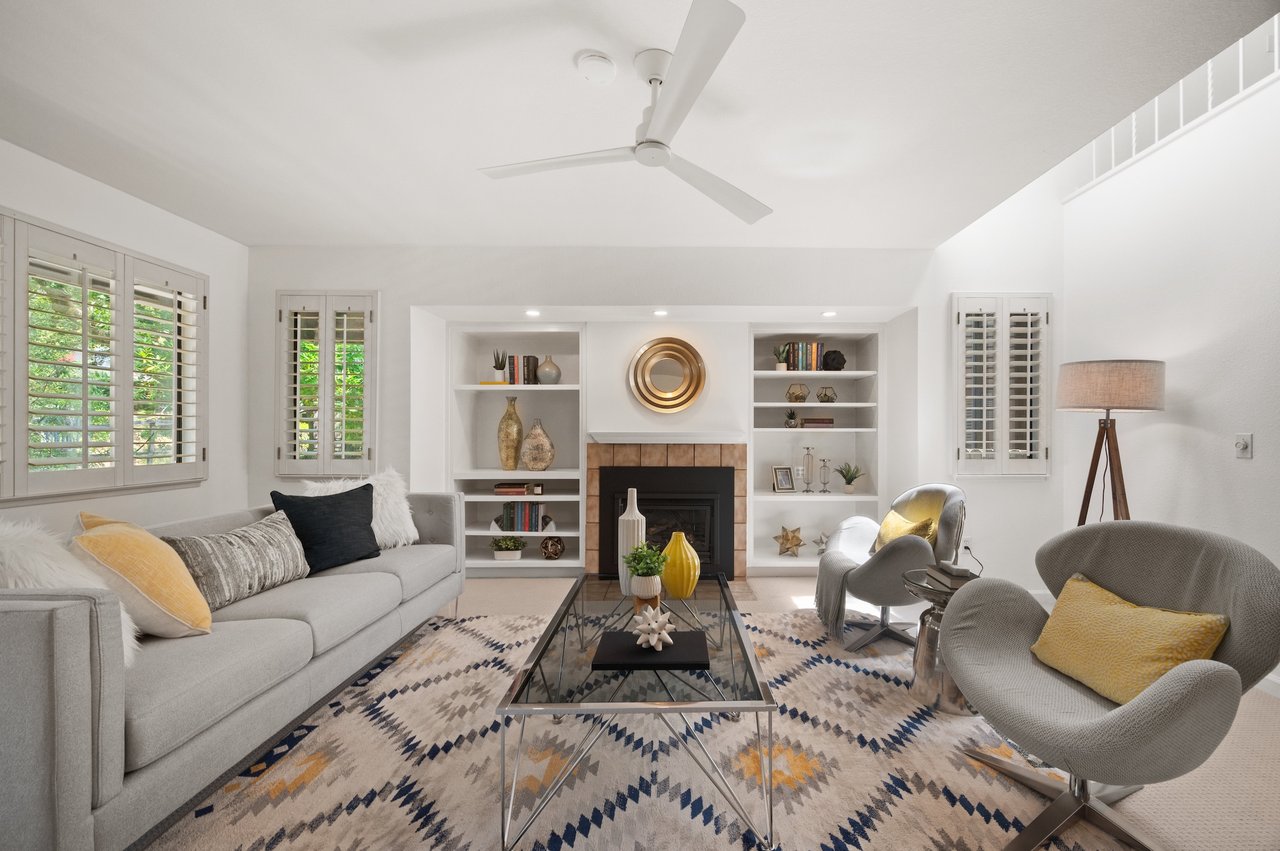
The neighborhood was built out primarily in the 1950s and 1960s as San Rafael expanded westward from its downtown core. The housing stock reflects that: mid-century single-family homes on flat-to-rolling lots, often with three or four bedrooms, original wood paneling and stone fireplaces under the renovations that have happened in the decades since. A meaningful share of homes have been thoughtfully updated. A few have been rebuilt entirely or replaced with newer construction. The lot sizes consistently surprise buyers coming from San Francisco; flat yards and real outdoor space are the rule rather than the exception.
The daily geography is small. A few hundred homes in the core, organized around Sun Valley Park and Sun Valley Elementary School, with Andy's Local Market on the corner doing the work of a village general store. The blocks between the park and downtown are walkable in the village sense, not the urban sense. Most people drive for groceries beyond Andy's, for the freeway, for errands across town. What the neighborhood gives up in walkability it pays back in quiet, in lot size, and in the kind of community where neighbors actually know each other's names.
Market snapshot
The Sun Valley market dynamic
The thing I tell every Sun Valley buyer the first time we walk the neighborhood: this is a school-zone market, and the school zone is the price. That isn't a passing observation. It's the structural reason inventory is tight and pricing is firm across cycles. Buyers don't stumble into Sun Valley. They aim at the school zone, they back into the few hundred homes inside it, and the math compresses from there.
Once a household buys here for the schools, the typical hold is long. The cycle is twelve to fifteen years of public-school assignment, sometimes longer, and most owners don't think about moving until the school cycle is complete. That kind of holding period suppresses listings structurally. A few hundred homes, a long hold on most of them, and you get the result we see most months: a handful of sales, well-prepared properties in contract within two weeks, and a spring season that is particularly compressed because that's when buyers are timing their move to a fall school start.
The practical implication for a buyer is twofold. First, the premium is real, and it is paid even by buyers whose own timeline doesn't include the public schools, because they know the resale market is anchored by school-zone demand. Don't model Sun Valley pricing against adjacent San Rafael blocks outside the zone and expect it to make sense. Second, the opportunity zones are real too. Homes a few blocks outside the strongest school-zone pocket trade at meaningful discounts to in-zone comps, and properties needing significant work tend to sit longer than turnkey homes do. If your timeline doesn't depend on the school assignment and you're willing to do the work, value is available. If your timeline does depend on the assignment, you'll be paying the premium. Both are rational outcomes of the same underlying dynamic.
What's on the market
Sun Valley's housing stock is quite varied having built over many decades, very similar to what you'd find in San Anselmo just west or Mill Valley to the south, and there's real range within it once you start looking:
- Mid-century single-family homes from the 1950s and 1960s with three or four bedrooms, often the original floorplan reworked underneath later renovations
- Thoughtfully updated mid-century homes with modern kitchens, opened floorplans, and added square footage on the back of the lot
- A small number of full rebuilds and newer construction infill homes scattered through the core
- Larger lots than typical San Francisco buyers expect, with flat yards and real outdoor space
- Period-correct mid-century homes on the more original end, which can be opportunities for buyers willing to take on a renovation
- Hillside homes on the climb toward Sorich Park, often with views and slightly different topography from the flat blocks
Directionally, a renovated three or four-bedroom on a flat block inside the strongest school-zone pocket generally transacts in the $1.8M to $2.6M range, with exceptional homes (larger square footage, full modern renovation, premier school-zone location) going above. Less-renovated mid-century homes typically start in the low $1Ms. Hillside homes vary widely based on view, condition, and the steepness of the access. The premium for turnkey condition, school-zone location, and a flat yard with sun is the most consistent pricing pattern across cycles.
Sun Valley sub-areas
Sun Valley is small enough that a walk across it doesn't take long, but the experience of living on one block is genuinely different from living on another. A few sub-areas worth knowing:
Core Sun Valley
The flat blocks organized around Sun Valley Park and Sun Valley Elementary School. This is the heart of the school-zone pocket and the postcard version of the neighborhood: mid-century homes on real lots, mature trees, Andy's Local Market a short walk away, sidewalks alive on weekends. Pricing here sits at the top of the band. Inventory is thinnest. The flat-block, in-zone premium is the most durable pricing pattern in Sun Valley.
West End edge
The blocks transitioning toward San Rafael's West End commercial corridor on Fourth Street. Slightly more urban edge, easier access to downtown shops and restaurants, often a touch more accessible on price for an otherwise comparable house. Worth a real look for buyers who want the school zone with a closer connection to downtown amenities.
Hillside blocks toward Sorich
The streets climbing west toward the Sorich Park ridge and the open-space access. Houses here are often slightly newer, sometimes pick up views, and have a different topography. The trade is the daily geometry of the hill: less walkable for groceries, more walkable for trails. For buyers who care about being able to step out the front door and onto a fire road, the hillside blocks are the place. For buyers who prioritize the flat walk to the park and school, Core Sun Valley still wins.
On the doorstep
A short, specific tour of what shapes daily life here:
- Sun Valley Park (playground, courts, the weekend hub)
- Sorich Park / The Ridge, the beloved walking loop just up the hill
- Loma Alta Open Space Preserve for trail running and hiking
- Cascade Canyon Open Space Preserve, minutes away
- Phoenix Lake and the Marin Municipal Water District trail network
- China Camp State Park and Mt. Tamalpais a short drive
- Andy's Local Market, the daily neighborhood anchor
- Downtown San Rafael's Fourth Street restaurant corridor, a few blocks away
- San Anselmo's downtown is a short walk or quick drive west
- Fairfax's commercial strip a touch farther west, more bohemian
- Direct Highway 101 access for commutes south to SF or north into Marin
- SMART train from downtown San Rafael
- Larkspur Ferry to San Francisco, roughly 15 minutes away by car
- Sun Valley Elementary School
- Davidson Middle School
- San Rafael High School
Living in Sun Valley, honestly
A few things I'd want a buyer to know before writing the offer. A car is essential. Sun Valley is not a walkable neighborhood in the urban sense. You can walk to Andy's, to the park, to the school, to downtown, but for groceries beyond the corner market, for daily errands across town, for the freeway, you'll drive. Some buyers coming from San Francisco's walkable neighborhoods find the transition real. Others find the trade obvious the first time they pull into their own garage on a flat lot with sun in the back yard. Worth being honest with yourself about which one you are.
The school-zone premium is the second honest conversation. You pay it whether or not you'll use the schools. If your own timeline doesn't include the public school system, and you don't care about resale being anchored by school-zone demand, you may find better value just outside the core zone in adjacent San Rafael neighborhoods. That's not a bug; it's the rational structure of the market. The third thing: micro-grades and microclimates within the valley vary more than you'd expect for such a small footprint. The flat blocks are flat. The hillside blocks toward Sorich are not. The valley generally gets sun, but specific streets vary based on tree cover and orientation. Walk the actual block at different times of day before you commit.
Your Sun Valley guide
"He offered guidance at each step along the way and was there to help us navigate the somewhat daunting journey through the disclosure and escrow process. We would recommend Oliver in a heartbeat, and without any hesitation."
Megan W. • marin

I've worked San Francisco and Marin real estate for over twenty-three years. I also live in Sun Valley. The bio insight on this page isn't something I read about; it's something I see walking my own block. The difference between the flat in-zone streets near the park and the climbing blocks up toward Sorich is part of the daily geometry of my life. So is the difference between the West End edge and the core. If you're thinking about buying or selling in Sun Valley, or anywhere in San Rafael, I can probably tell you what I'd advise a client to do because I've already done some version of it for myself. A 15-minute call is the right first step.
Frequently asked questions about Sun Valley
What makes Sun Valley different from other San Rafael neighborhoods?
How important is the school zone to pricing?
What's the housing stock like?
What price range should I expect for a Sun Valley home?
Is Sun Valley walkable?
What's the commute to San Francisco like?
Why is inventory so tight?
What's the difference between core Sun Valley and the West End edge?
Are there opportunities for buyers willing to do work?
How do I think about selling a Sun Valley home?
Selling a home in Sun Valley?
A Sun Valley listing has the school-zone demand pre-loaded, particularly in the spring buyer cycle. The work is in presentation, pricing, and timing the prep so the scarcity does what it does. Start with a real valuation, then a short call to map out the pre-list moves that matter.